Welcome to the Neighbourhood 2023
Throughout June, Askeaton
Bryony Dunne, Chris Kallmyer and Robin Price lived and worked in Askeaton throughout June 2023. A programme of events accompanied their stay culminating with a special celebration Open Day featuring new artistic encounters throughout the town.
Robin Price
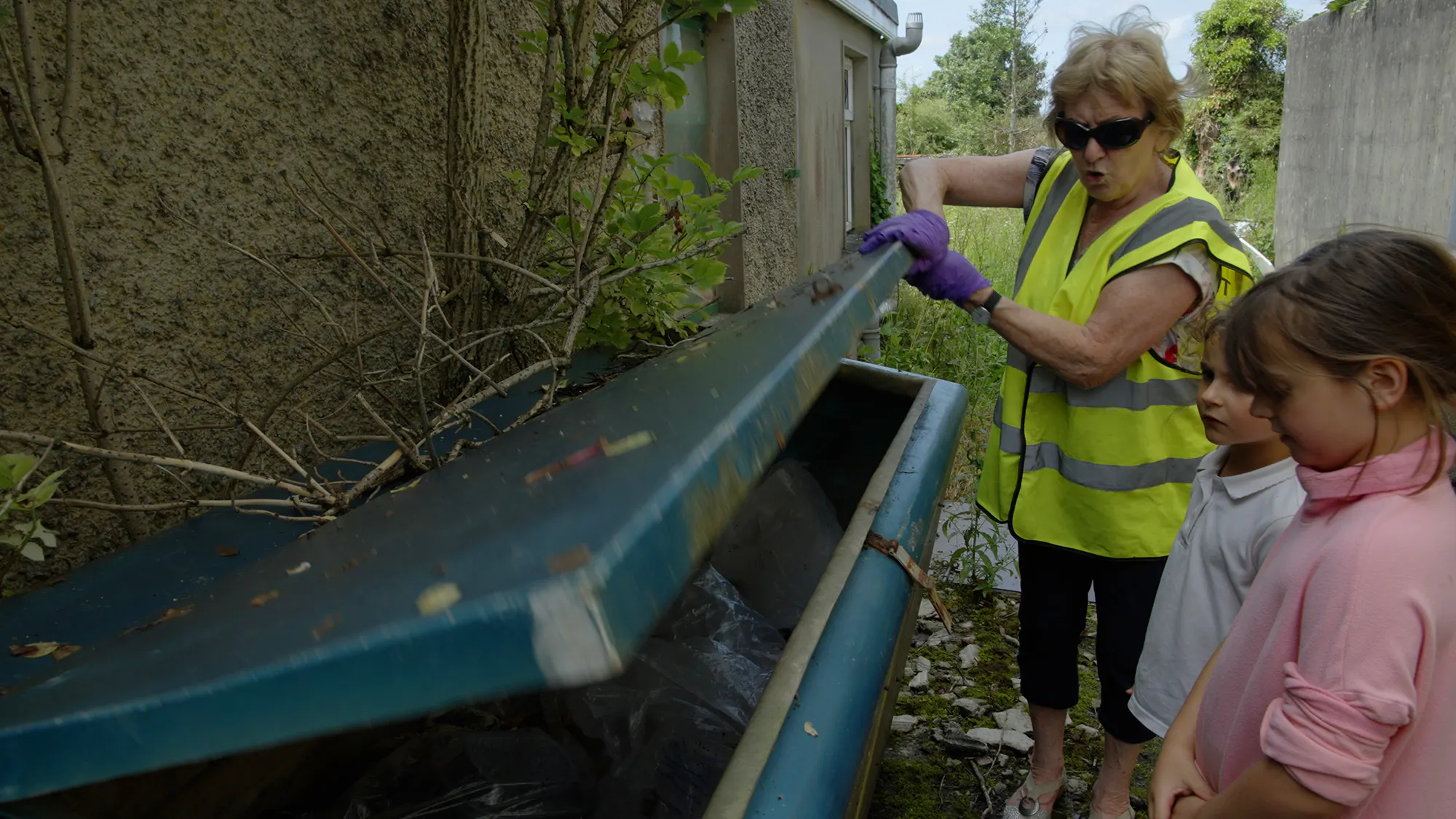
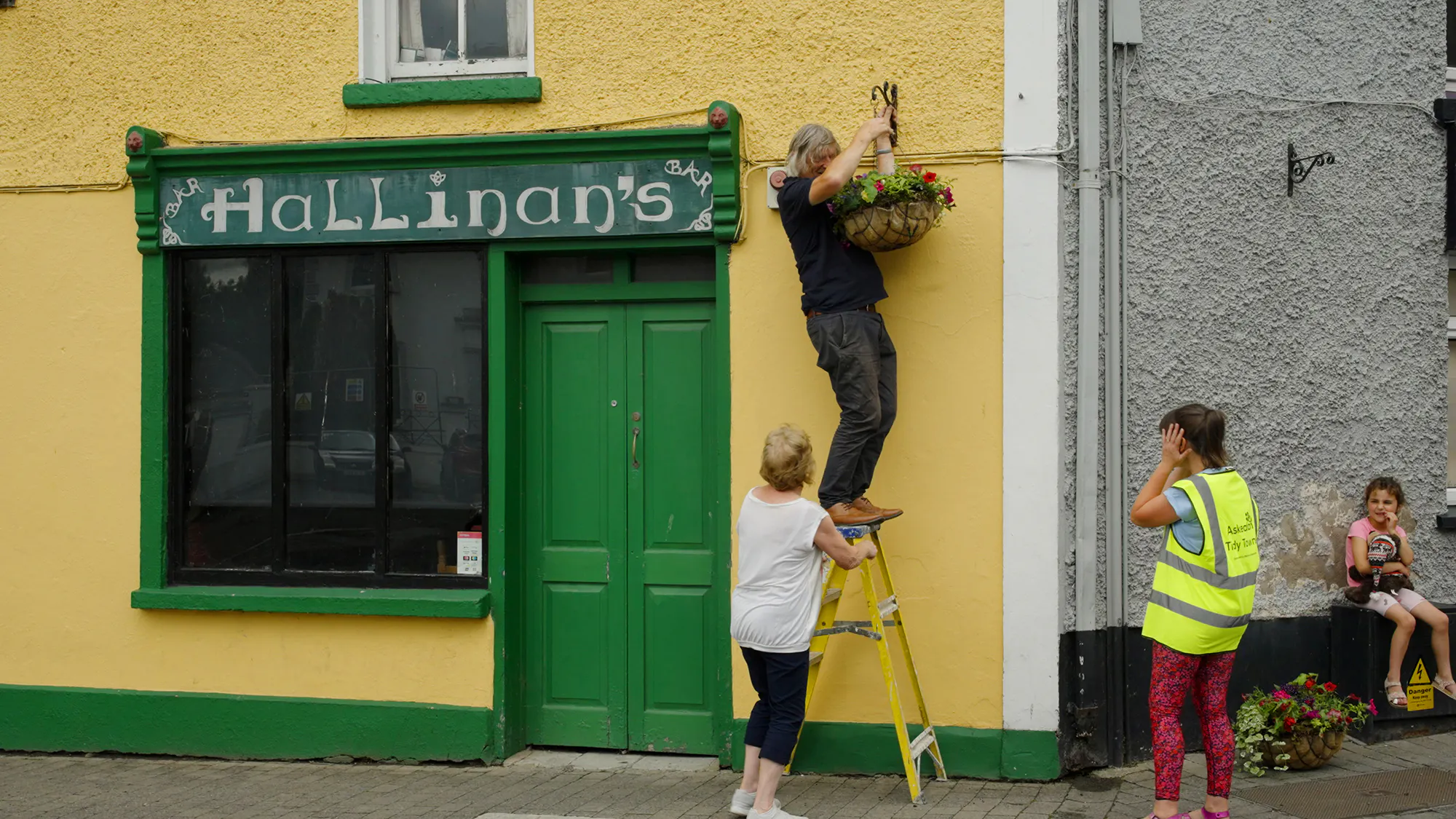
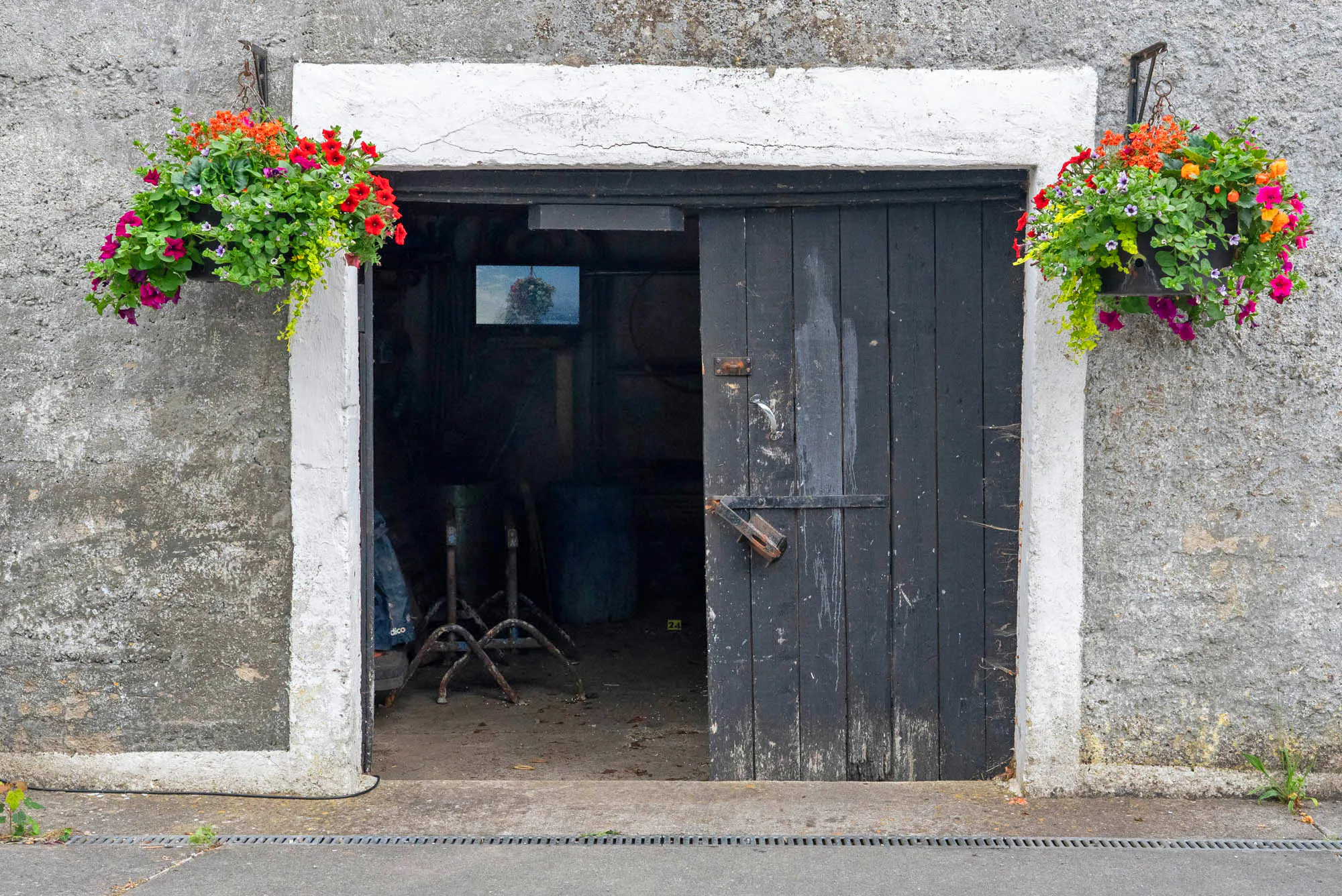
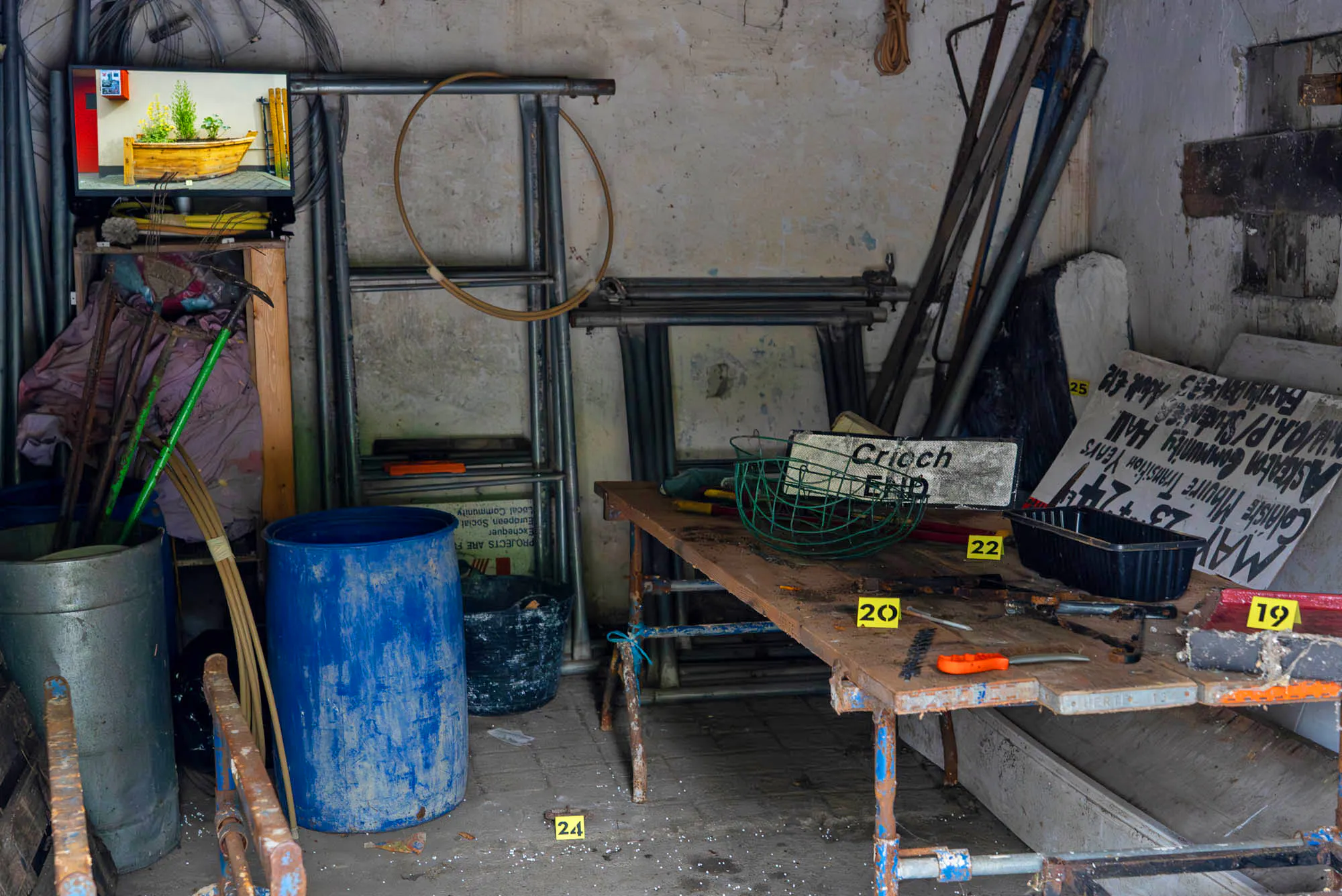
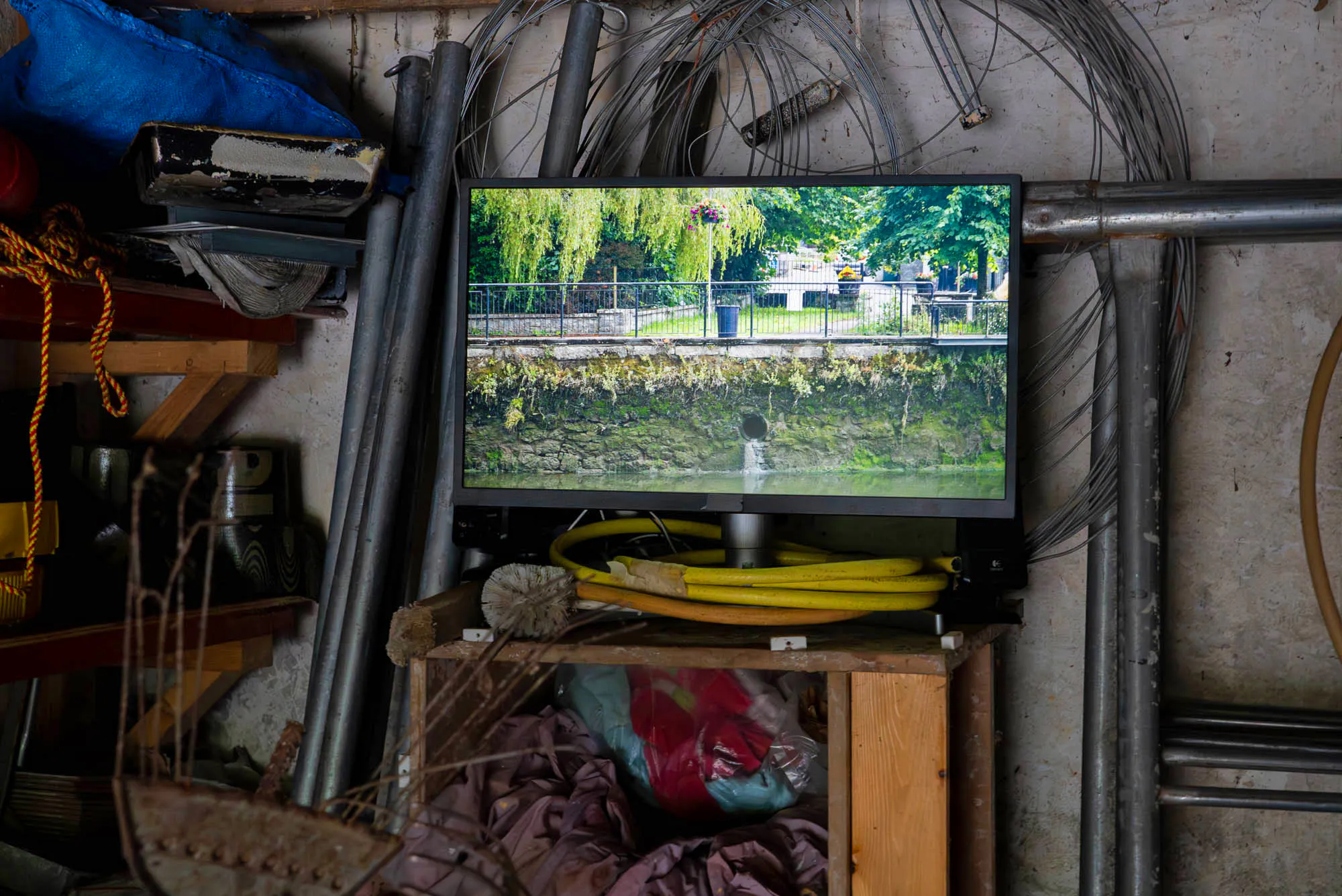
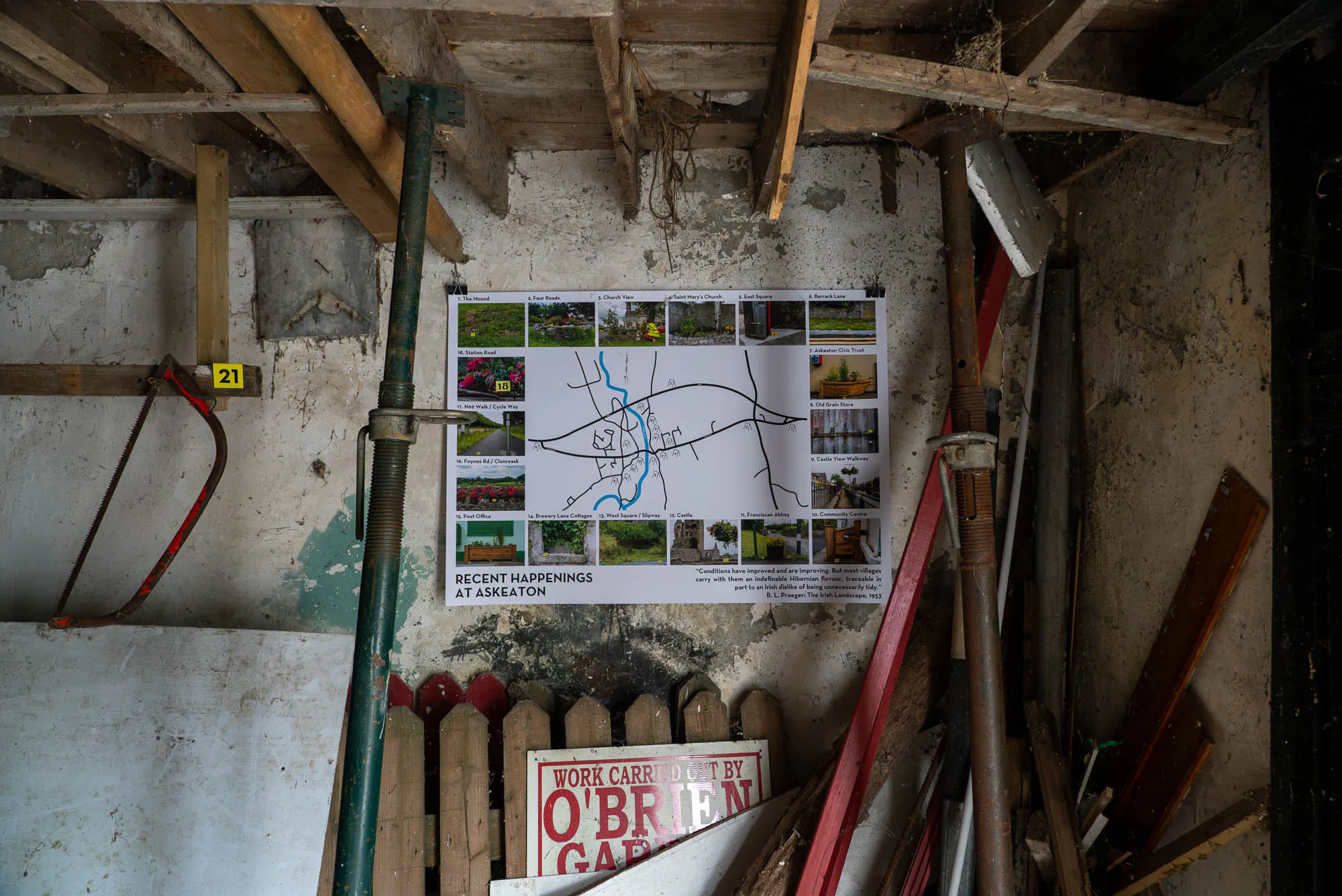
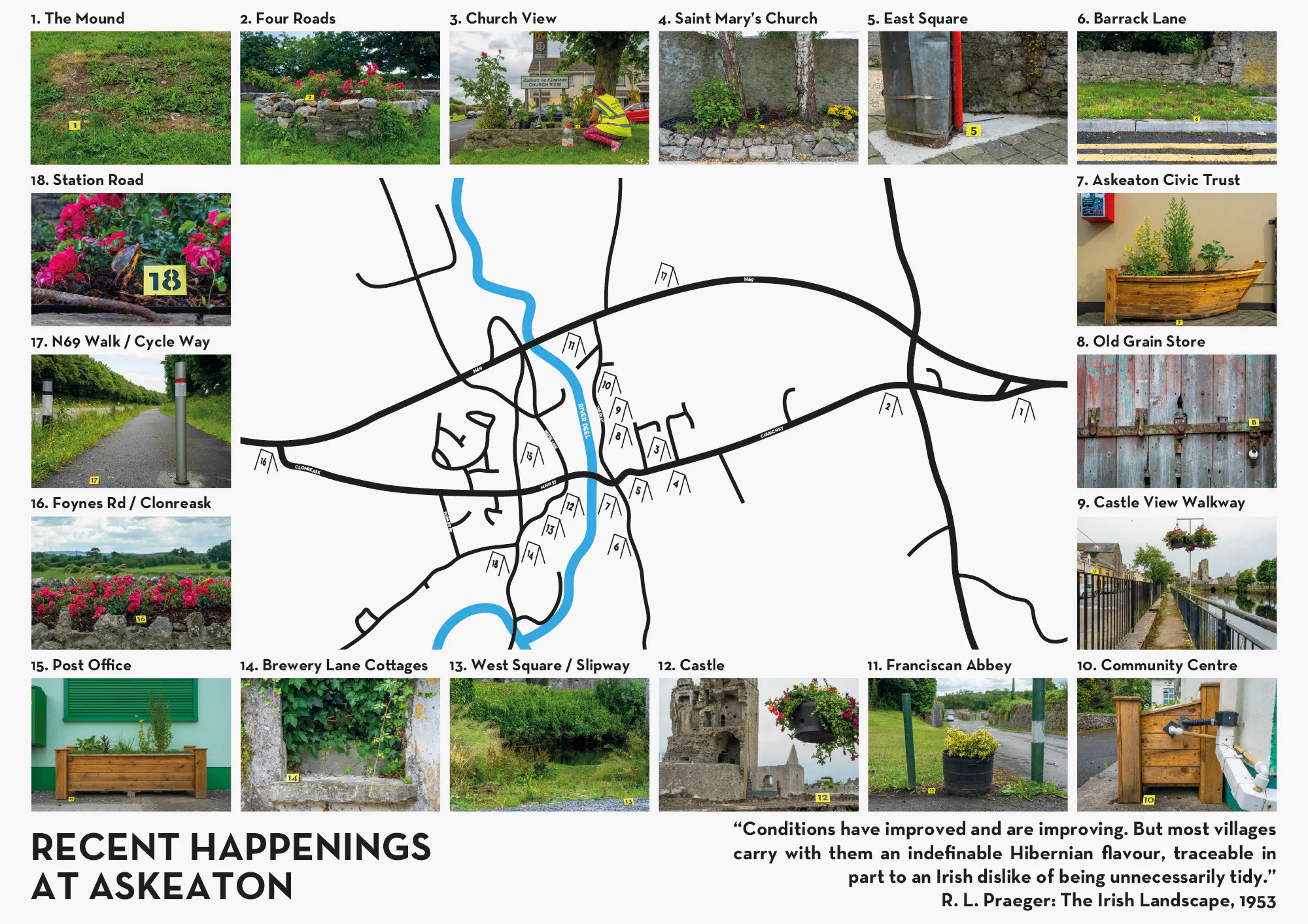
Robin Price’s video and installation Flowers and Flamethrowers and map Recent Happenings in Askeaton were made working with Askeaton TidyTowns. Here he reflects on the relationship between Ireland’s annual competition for picturesque townscapes and contemporary art:
‘I think TidyTowns are like artists, they are concerned with visual aesthetics, they go to the effort of making things look a certain way and installing their work. Similar to artists they then have to open themselves to external and entirely subjective critique when the ‘assessors’ come to judge their work. Then when the winners are declared they have to abide by the decisions, pick themselves up and plough on hoping perhaps to do better next time. If they are wise they enjoy the process for its own sake rather than for fleeting success.
When I first came to Askeaton for a site visit earlier in 2023 I met the TidyTowns group at their pub quiz fundraiser in Cagney’s Bar. Una from the committee, who features heavily in the video, said cheerfully and unironically ‘welcome to the neighbourhood’ which stuck with me. What also stuck with me was Askeaton Contemporary Arts curator Michele Horrigan’s joke that a stranger could come to town at a certain time of year, be mistaken for a TidyTown judge and get anything they asked for!
Along with the TidyTowners I imagined a story where someone, perhaps myself, a stranger, was mistaken for a TidyTowns judge and after having overplayed his hand for the town’s favours and co-operation was found out, and murdered. Tidied away in the hanging baskets and raised beds. Perhaps leaving a warning to others that might judge – tread softly on a town’s imaginative efforts. I tried coming up with a coherent narrative but Una said ‘don’t give me answers, give me intrigue’.
Bryony Dunne
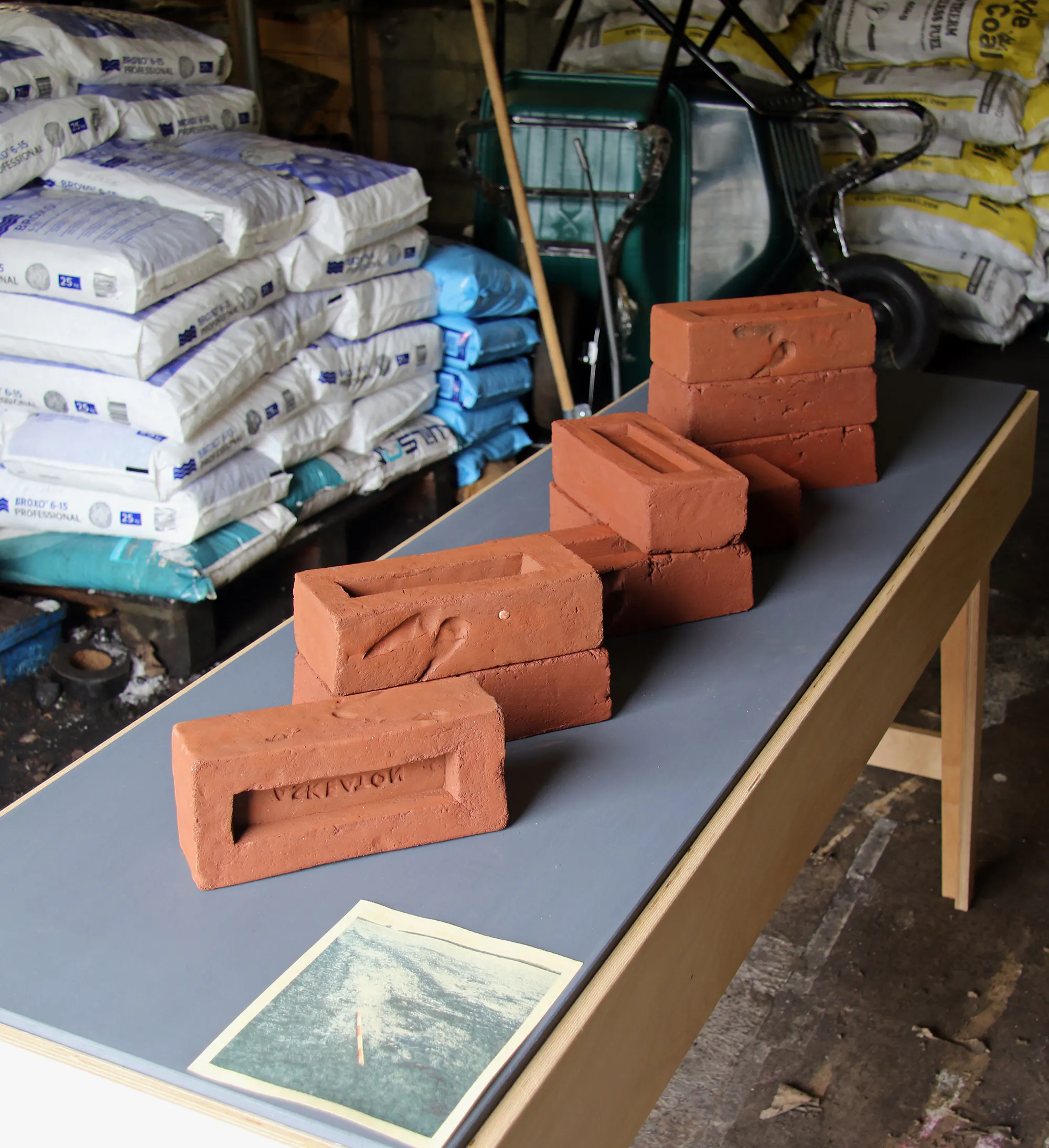
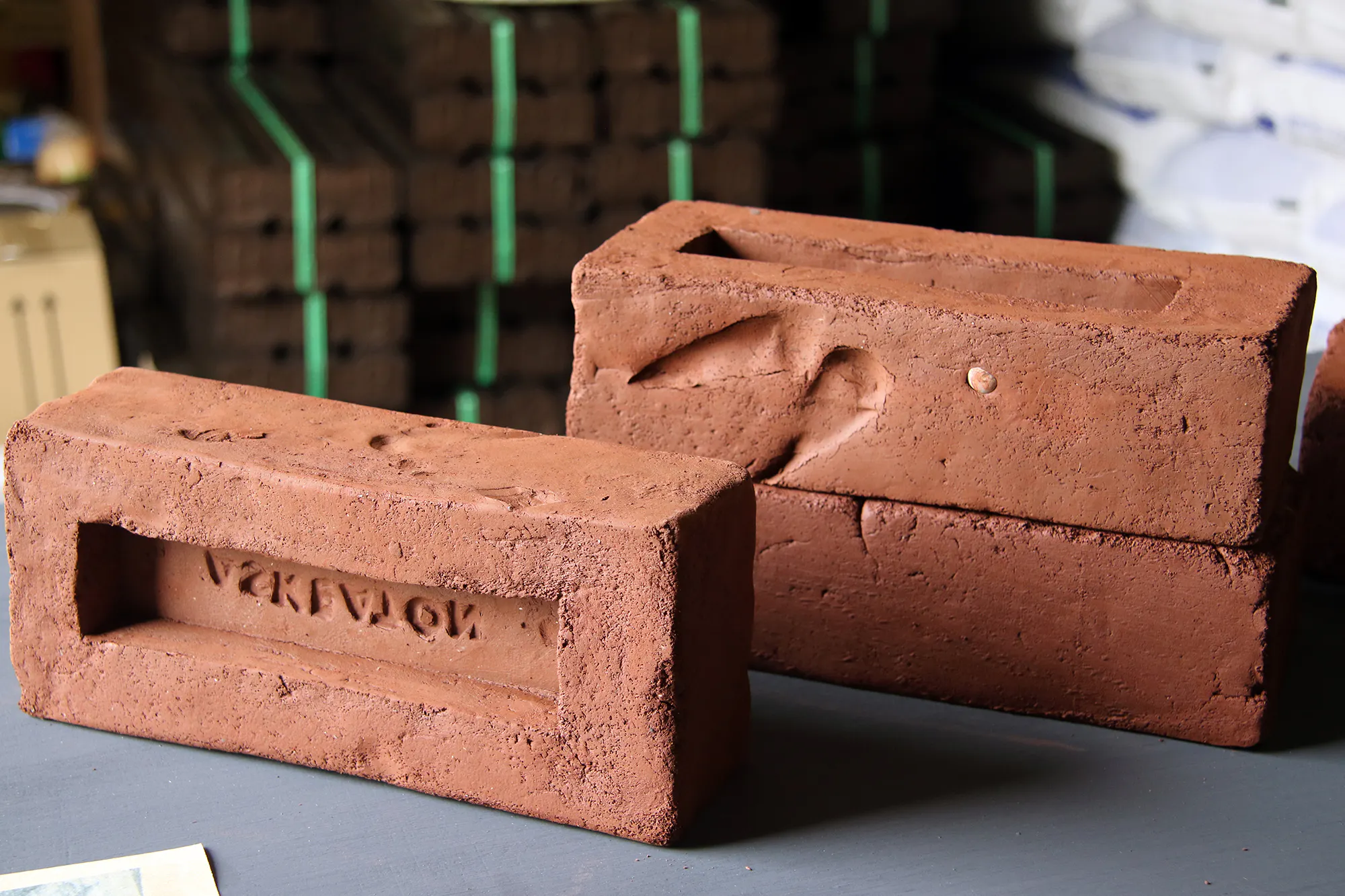
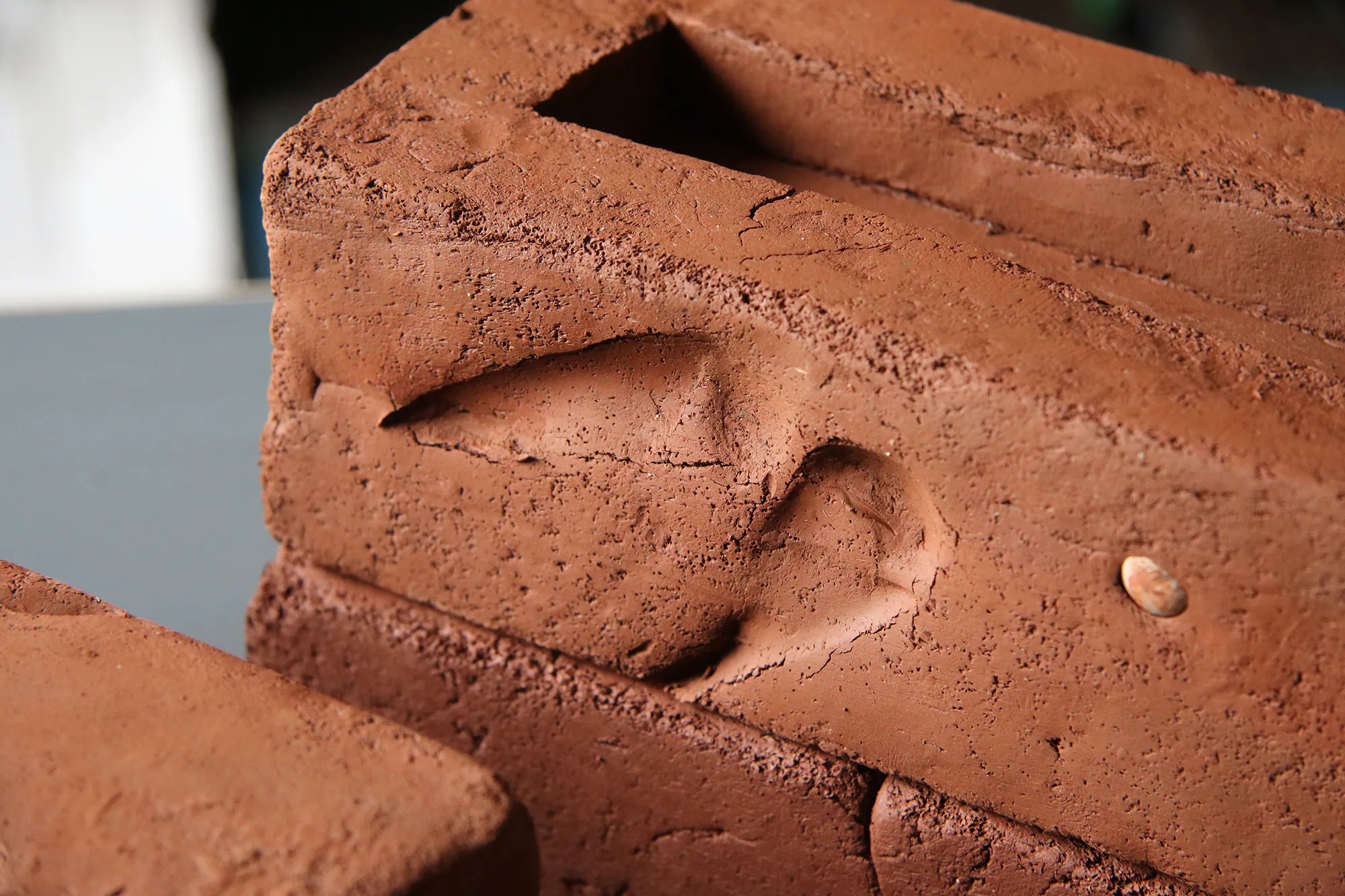
Bryony Dunne describes a series of bricks, made from river clay dug up at low tide on the Shannon Estuary, ‘Hybrid creatures found in mud, murky myths that merge from matter. While in Askeaton I collected river clay to think about how mud and clay hold traces of time trapped, where dead and living creatures are found, and are often preserved by it. I processed this clay, tinting it red to replicate bricks found at the Hellfire Club, located in the centre of Askeaton – a place where wealthy men were known to come together, to hunt, drink, gamble and share stories. I was told that some of the bricks found in the construction walls of the club contained deer or goat hove prints, once imprinted by animals when the bricks were left out to dry.
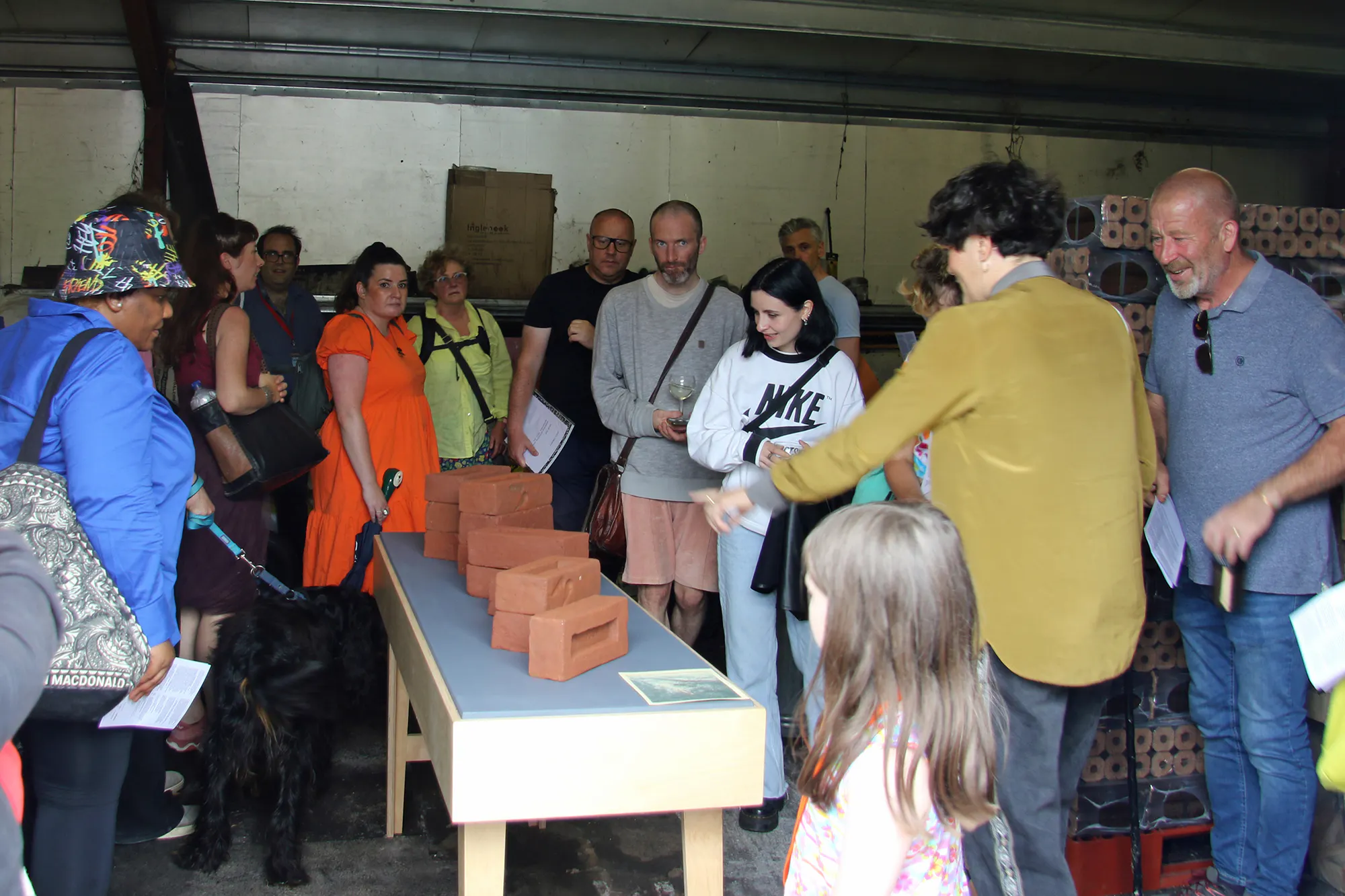
As a child one of the many ghost stories I recall emerged from the only other Hellfire club in the Dublin mountains; when club members were playing cards one night, and a card drops on the floor and another member retrieves it, to his surprise he notices that the members feet were that of a deer, it was later revealed that this member was the devil in disguise. Different variations of the story unfold, sometimes the hoves of a cow, other times a goat. These reproduced bricks, exhibited in Askeaton hardware store, contain the imprint from a local goat, and illustrate the entangled relationships between human and animal and the myths and stories that circulate around them both. NOTAEKSA, the word ASKEATON spelt backward, is imprinted on each brick.’
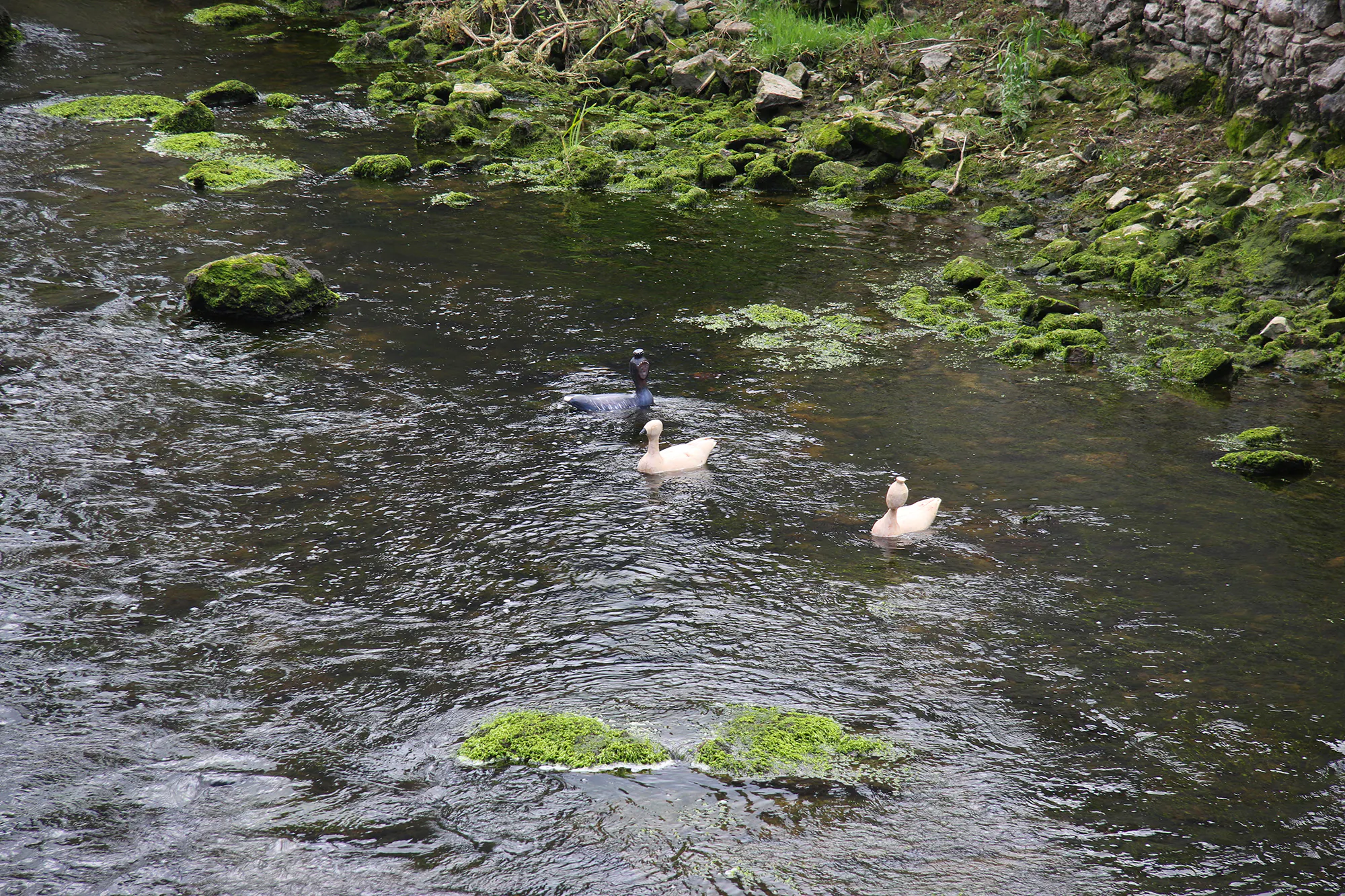
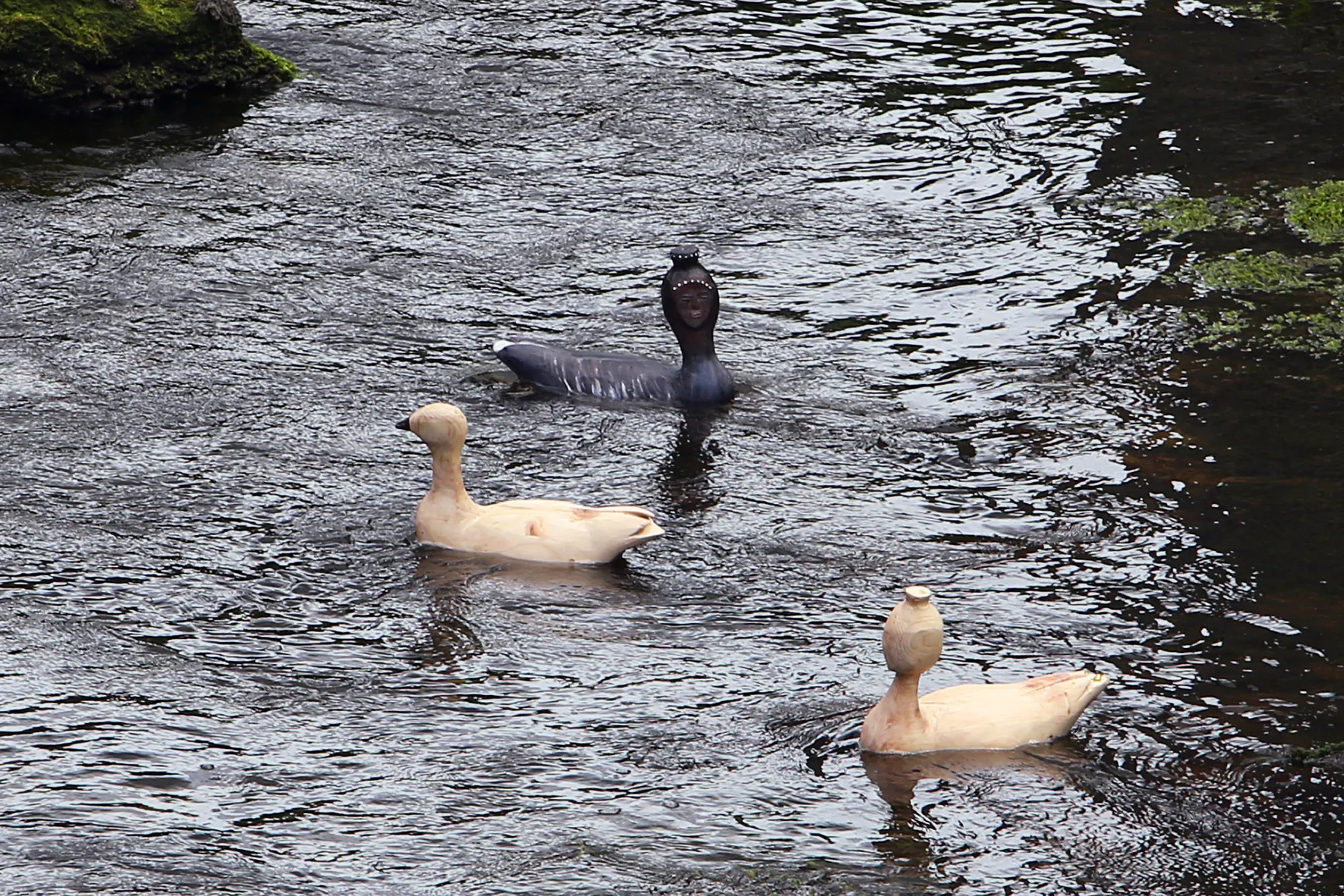
‘A second work looks at rivers, water, mythology and conservation. Bird decoys, which often function to aid hunting, have been known on a few occasions to aid conservation projects, to lure birds back to an area, where populations have decreased due to habitat loss, pollution and climate change such as the river Deel. The bird decoys assist the birds to return to an area, as when they see other birds, it means it must be safe. In pagan Ireland water was always under the protection of a female spirit. Here these wooden birds, some hybrid beings representing female deities, float with the tide on the Deel.’
Chris Kallmyer
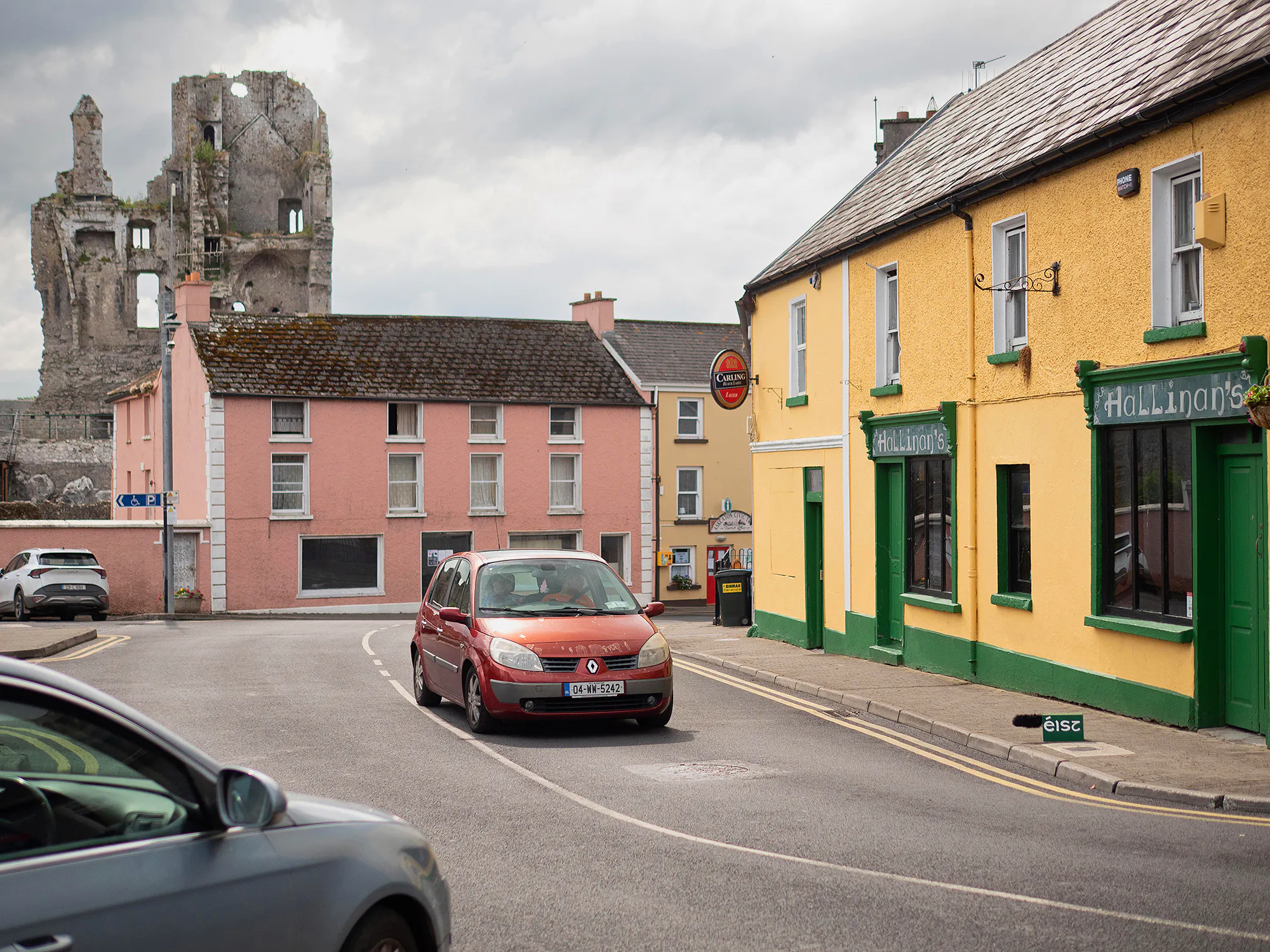
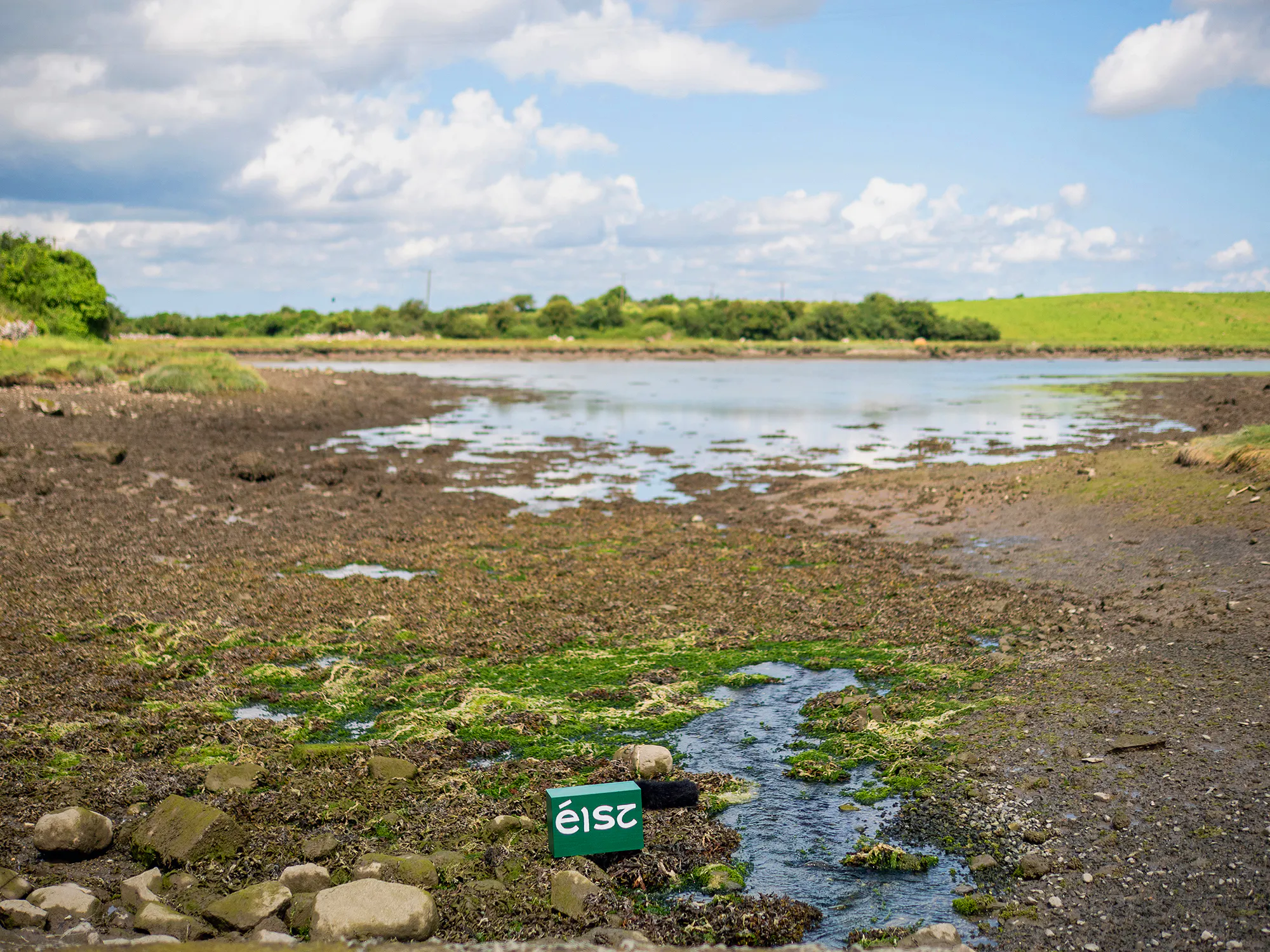
Chris Kallmyer’s Éist project was an experiment in rural broadcasting of live ambient environments. He writes, ‘During my time in Askeaton, I walked the land, made audio recordings, delighted in easy conversations with locals, and visited a half dozen holy wells on properties that surround the town. Coming from a dry California, I had never been on land that felt so vibrant and alive – water flowing over and through – layered with memories, histories, sadnesses, and delights.
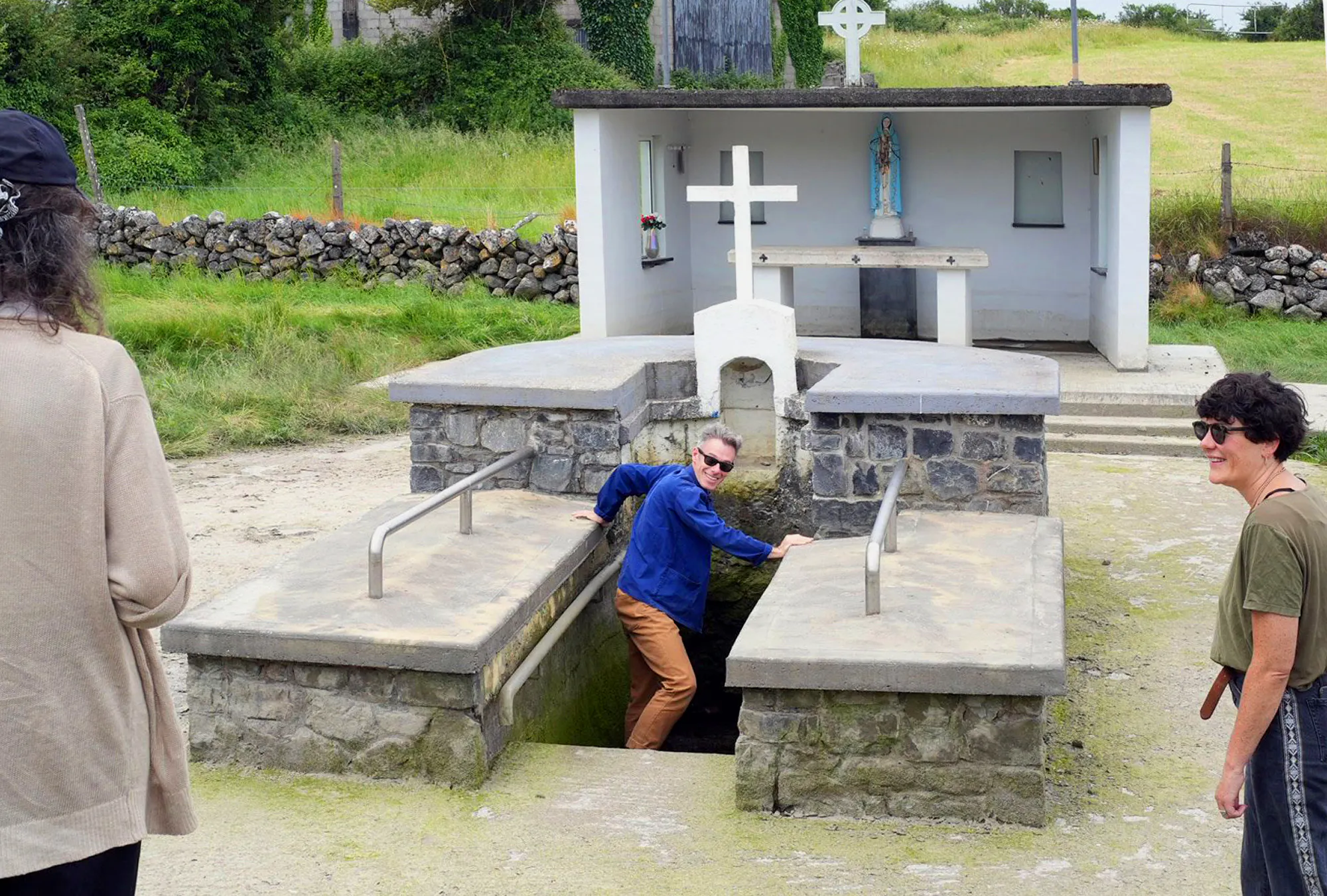
The holy well at Barrigone is positioned down a set of stairs on the shore of the Shannon. From the well, you can observe bird life, a small quarry that goes back a thousand years, and in the distance the Aughinish Alumina plant with its dystopian smoke stacks and reddish fields of discarded industrial waste.
As I descended this small set of stairs down into the well at Barrigone, all other sounds faded away. By the first step into the well, I could no longer hear the cars from the nearby road. By the second step, a crab scurried across my shoes into the basin – rippling the water as it entered. As I take a third step my legs suddenly fly out from under me and I grasp the concrete wall for balance – I am new here!
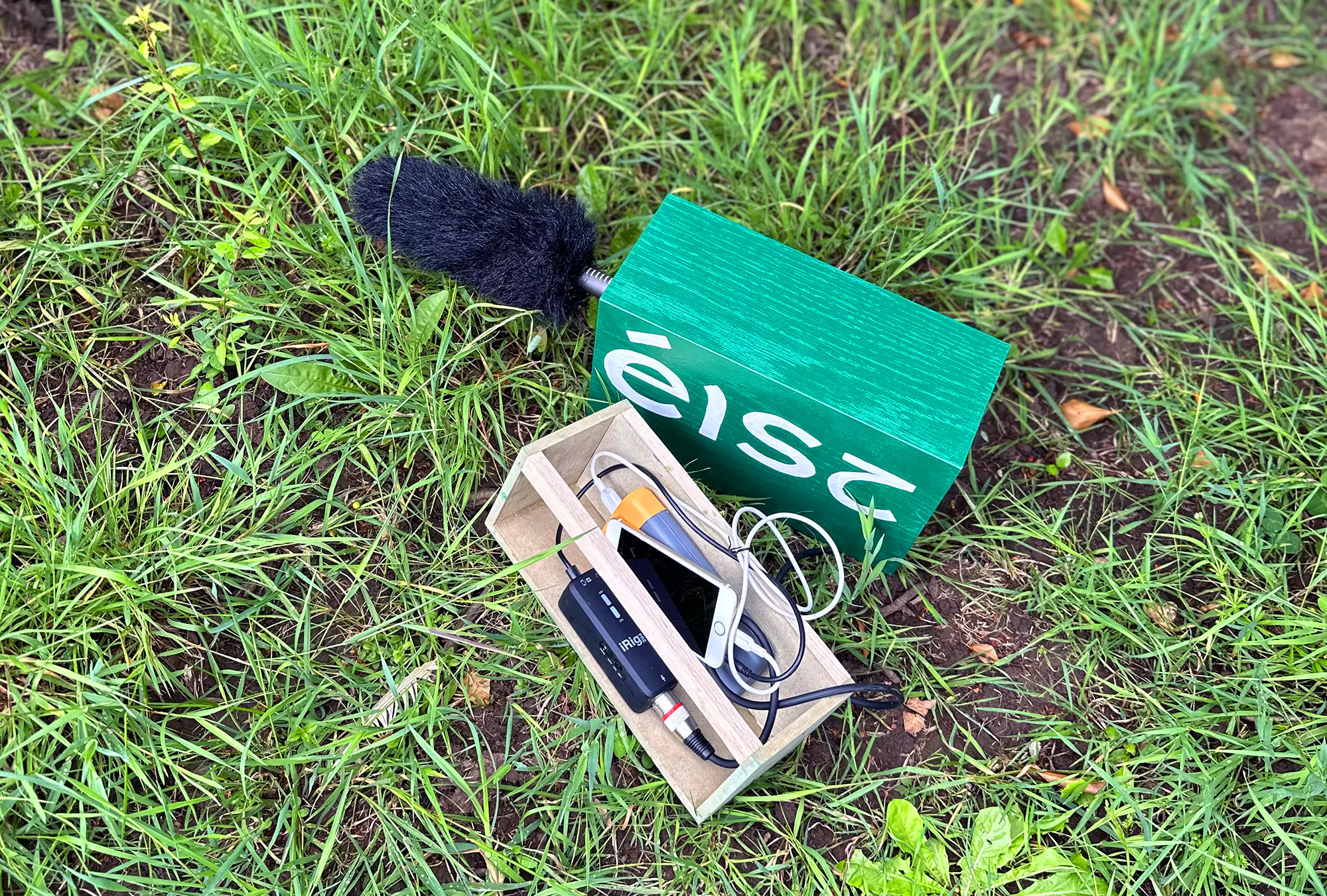
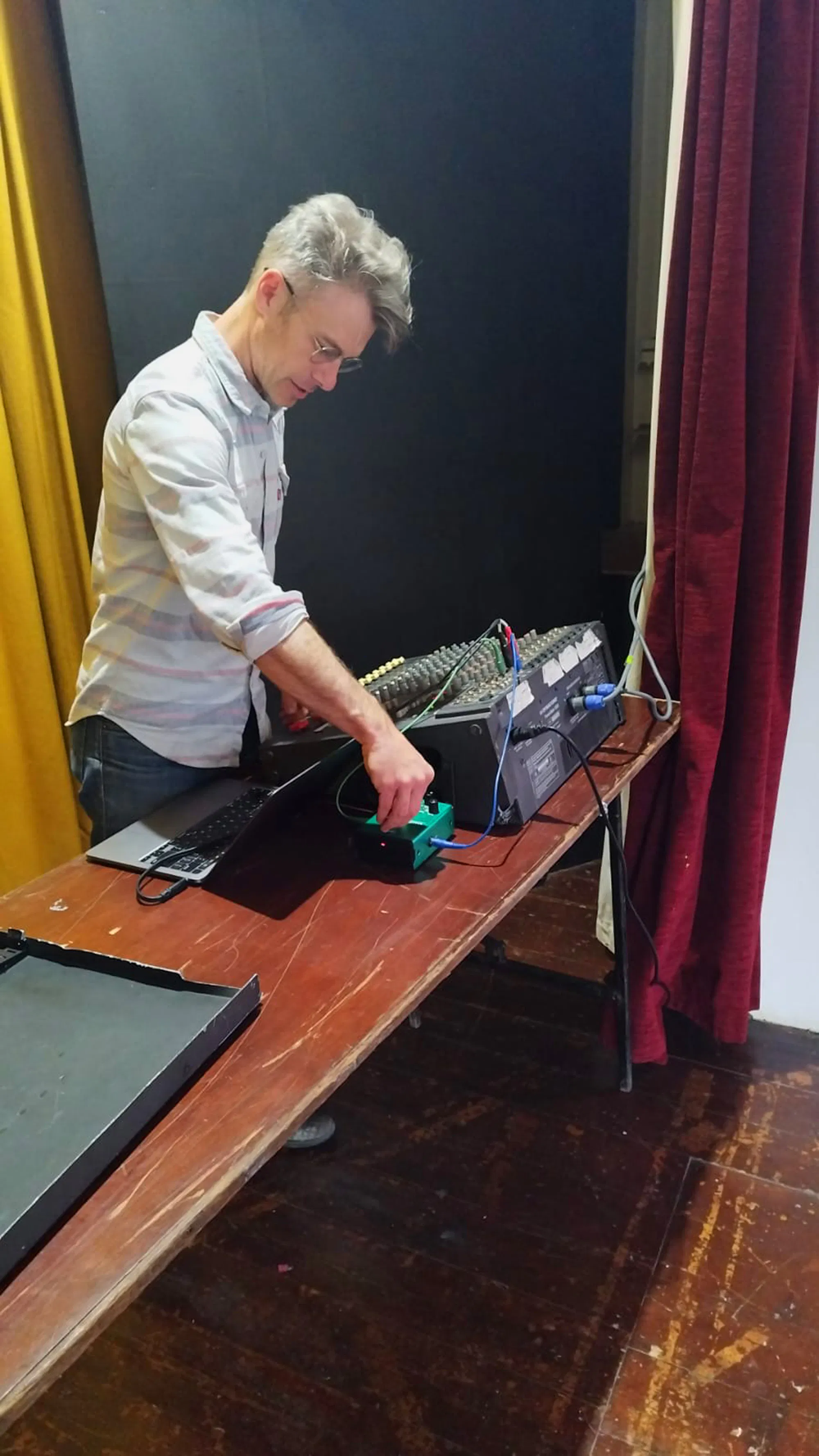
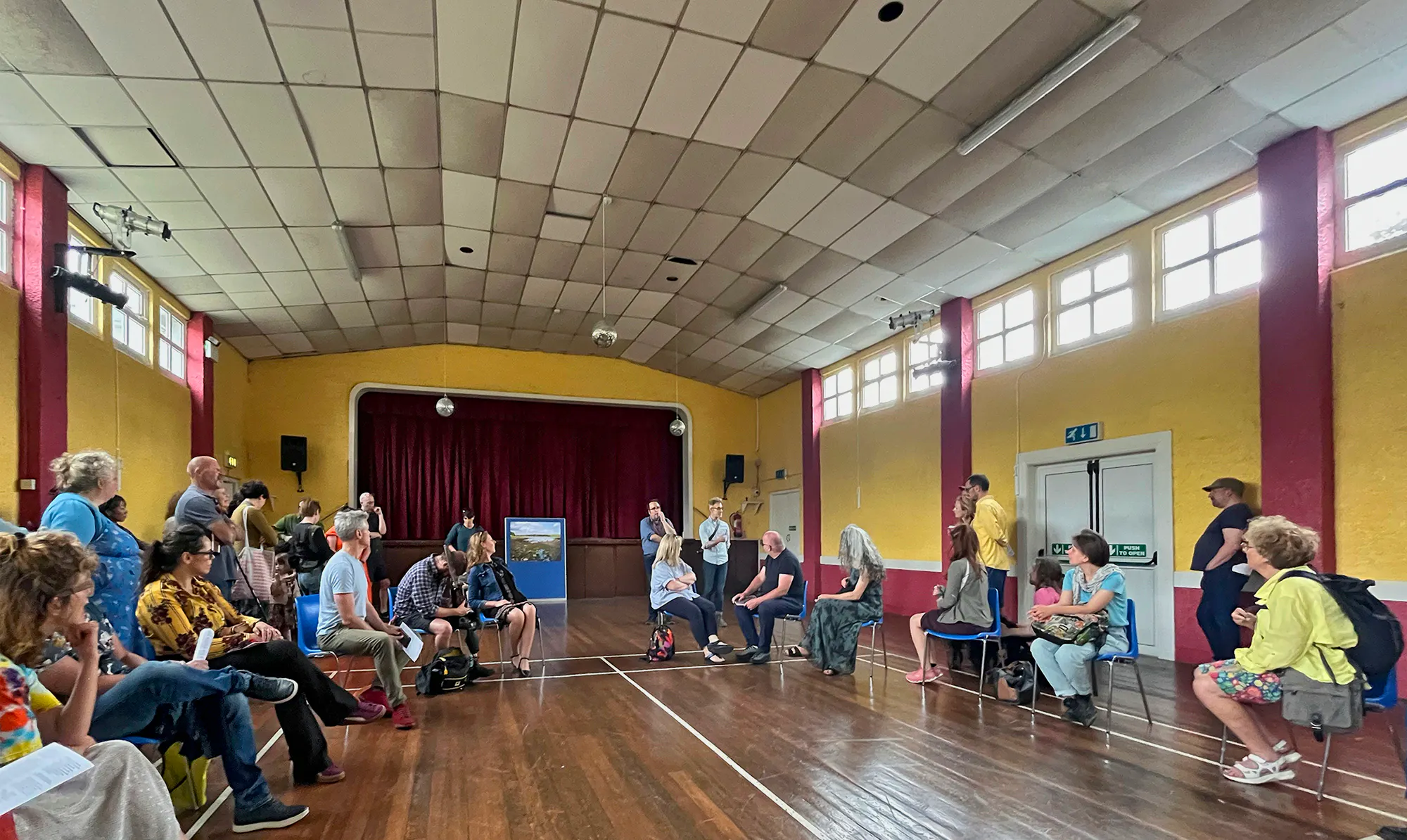
In response to this special quality of place, I created a device that we came to call the Éist Machine - a radio transmitter that would broadcast live sounds from remote sacred wells back to the town of Askeaton. I hoped that the Éist machine could break space and time in its own way – situating us at the rim of the well in Barrigone, while we sit listening 10 kilometres away in the town of Askeaton. From our position in the Community Center, we can hear the birds, wind, and flow of water - a rupture where we can close our eyes and exist both in both places.This concept touches on systems and concepts such as regional biodiversity, the global climate crisis, and the water quality of the wells that dot this part of County Limerick in the shadow of contemporary life.’
The Worm: aiPotu, Askeaton Ballysteen Natural Heritage, Michelle Browne, Matt Calderwood, Bobby Duhig, Jonny Lyons, Quim Packard, Studio Suss (Dan Scully and Ruza Leko) and Filip van Dingenen
The Worm was an exhibition about the heart of Askeaton – its river. Over sixty kilometres long and rising in North Cork, the Deel flows through the towns of Milford, Castlemahon, Newcastle West, Rathkeale and Askeaton before entering the Shannon Estuary. Due to its winding nature, the river was originally named An Daol, meaning insect or worm in Irish.
Assembled from Askeaton Contemporary Arts’ archive of seventeen years of artists working with this special waterway as a place of encounter and cultural innovation, the exhibition demonstrates the Deel’s visibility and vitality, offering perspectives such as aiPotu’s open air bathing, Jonny Lyons’ surreal water games, Matt Calderwood’s D.I.Y. boat and Michelle Browne’s diving board performances. Quim Packard’s ramblings and Filip van Dingenen’s uncovering of almost-forgotten swimming spots show the importance of the Deel to Limerick life in past, present and future times.
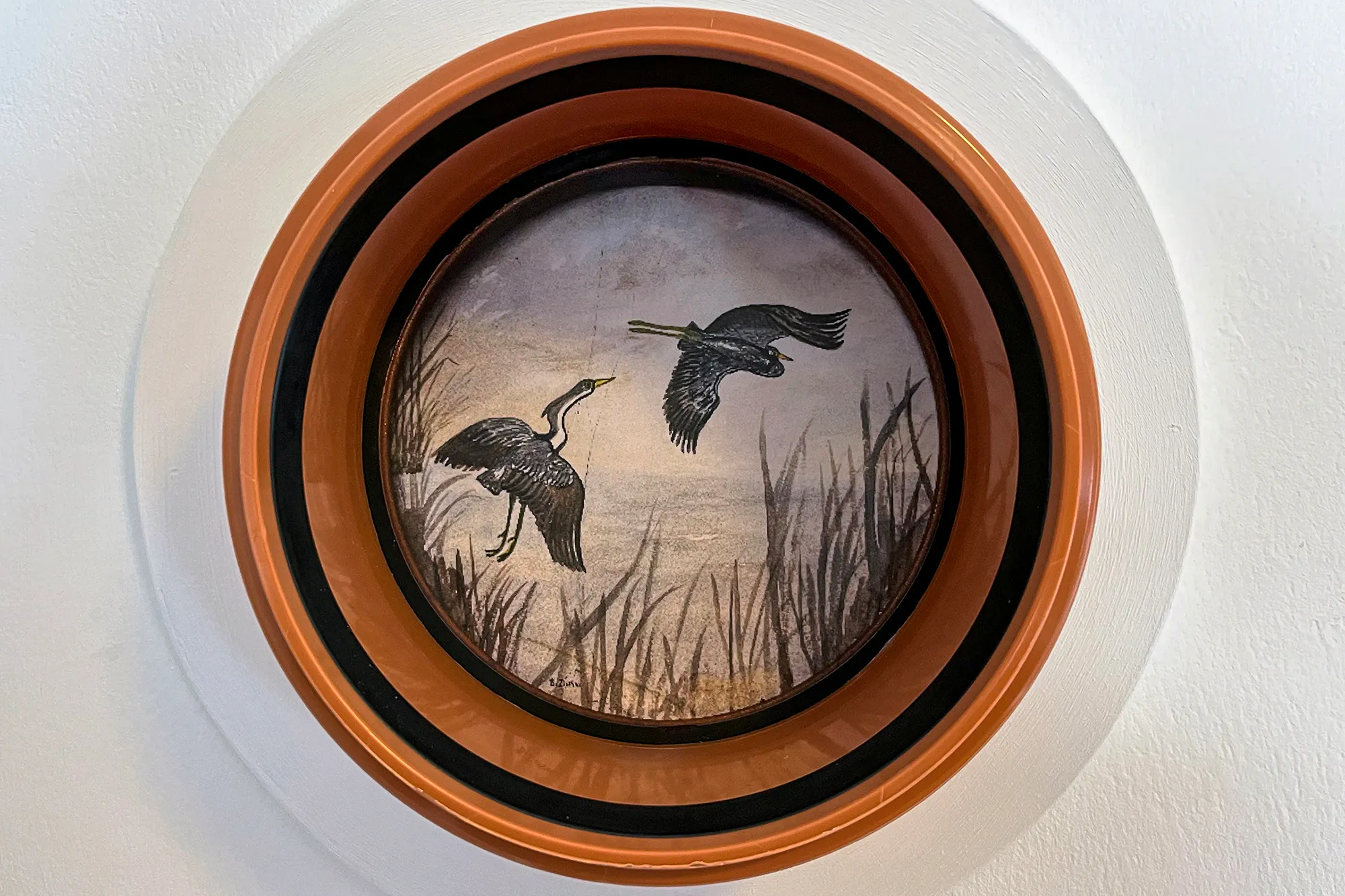
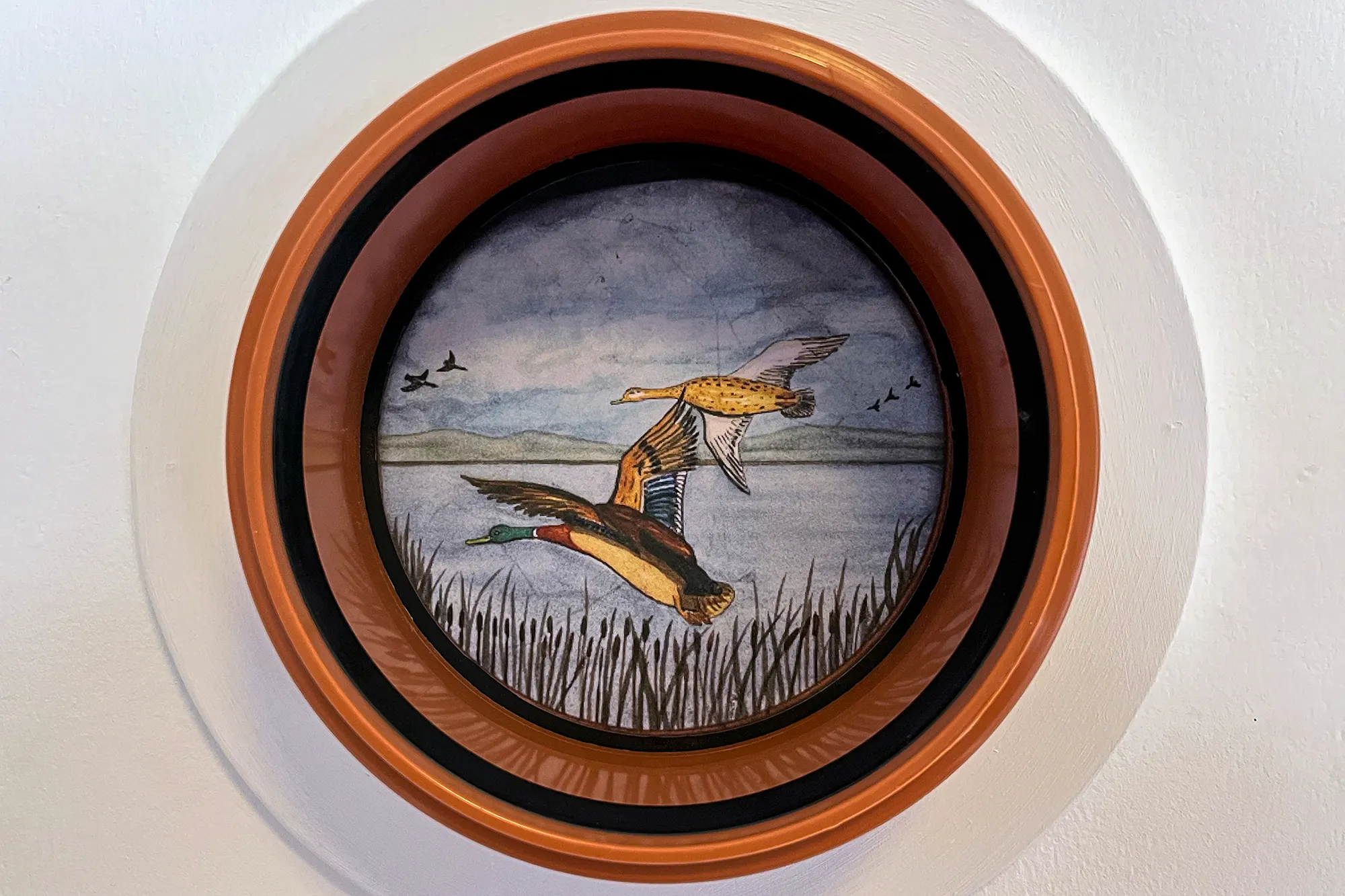
The river has in recent years suffered from substantial pollution, urban waste water runoff and resulting cancellation of the annual Deel Swim celebration. Askeaton Ballysteen Natural Heritage’s new community-generated video and reconstructions of folk artist Bobby Duhig’s (1930–2014) sewerage pipe paintings, seen here below, and are both poignant reminders of issues that compromise the ecological beauty and the need for sustainable conservation. The exhibition was designed by Dan Scully and Ruza Leko of Studio Suss with digital accessibility available here.
Jes Fernie, Michael Holly, Amanda Rice and Lily van Oost
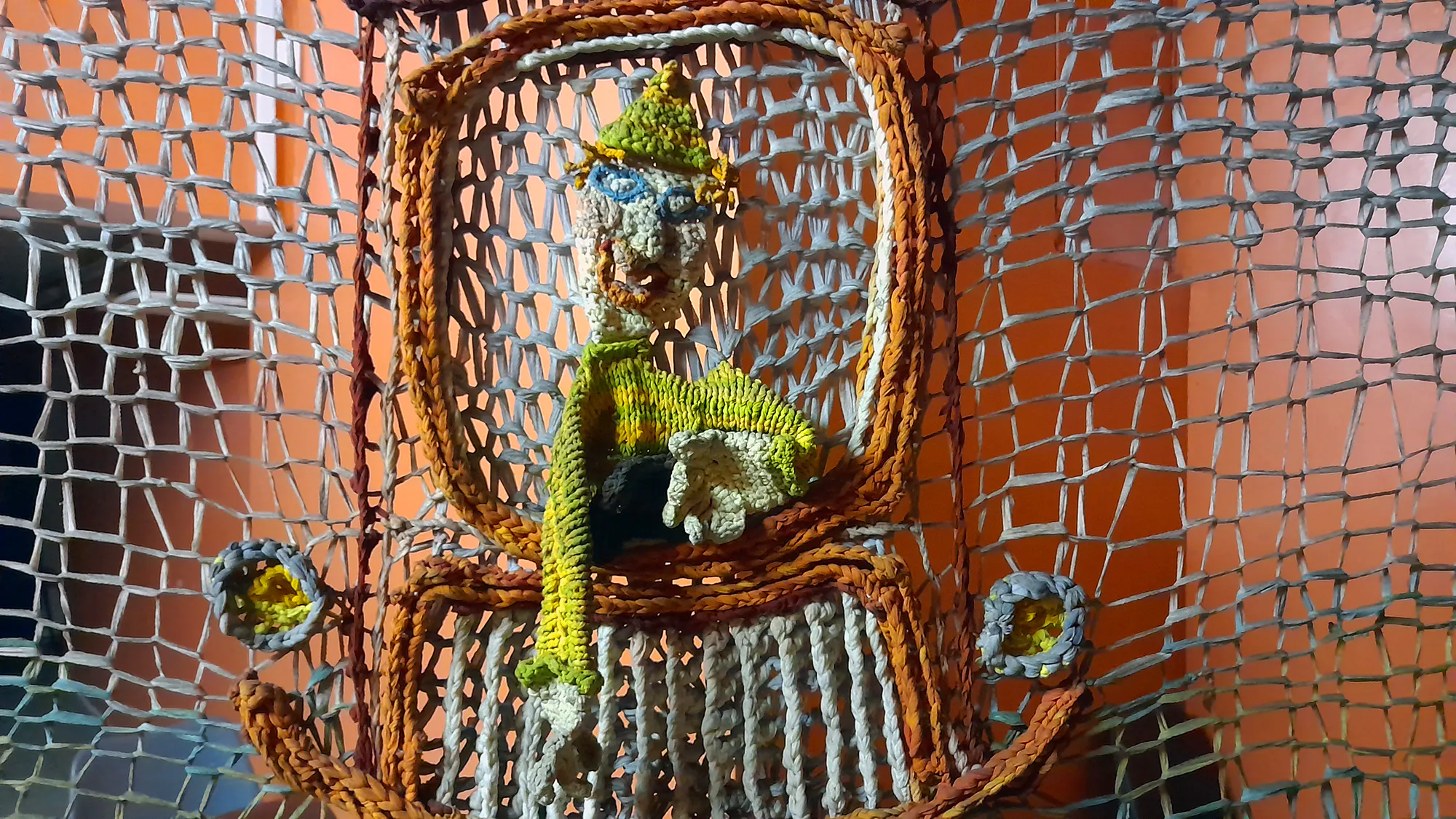
More public events included Jes Fernie and Michael Holly discussing Flemish artist Lily van Oost (1932–97), who from her studio in Kerry’s Black Valley produced an esoteric body of artworks evoking the intrinsic relationship between sculpture, inhabitation and nature. Alongside Amanda Rice’s new video The Flesh of Language, a van Oost sculpture unseen for decades and made for Bowler’s Garage in Killarney featured.
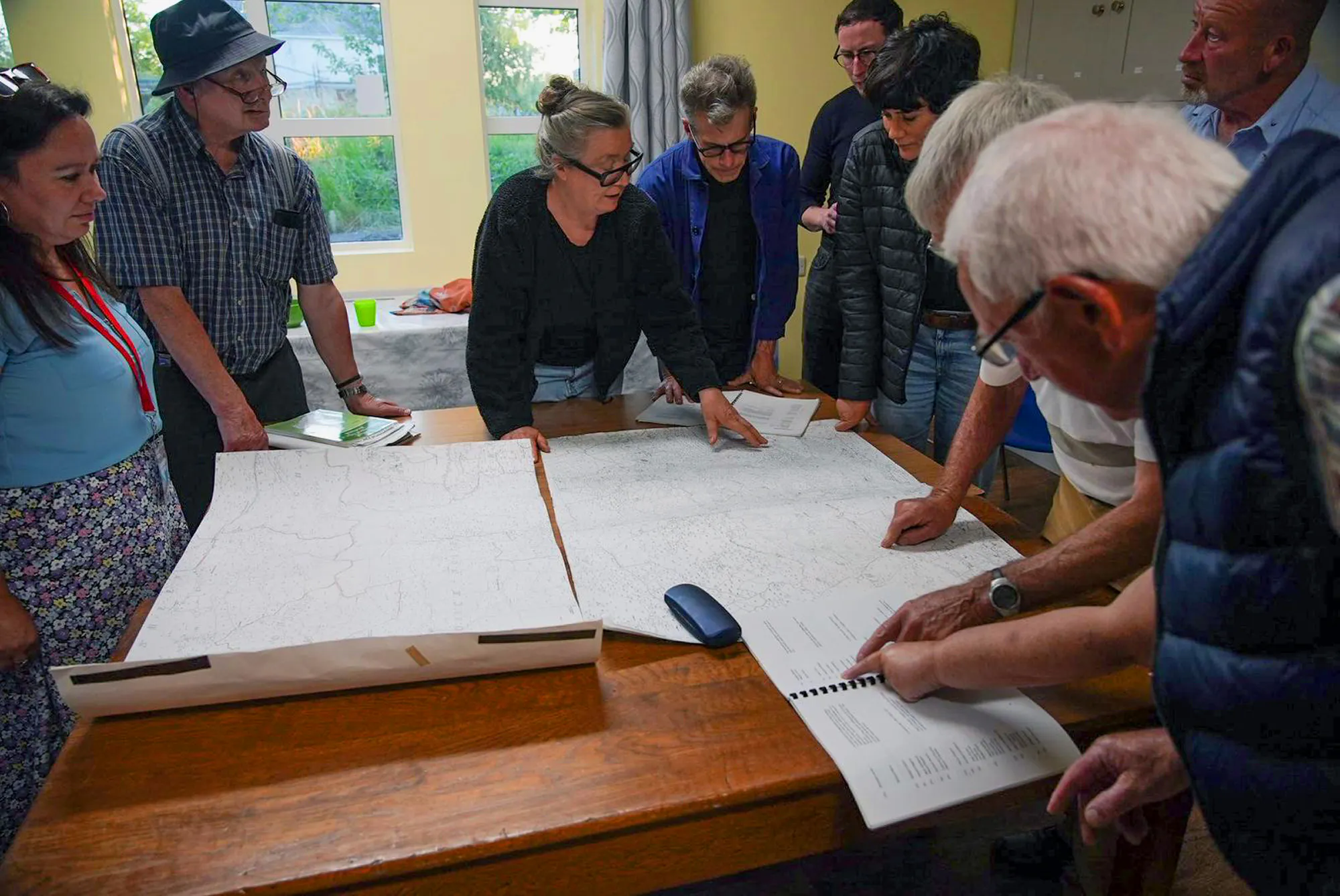
Jim Clarken, Kilnaboy Mapping Group and Deirdre O’Mahony
Jim Clarken, Commissioner at the Irish Human Rights and Equality Commission, CEO of Oxfam Ireland and an Executive Director of Oxfam International, presented his work over the last thirty years as a thought leader on global issues relating to human rights, inequality, sustainable development and the rights of refugees and migrants. We additionally welcomed artist Deirdre O’Mahony and members of the Kilnaboy Mapping Group. Since 2007, they have set out to revive the activity of dinnseanchas, a form of oral history that encompasses the knowledge of family, kinship place names and the stories, both mythical and factual, that they evoke. The practice is one that formed a significant part of community life until the early sixties and the arrival of television in rural Ireland. Since 2007 the group gather to name and trace the occupants, roads, paths and byways of their County Clare neighbourhood, and their dedicated research has substantially contributed to community mapping workshops throughout Ireland.