Welcome to the Neighbourhood 2024
Throughout June, Askeaton
Welcome to the Neighbourhood is an annual artist residency programme situating Irish and international artists in the midst of Askeaton life each summer, discovering new potentials of creative energy, the making of place and innovative ecological thinking. Since 2006, artists from around the world have been at the centre of the community investigating, uncovering and creating new understandings of our locale, evoking Askeaton’s reputation since medieval times of exchange, trade and place of cultural knowledge.
Santiago Borja
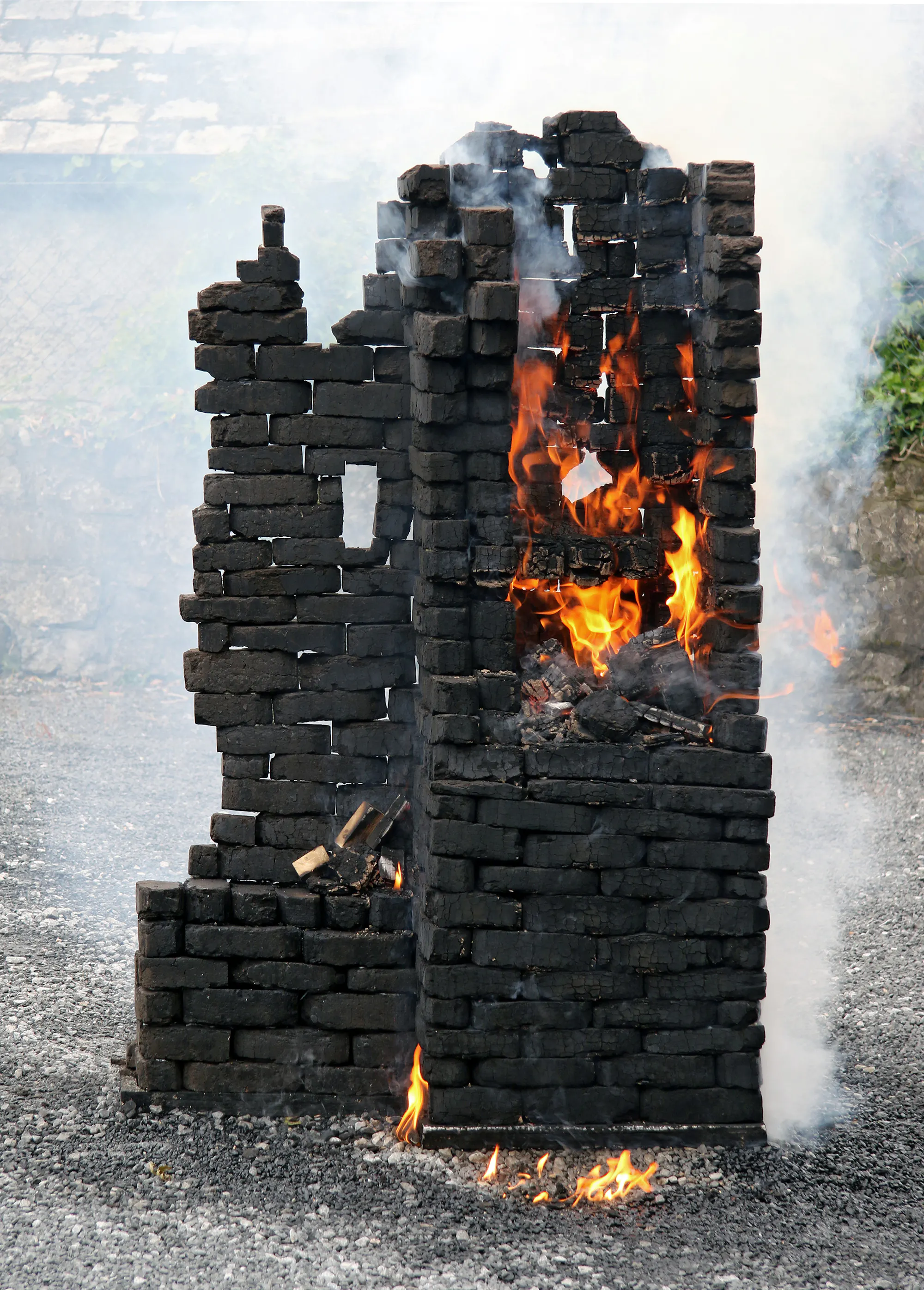
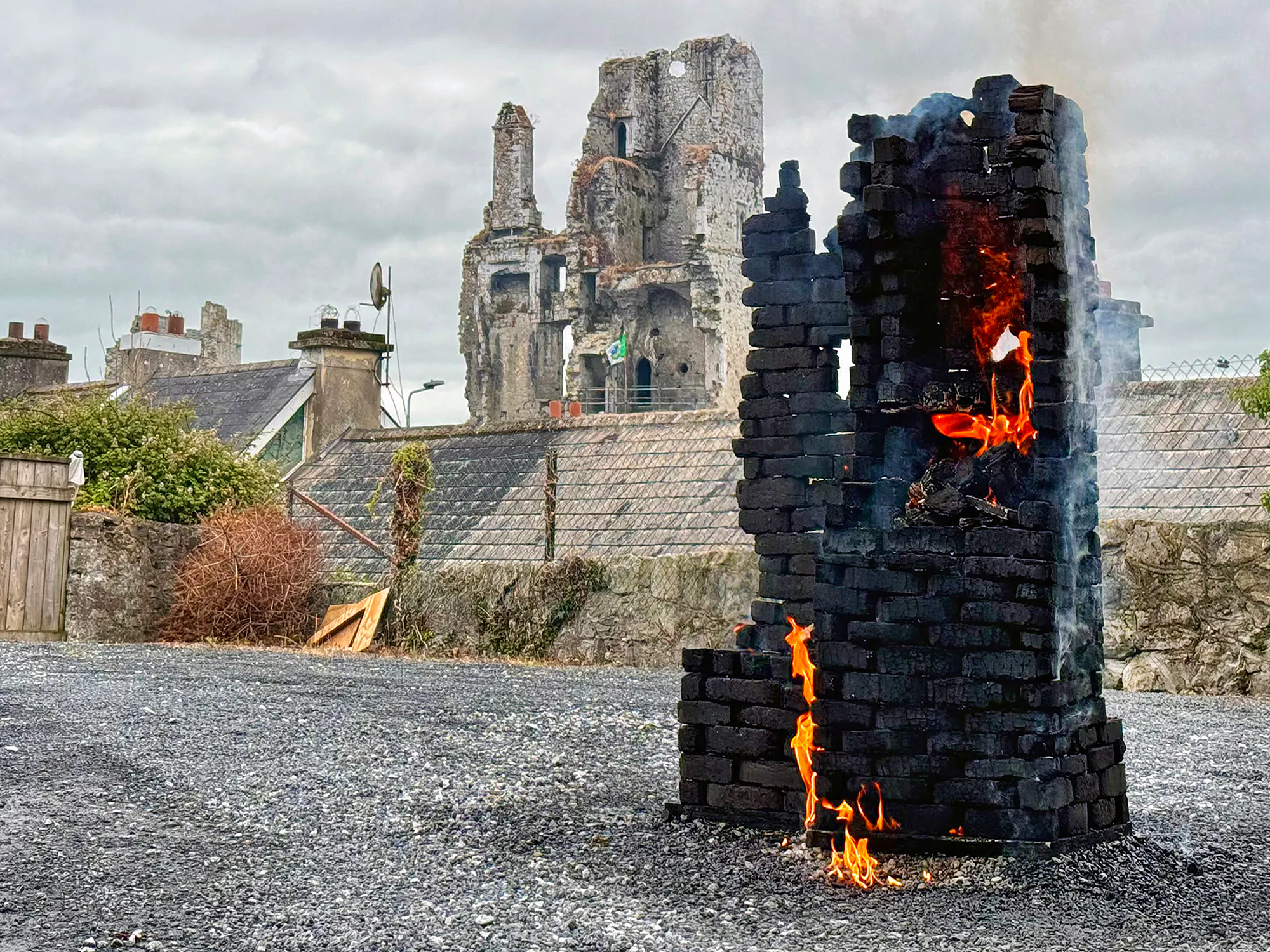
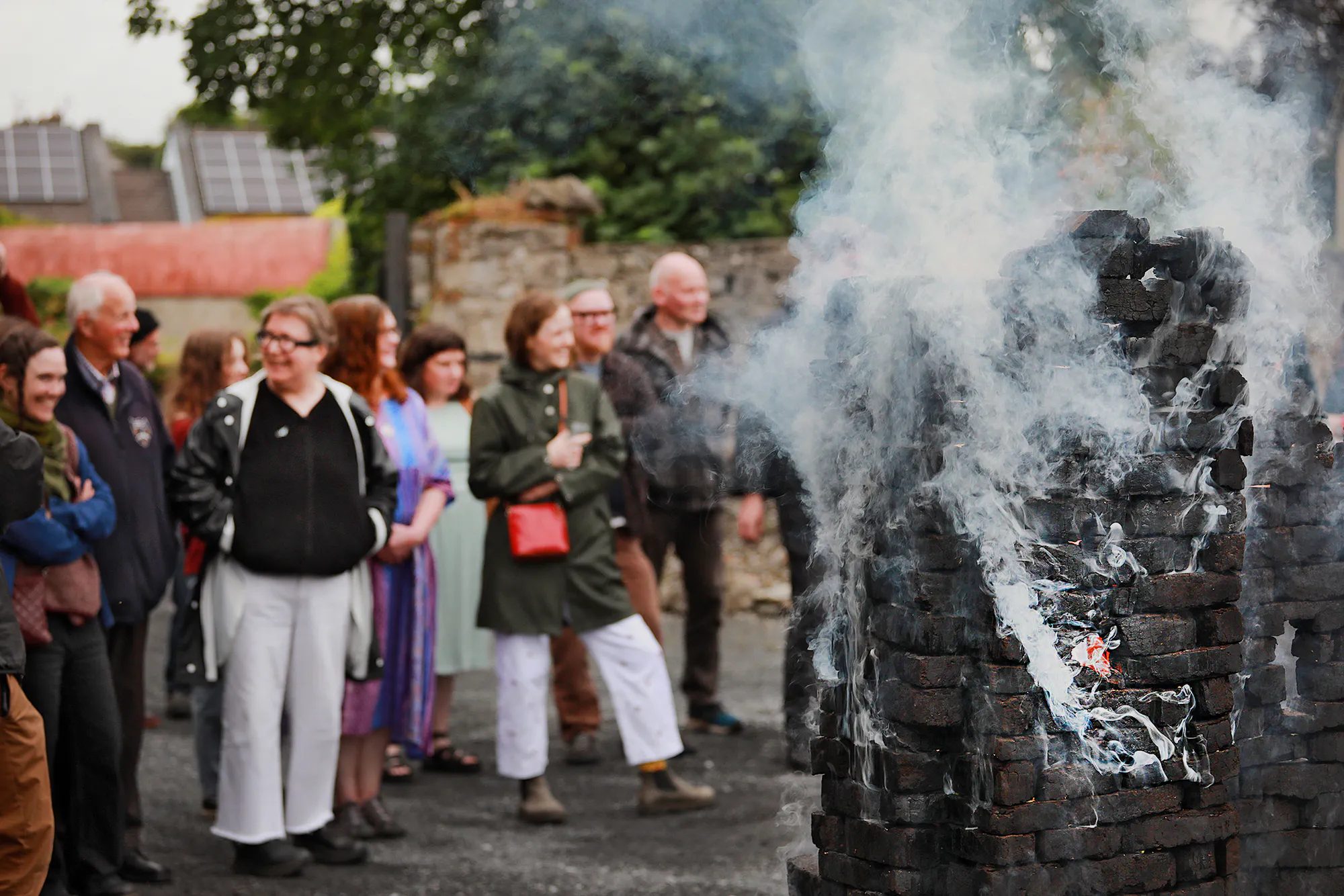
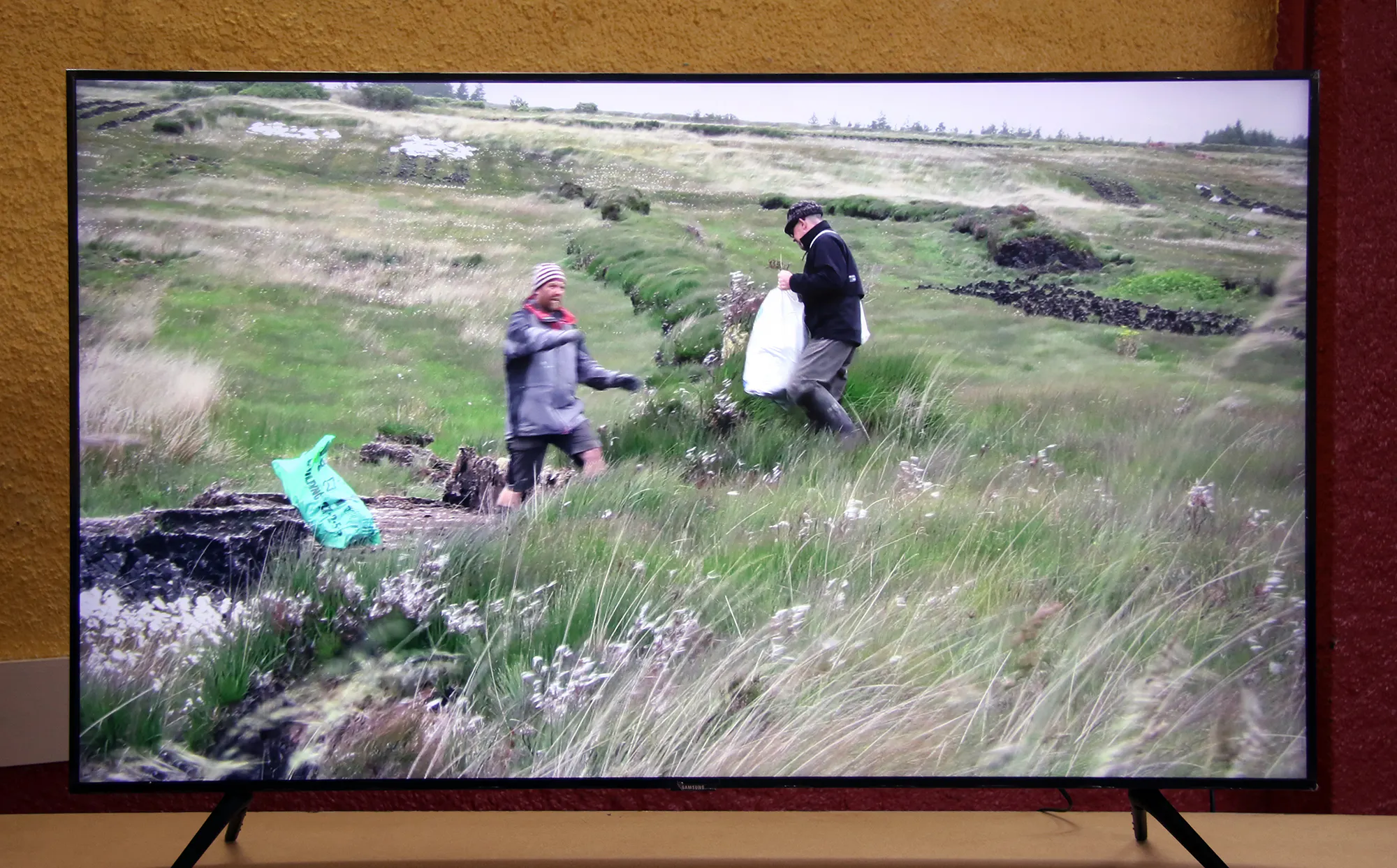
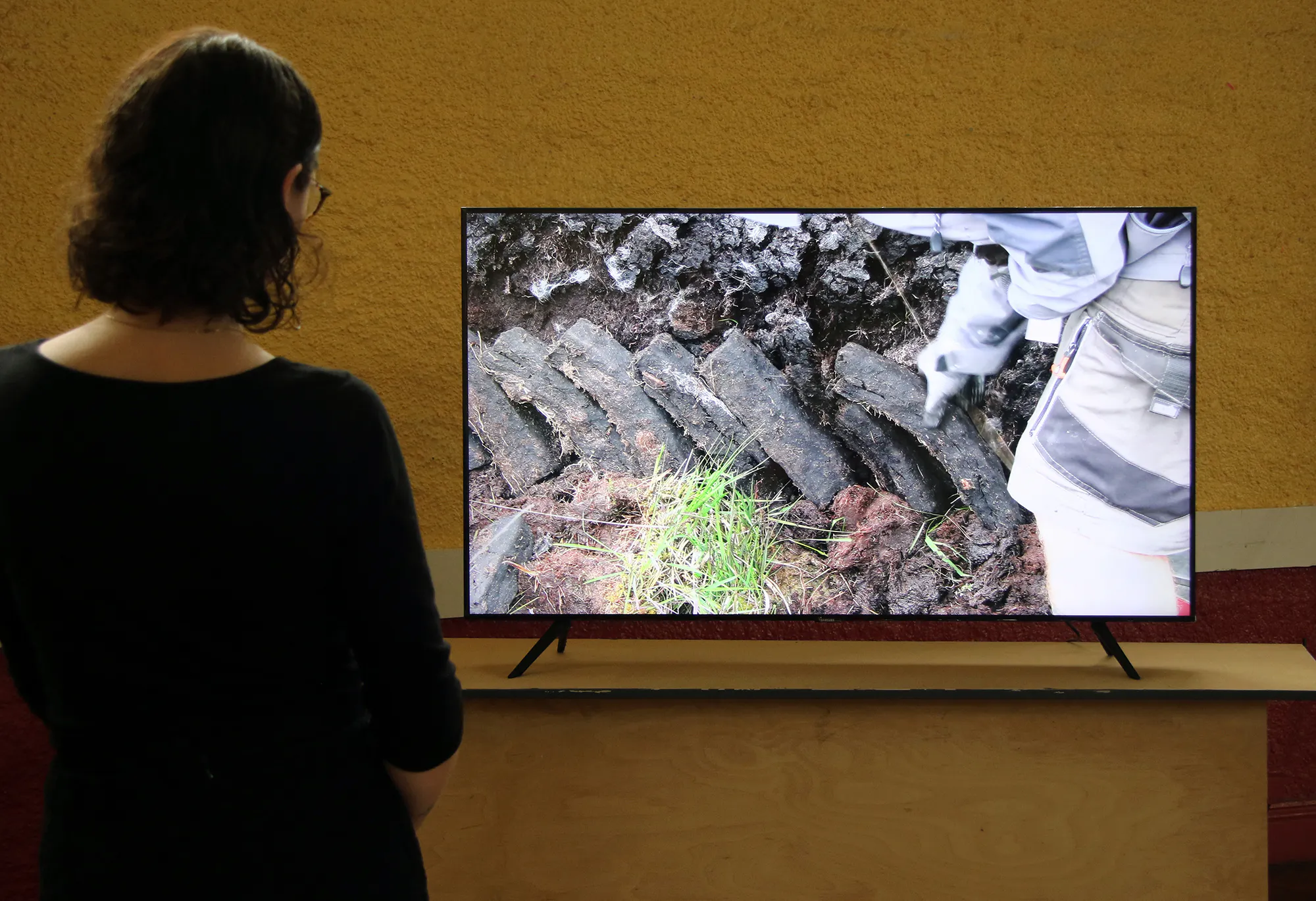
Making a journey from Mexico City, Santiago Borja’s artworks exist on the intersection of art, anthropology and architecture, creating installations and architectural interventions that blur cultural boundaries and contrast tradition with contemporary theory and design. A large sculpture based on the ruins of Askeaton’s medieval castle was created using peat briquettes, a fossil fuel now phased out in Ireland yet still imported into the country from Eastern Europe. As a comment on societal excess and akin to George Bataille’s theory of the ‘accursed share’, proposing that there is a portion of human energy and wealth that cannot be spent usefully, Borja’s sculpture was placed in a yard close to the castle and set on fire during the annual Welcome to the Neighbourhood open day. Additionally, working closely with the Griffin family in the Athea-Carrigkerry peatlands and captured on video, Borja took sods of turf already harvested from the bog and returned them back into the place they came from, creating a reversal of a very typical process of fuel extraction seen in Ireland.
David Beattie
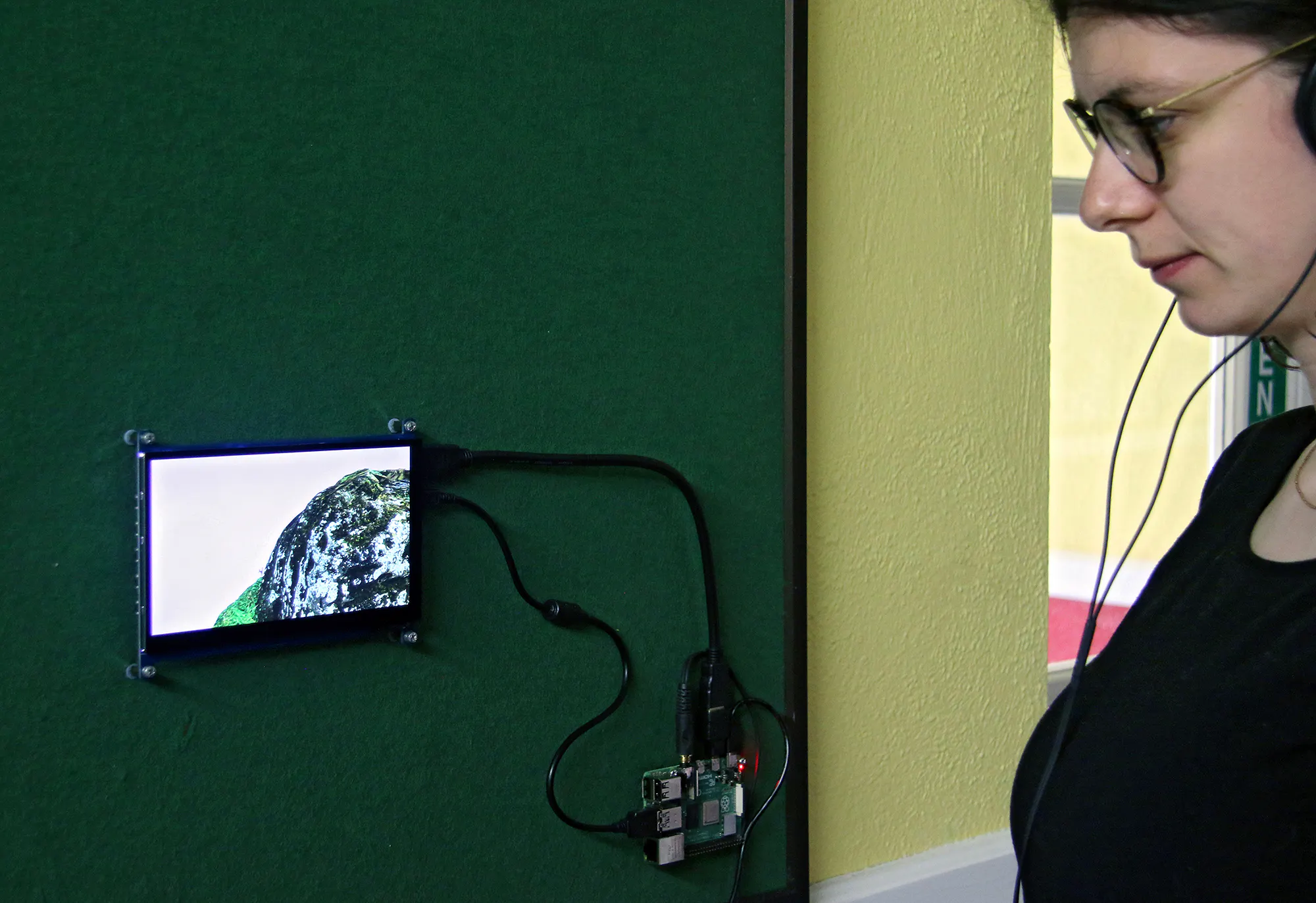
David Beattie’s Remnants, presented on a notice board in Askeaton Community Hall, examining mythology, folklore and oral history in the age of digital reproduction and algorithmic narratives. Beattie conducted extensive fieldwork around sites of ancient ritual at nearby Grange stone circle. In navigating the resulting 3D digital scan, an accompanying story about the site generated by AI continually interrupts, resets and changes, seemingly unable to grasp the extent and richness of the world we live in.
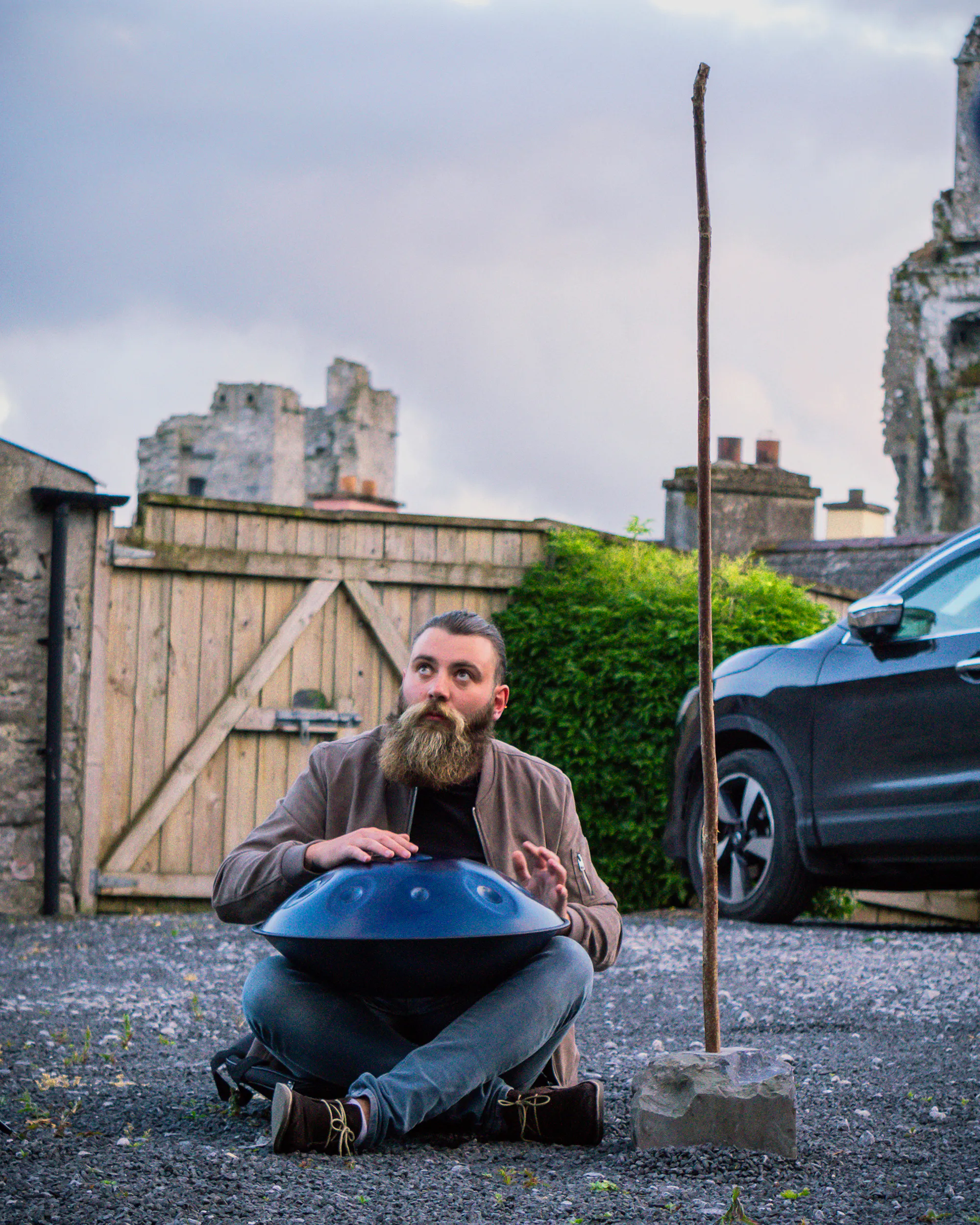
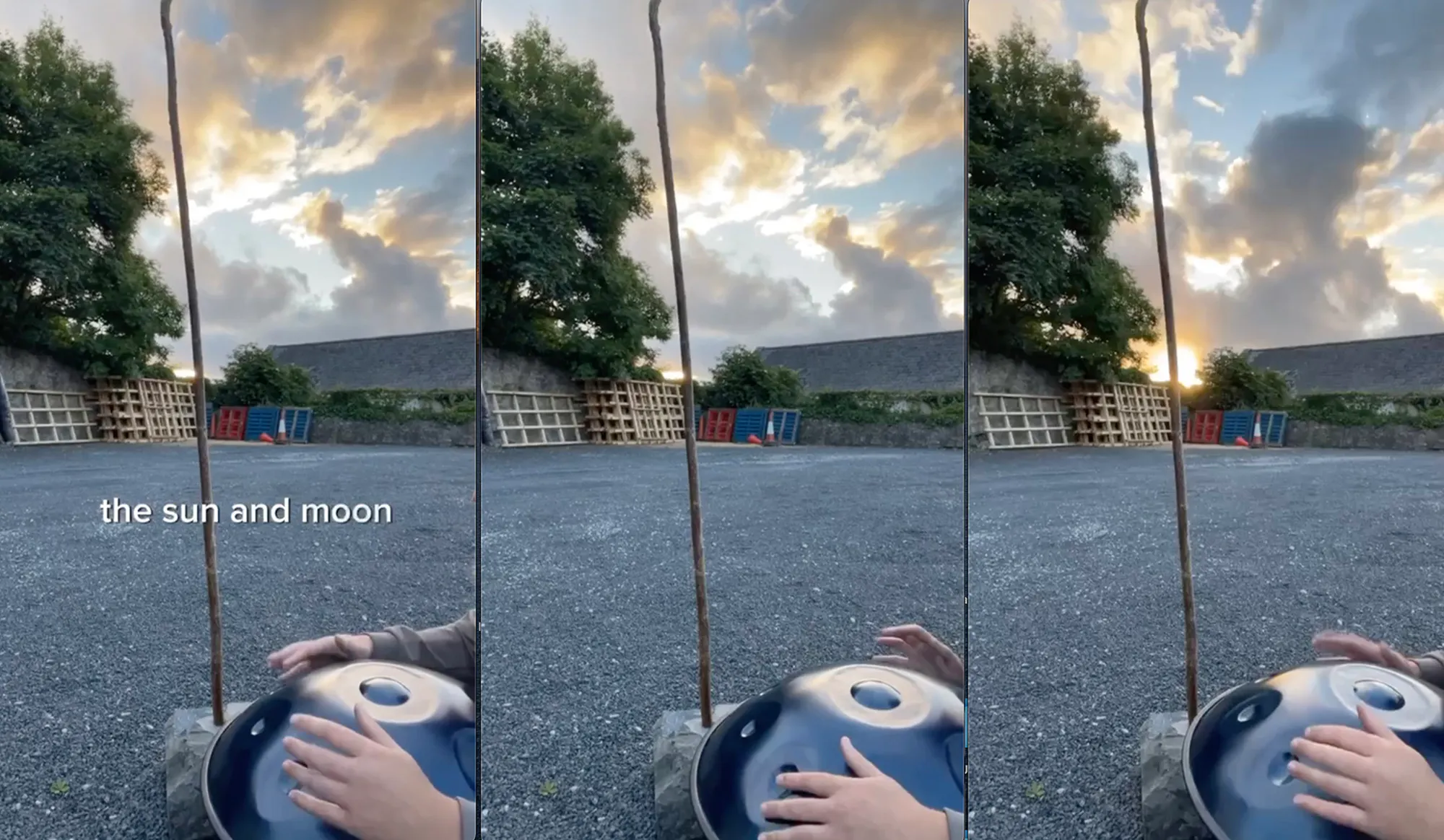
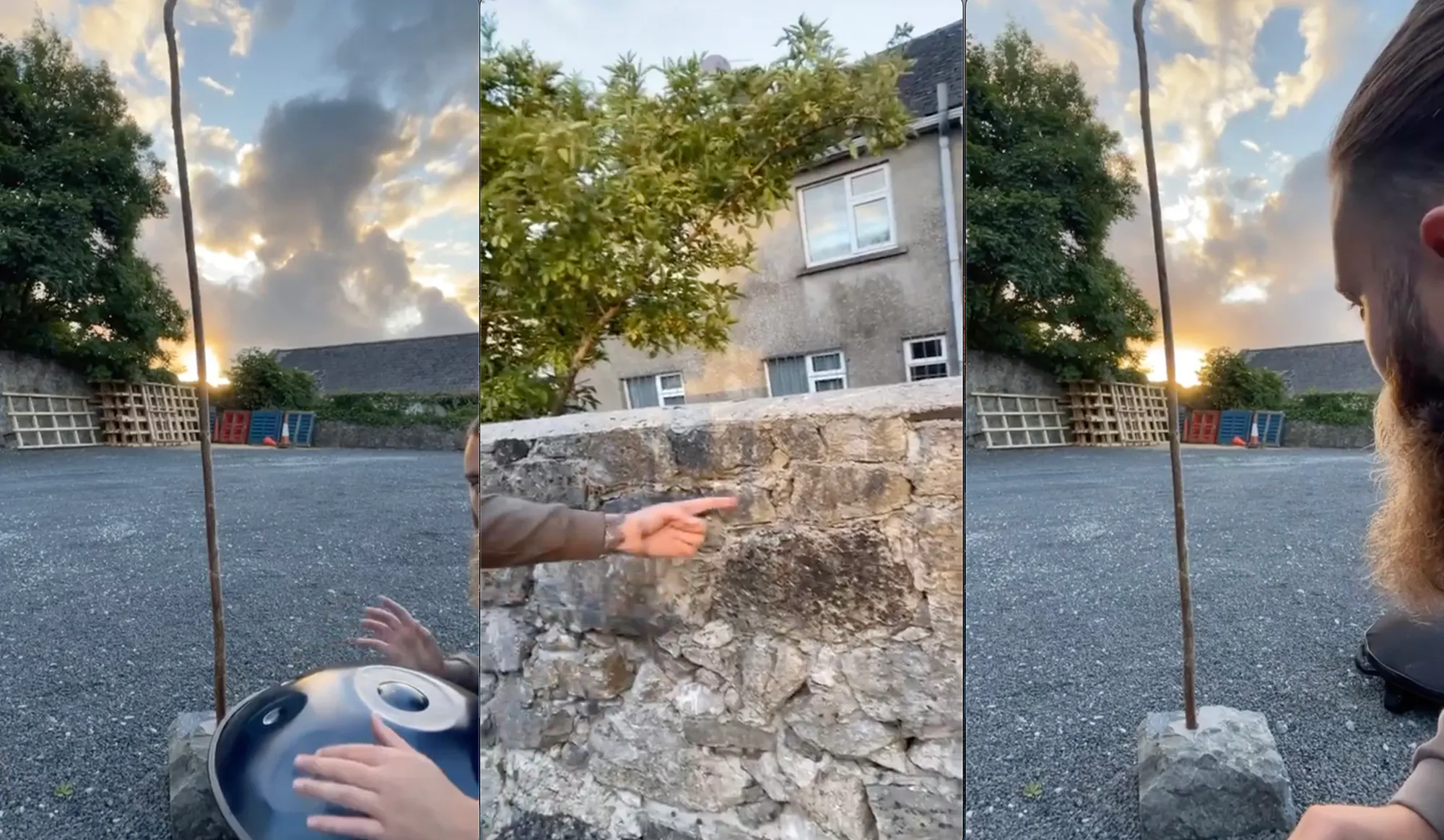
Remnants also reimagines Askeaton itself – a stone and wooden marker was positioned at a points of solar alignment in Askeaton, encouraging everyone to seek out moments of midsummer evening reflection. Accompanied by Bobbo the Bard’s hand pan melodies and poetry vibed from the cosmos and land, social media feeds carried the event far and wide across the globe.
Robin Price
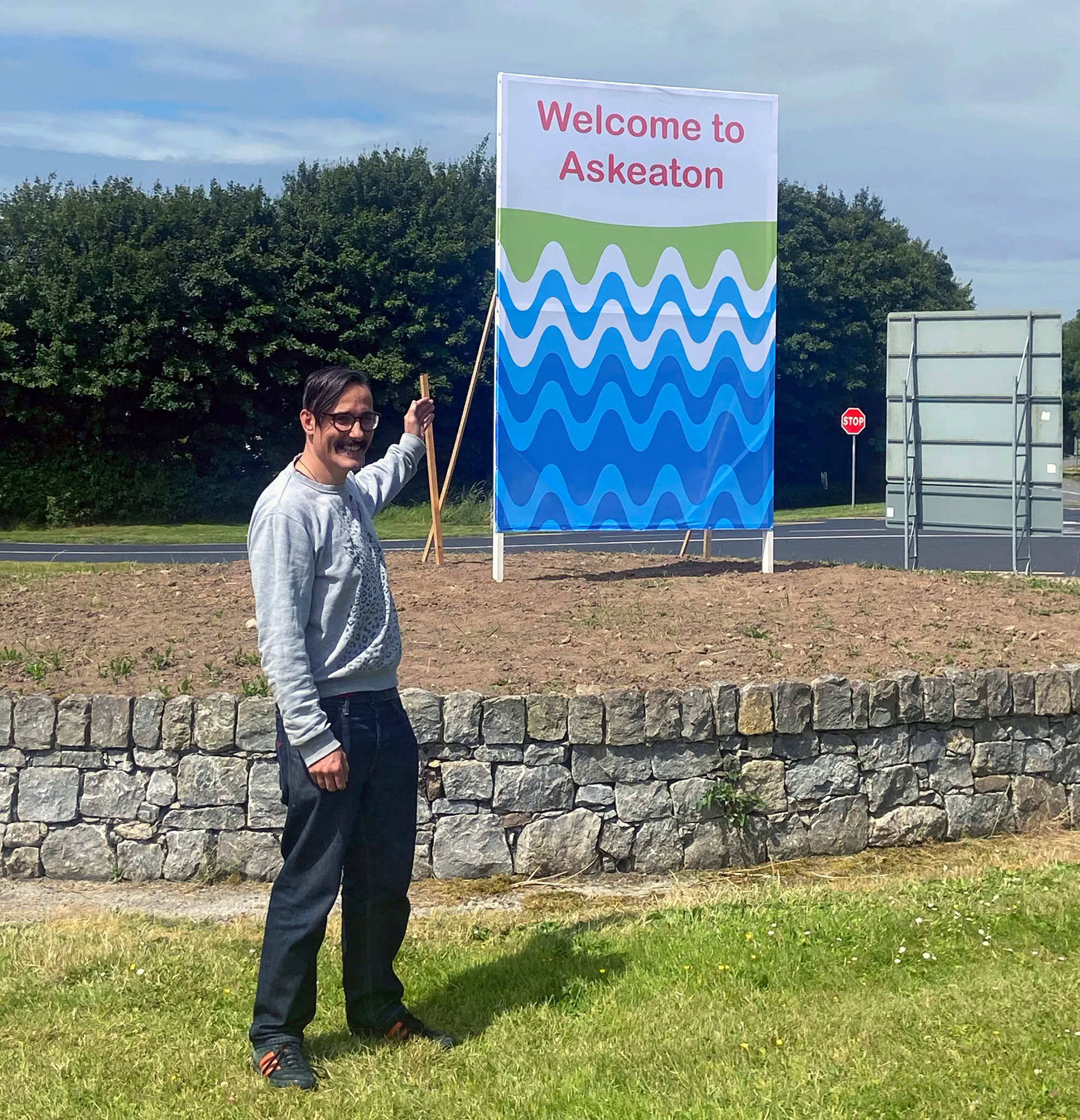
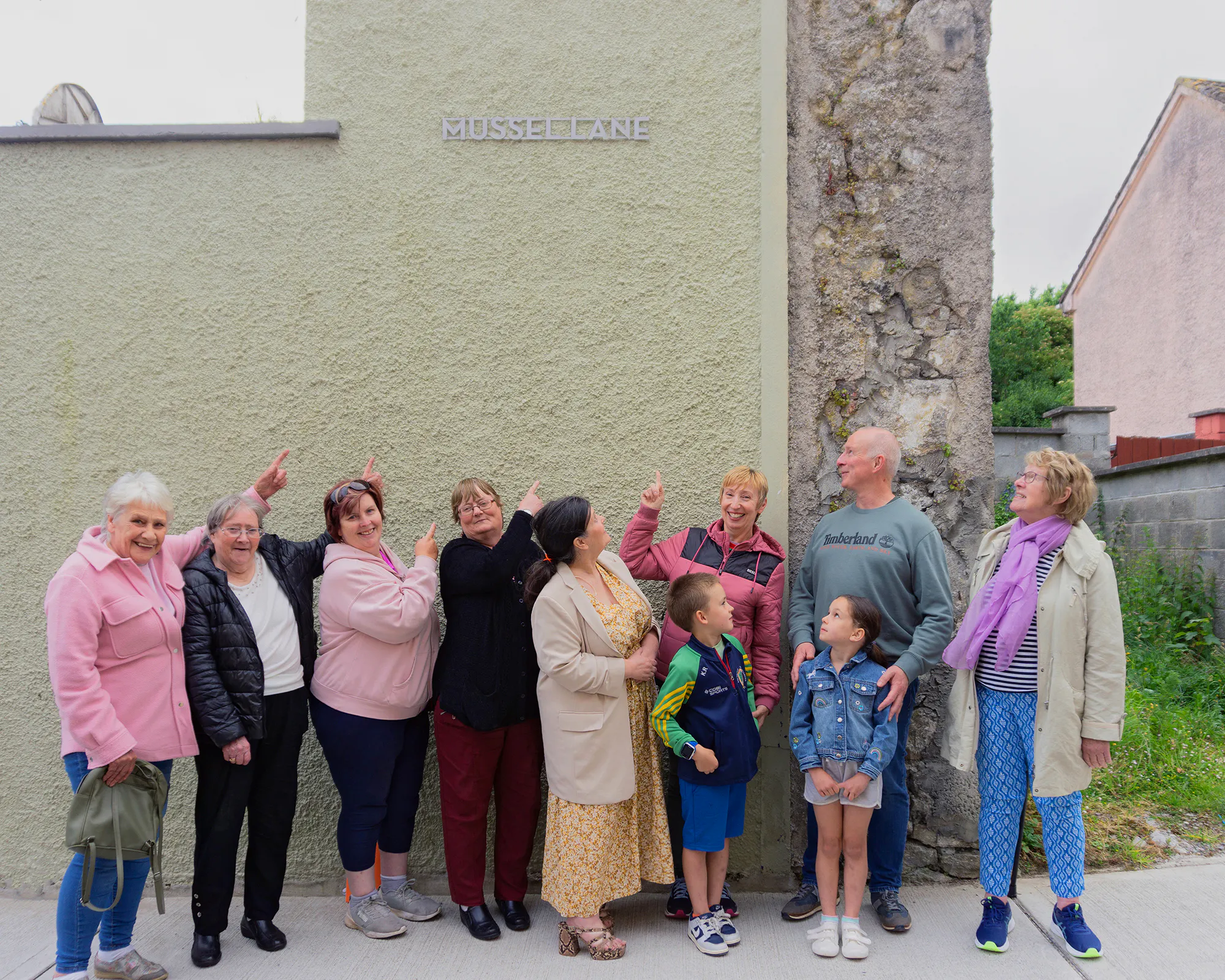
Artist Robin Price continues to work alongside Askeaton’s award winning TidyTowns group, finding new ways of merging the queries of contemporary art with the busy activities of the annual village and town improvement competition. In summer 2024, he organised the ceremonial unveiling of a new bespoke street sign for Askeaton. For many years Mussel Lane has had no marker denoting its presence in the middle of the town, despite its important location as part of Askeaton’s once rich fishing industry and maritime history, subjects now to be remembered and valued on the corner of Brian Collins bookmakers. On the N69 road into Askeaton, another new sign for the town was created, with its beguiling graphic wave forms taking inspiration from the nearby Deel River, an important special area of conservation.
Jan McCullough
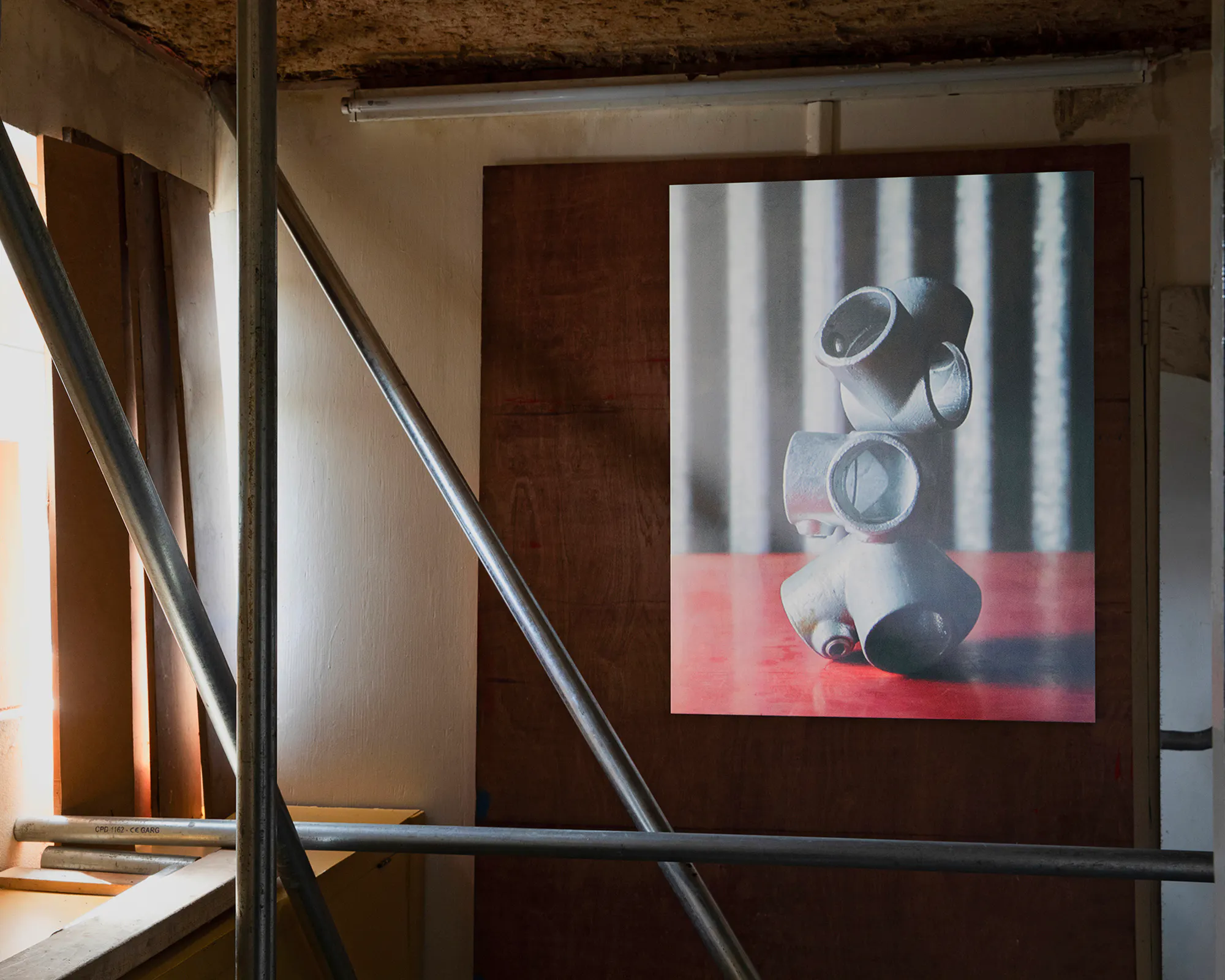
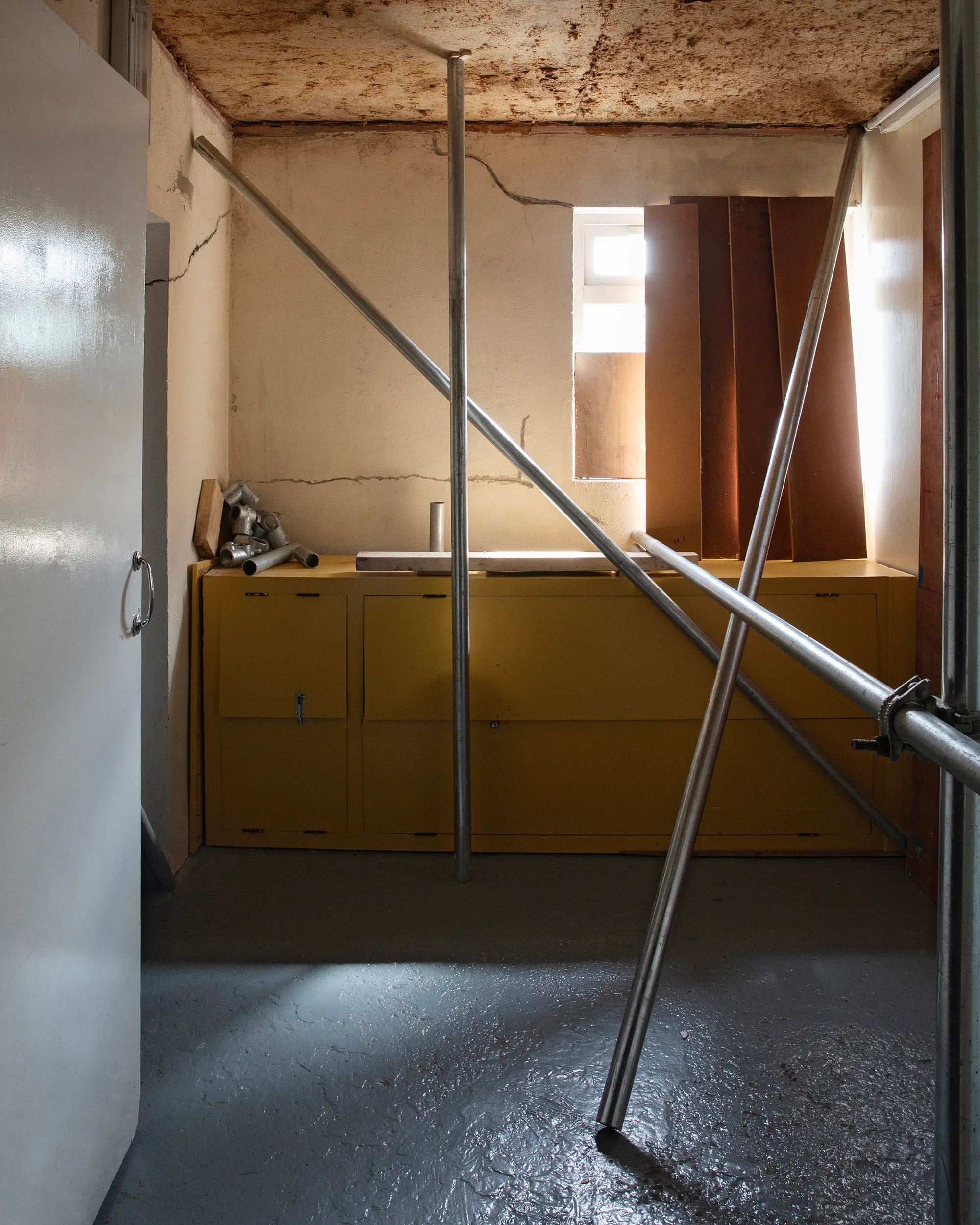
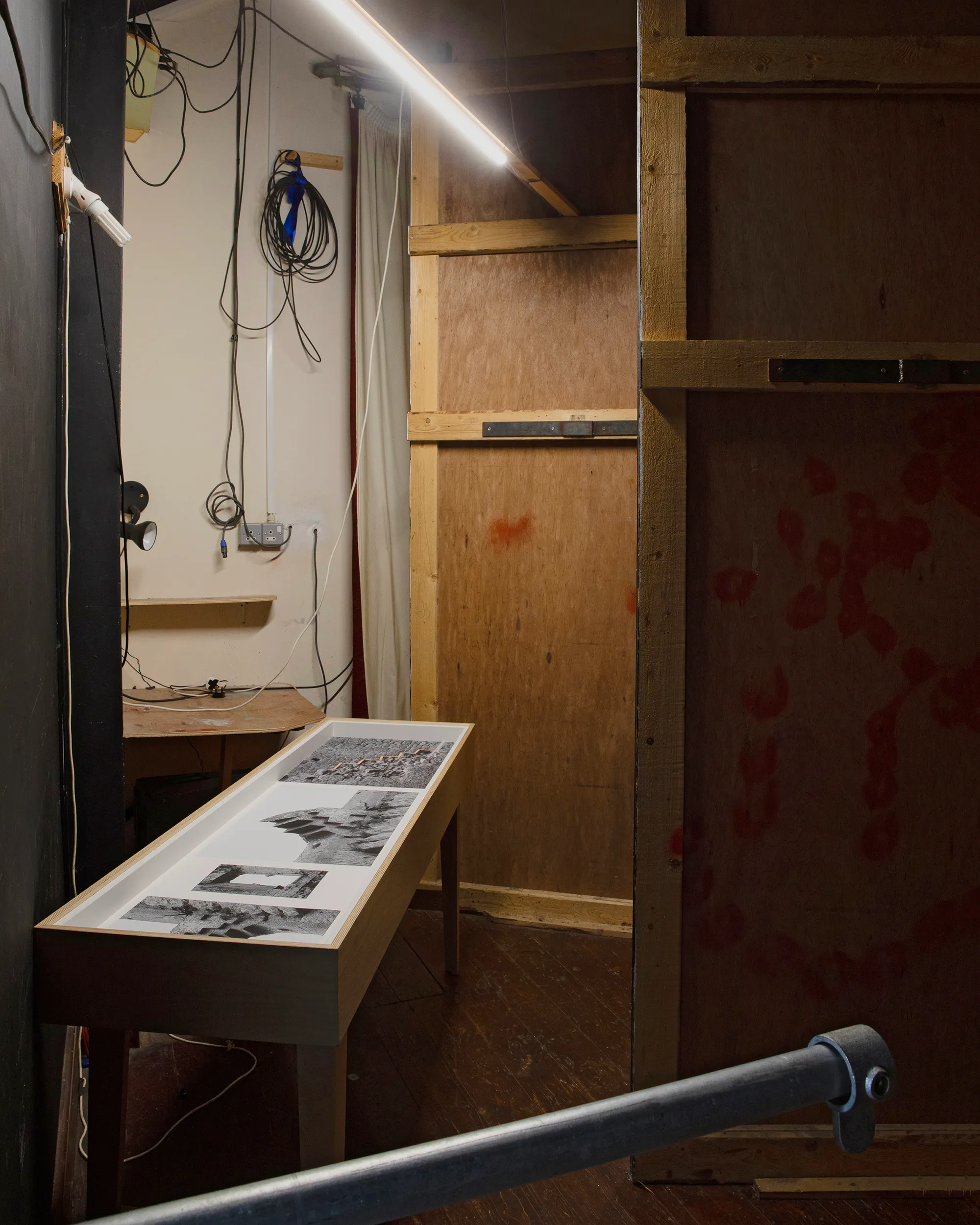
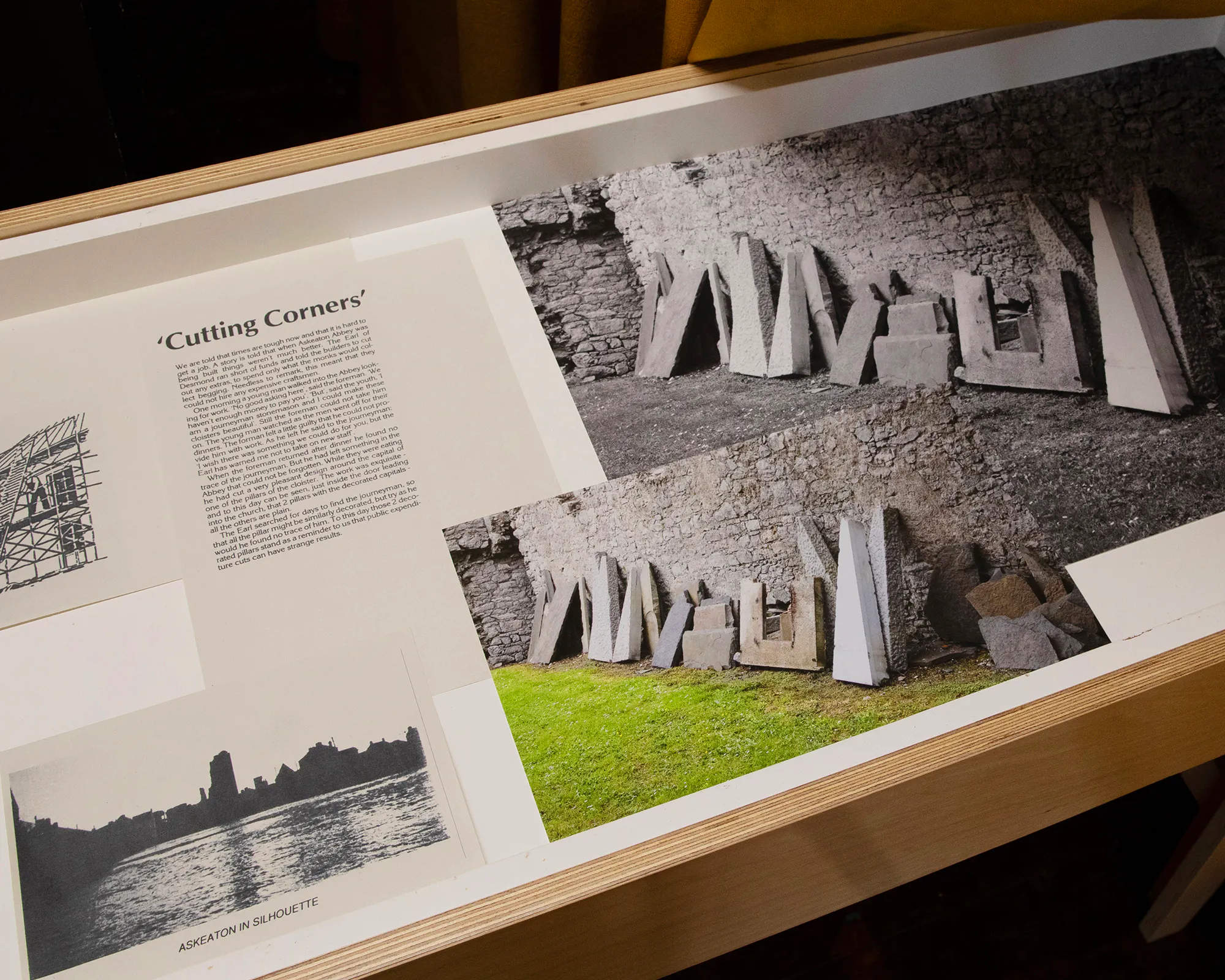
Jan McCullough is known for her investigations of acts of construction, fabrication and DIY, and the communities of interest and places that form around them. Backstage at Askeaton Community Hall, display cases of her fieldwork photography pointed to examples of unplanned and improvised architecture around Limerick, while a scaffold structure led into another room where immaculately-executed images of various building site fittings and configurations were projected.
Frank Wasser
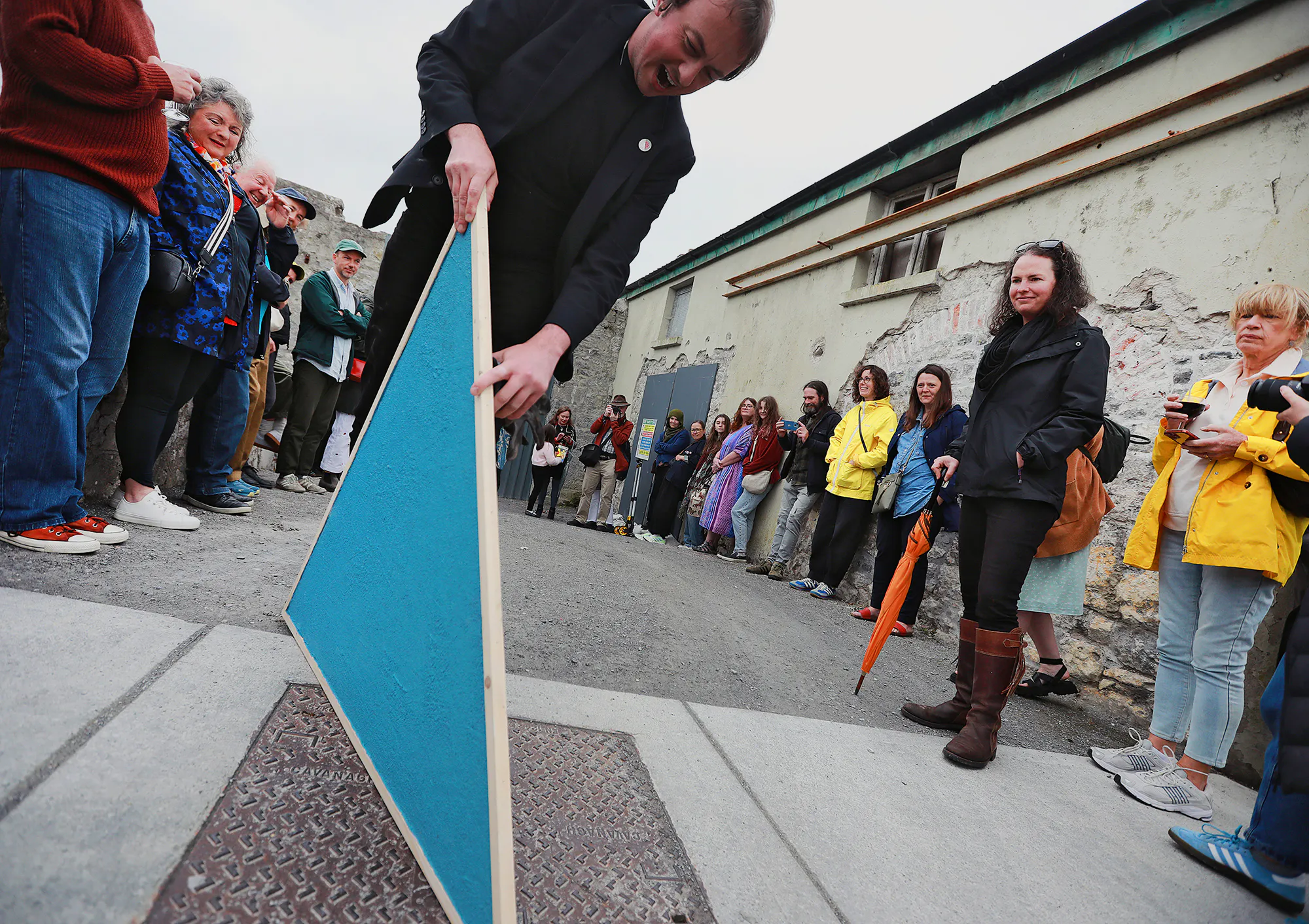
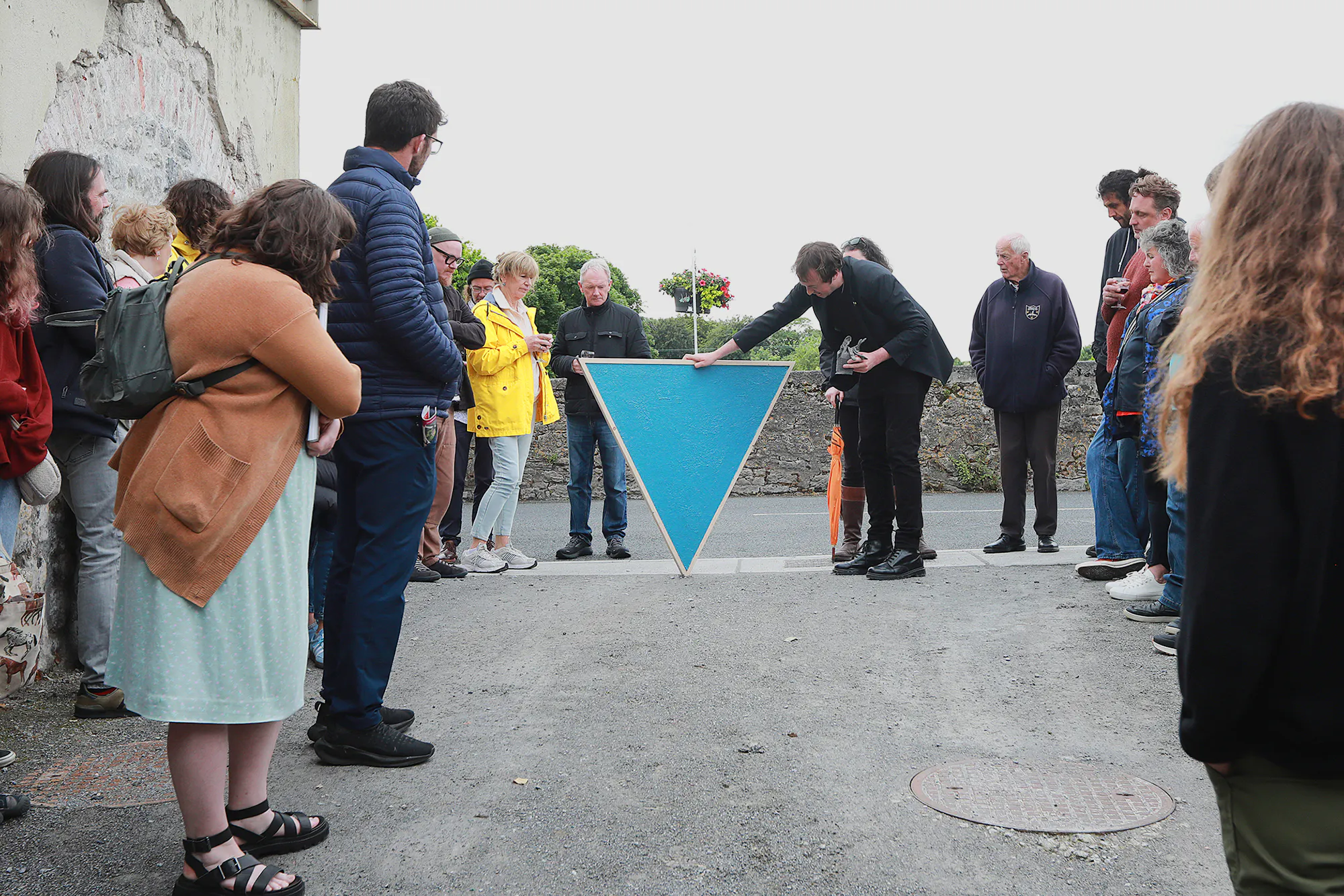
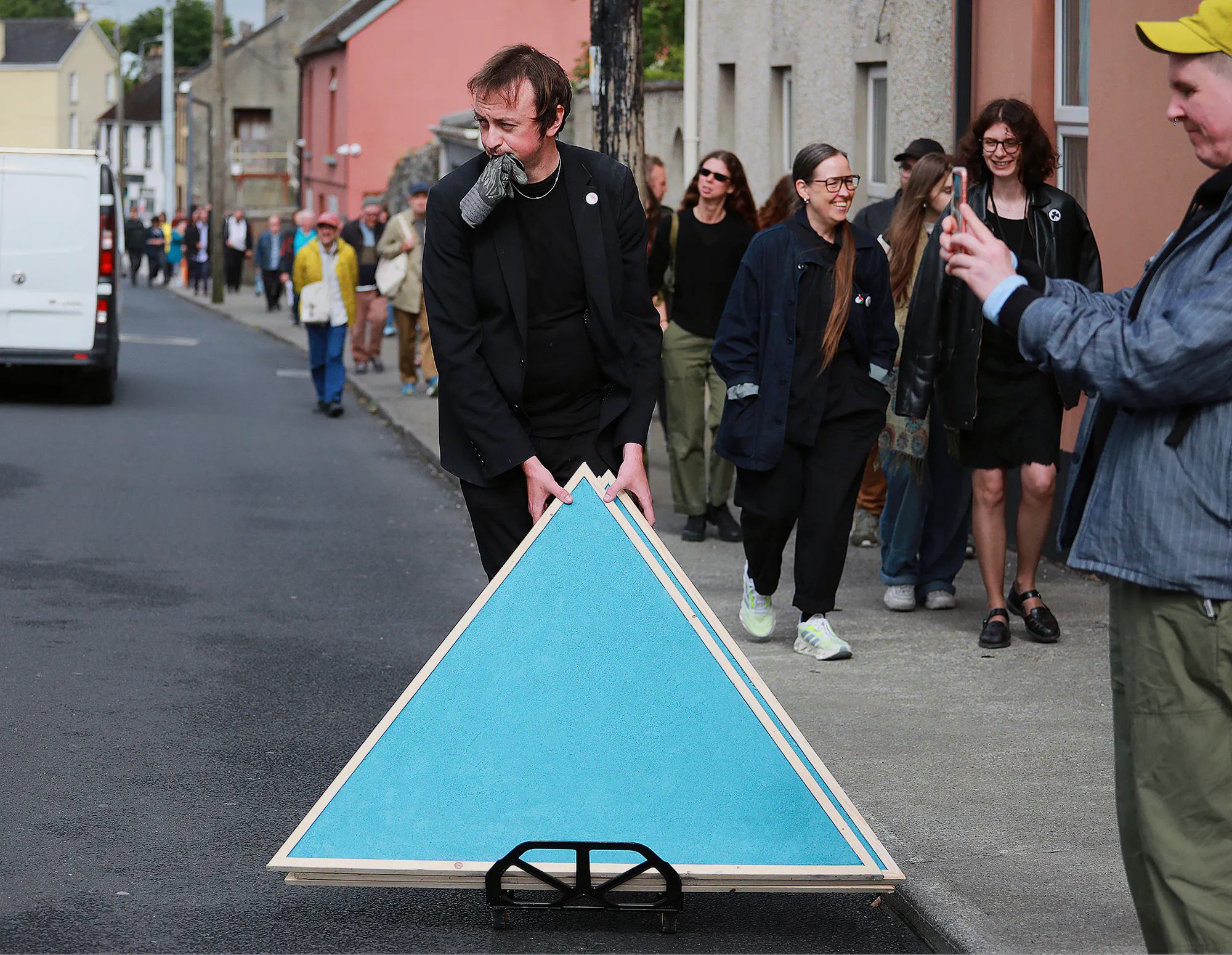
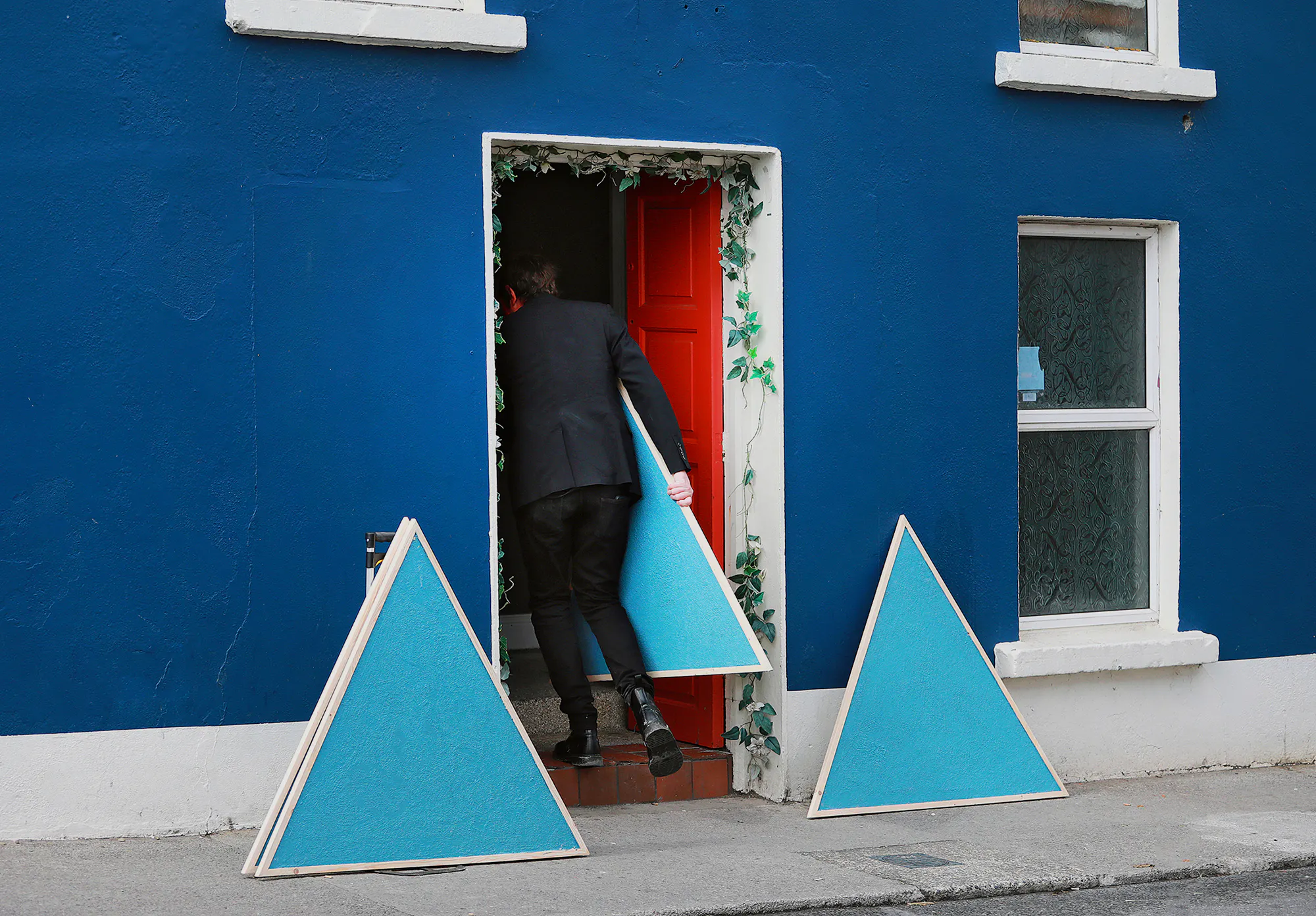
Frank Wasser’s explorations of contemporary storytelling ask questions of and challenge conventional notions about authorship, authority and social structures. At Welcome to the Neighbourhood he took on the role of a Pied Piper as he held performances around the town, accompanied by a number of heavy triangular shapes, each made with a hardwearing pebbledash render finish. Moving in and around these sculptures effectively created a form of mobile architecture to muse upon, from where Wasser presented a spoken script and stream of consciousness reflective of his recollections, encounters of his time in Askeaton.
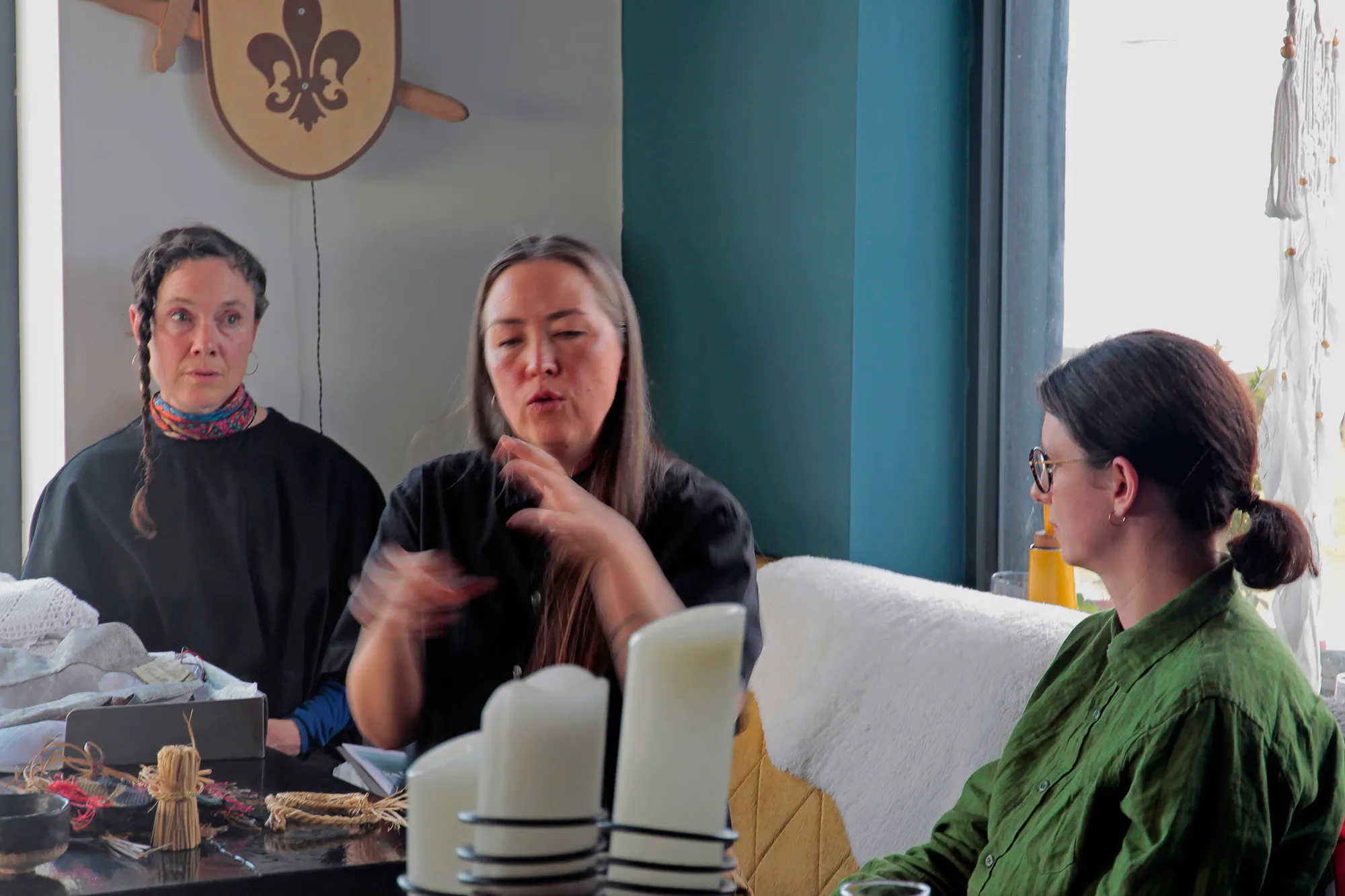
An active programme of tours, film screenings and conversations are a key element of every Welcome To The Neighbourhood. More events included an evening by the Shannon Estuary at Ballysteen Pier, with ACA PUBLIC editor Niamh Moriarty in presenting the artists of an upcoming publication on textiles and art. Mice Hell presented elements of History of Costume in Ireland, illustrating clothing worn from prehistoric times to the modern era and demonstrating how conflict, famine, settlement and resistance have shaped the way people have dressed throughout eras. Tara Baoth Mooney explores the life of clothing in family history, environmental and liberation, while Emily Waszak’s sculptural weavings of found and natural materials open up understandings of the weight of ritual and find new ways to communicate and experience grief.