Operating Manual For Spaceship Earth
6 September–1 November 2019
Irish Architectural Archive & Askeaton Contemporary Arts
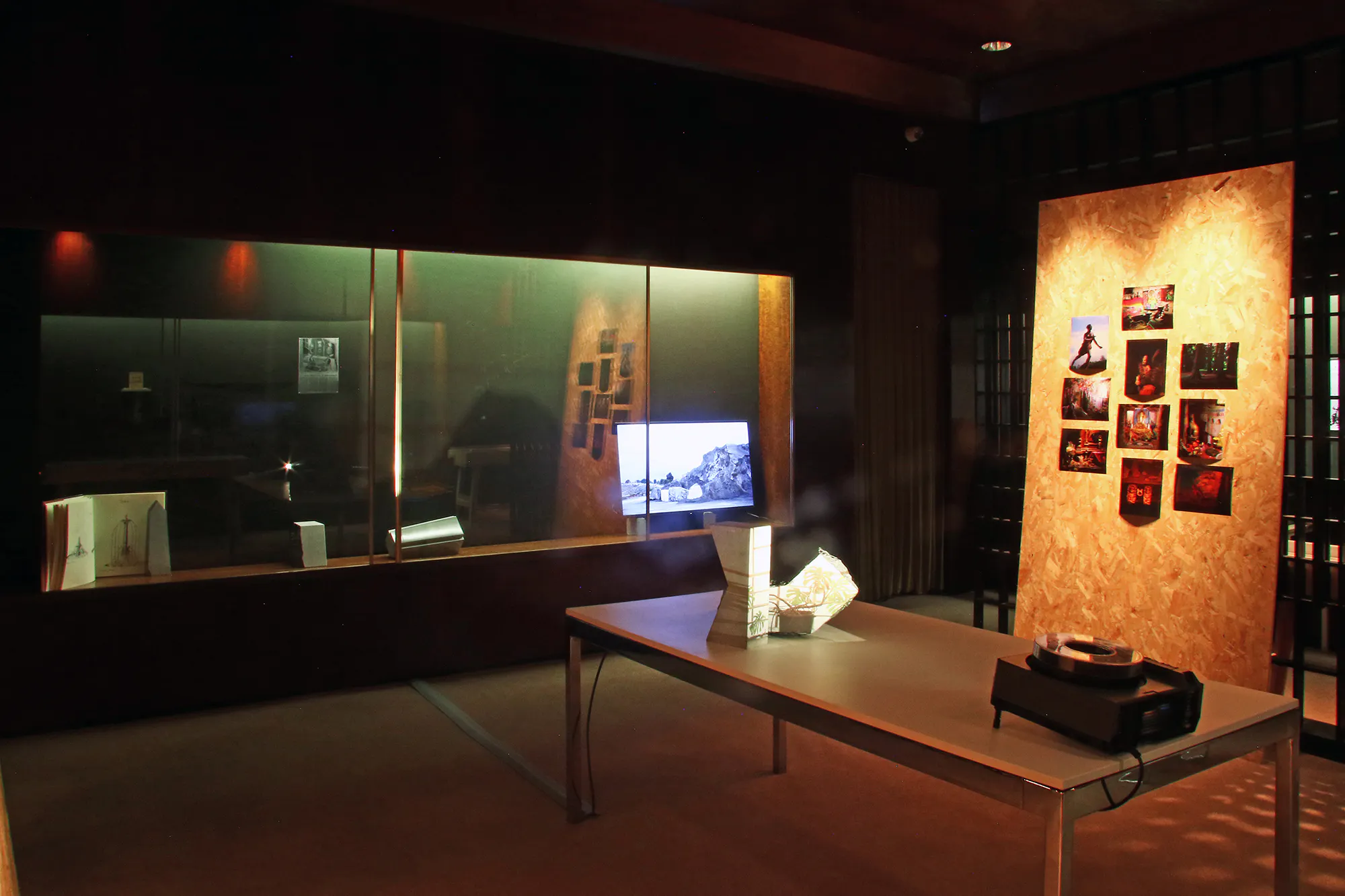
Gleaning its title from visionary architect R. Buckminster Fuller’s 1968 book, Operating Manual For Spaceship Earth debuted new commissions by Patrick Hough and Fiona Marron, inaugural artists-in-residence with Askeaton Contemporary Arts at the Irish Architectural Archive in Dublin, alongside key artworks by John Carson and Stuart Whipps.
The artists presented here and the three-million-plus items the IAA holds are of unknowable dimensions – full of adventure, surprising and unexpected encounters. Akin to Buckminster Fuller’s idea of an operating manual for humanity itself, they advocate us to unhinge our inquisitiveness, and search for progressive forms of knowledge. In this context, the notion of the built environment and architecture falls away from principles of foundation and stone, structure and surface. It becomes a malleable, erratic subject and an expressive ideology at play.
Patrick Hough
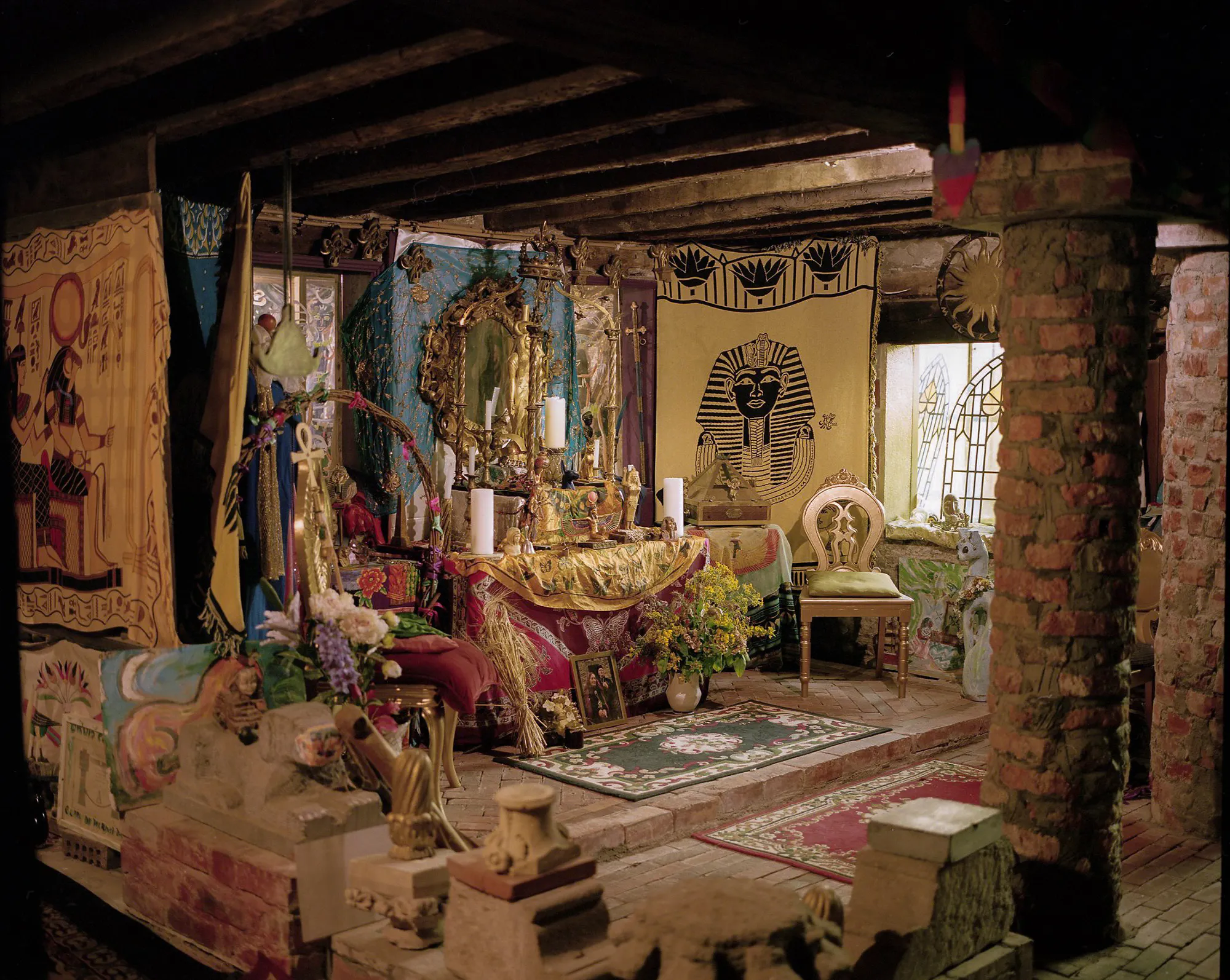
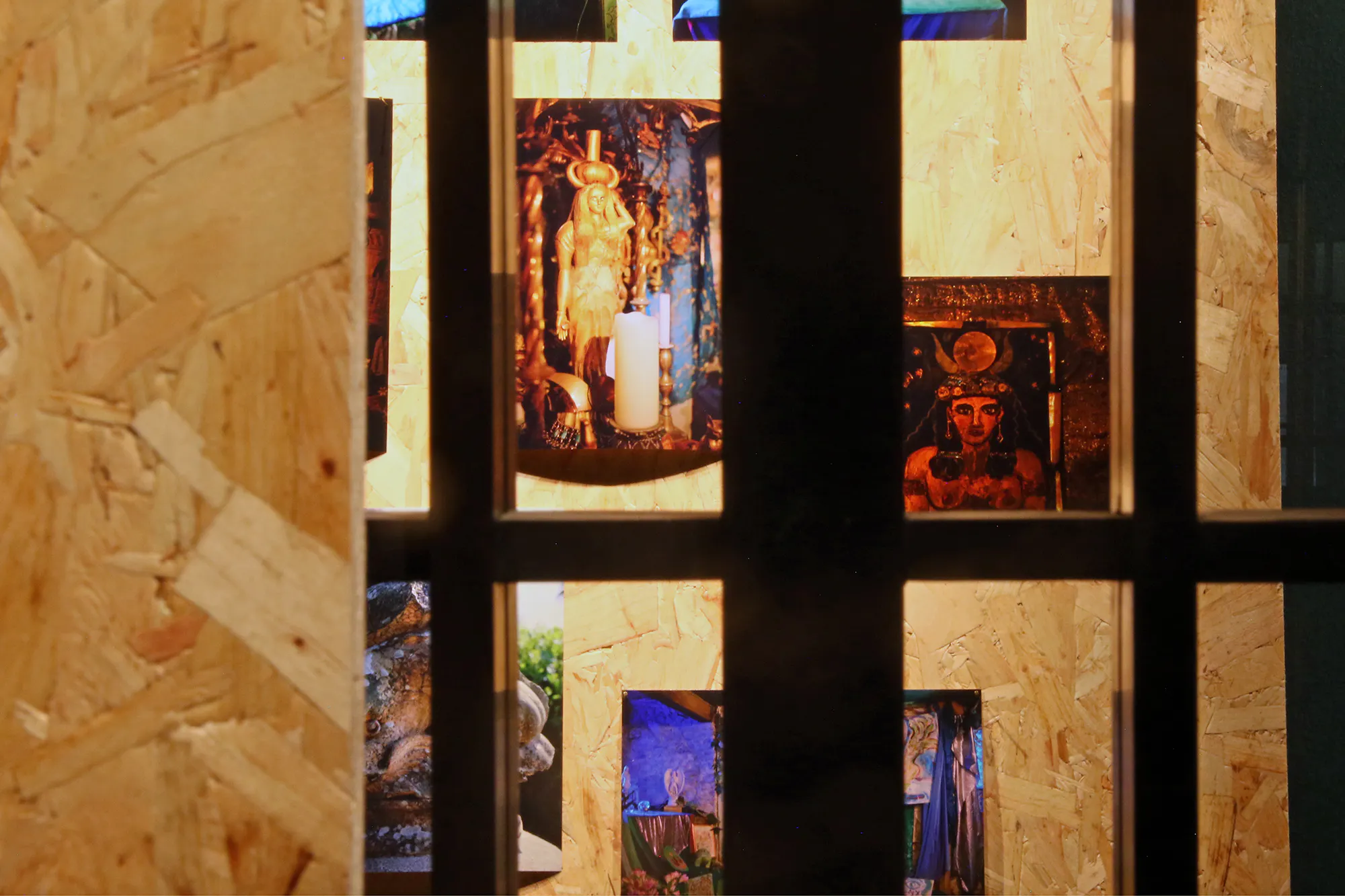
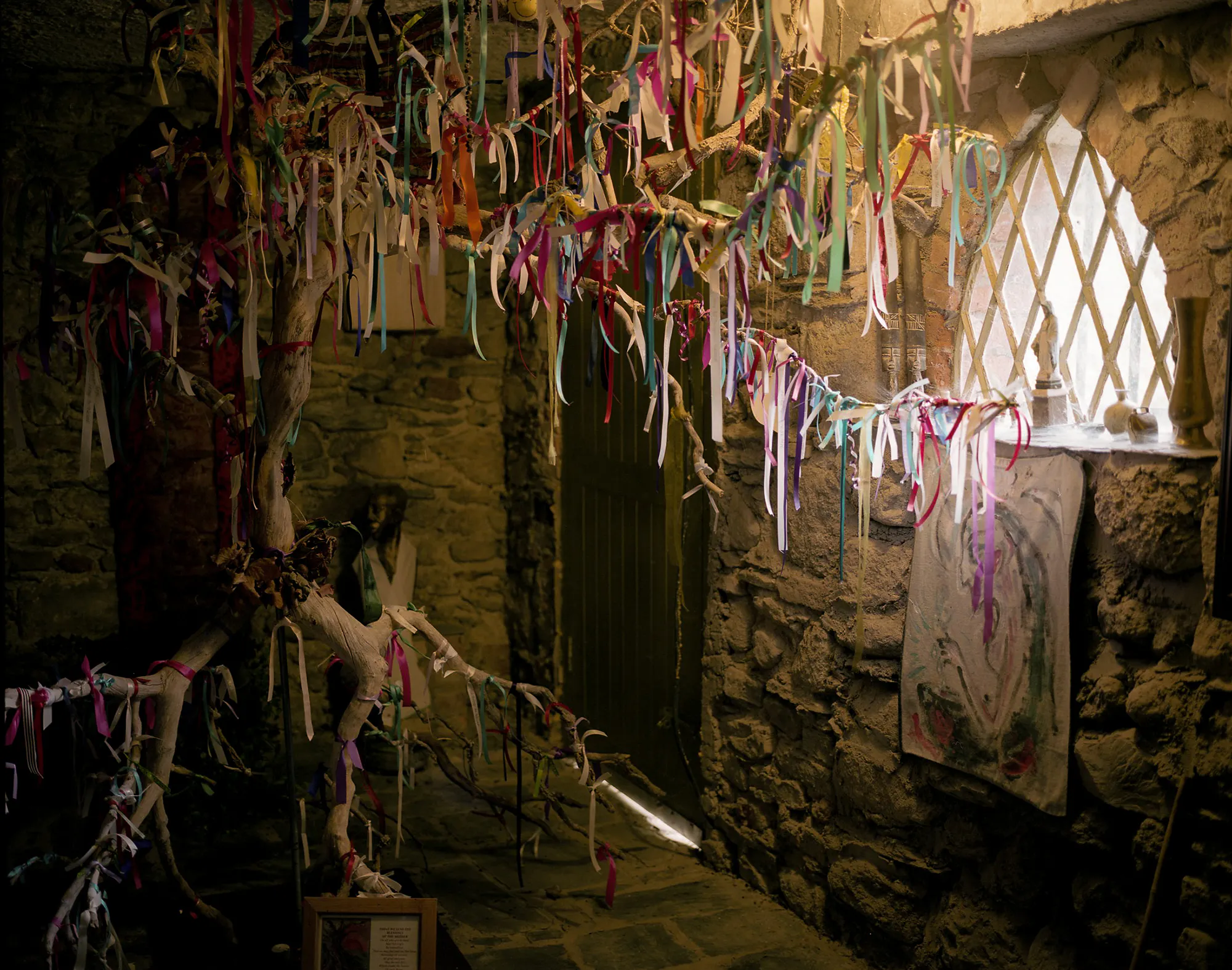
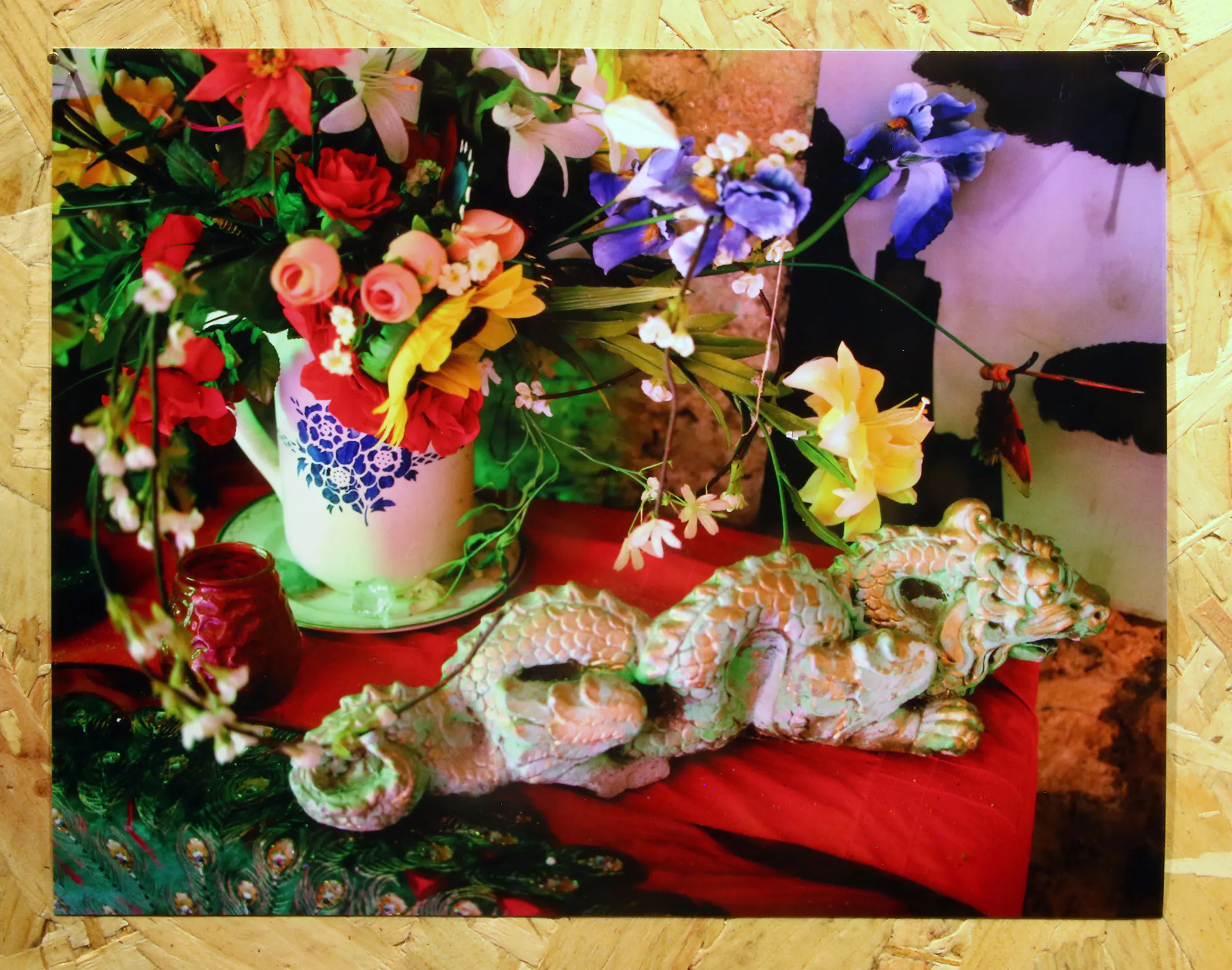
Patrick Hough’s research led him to the Fellowship of Isis, a neo-pagan religious organisation founded in 1976 in Carlow to revive worship of the ancient Egyptian goddess Isis and to promote more general knowledge of matriarchal deities. His photographs carefully unveil the temple’s kaleidoscopic worldview, and are paired with a selection of archived newspaper articles reporting the fellowship’s activities over the years. Hough’s sensibilities disavow any dogmatic presumptions of cult-like rites and sacrifice, and reveal the fellowship as symbolically diverse, eccentrically aware of nature as something to be revered and conserved.
Fiona Marron
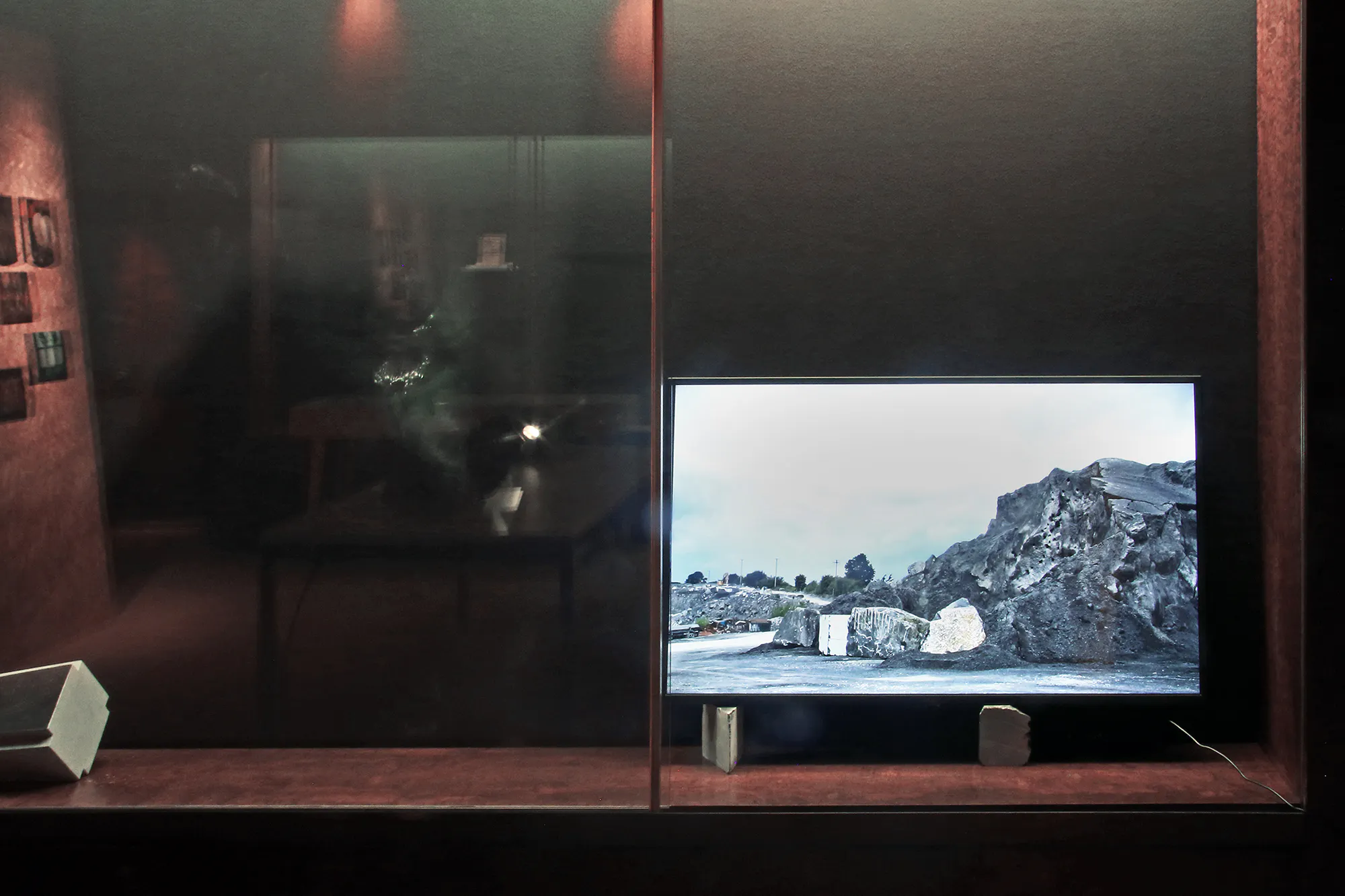
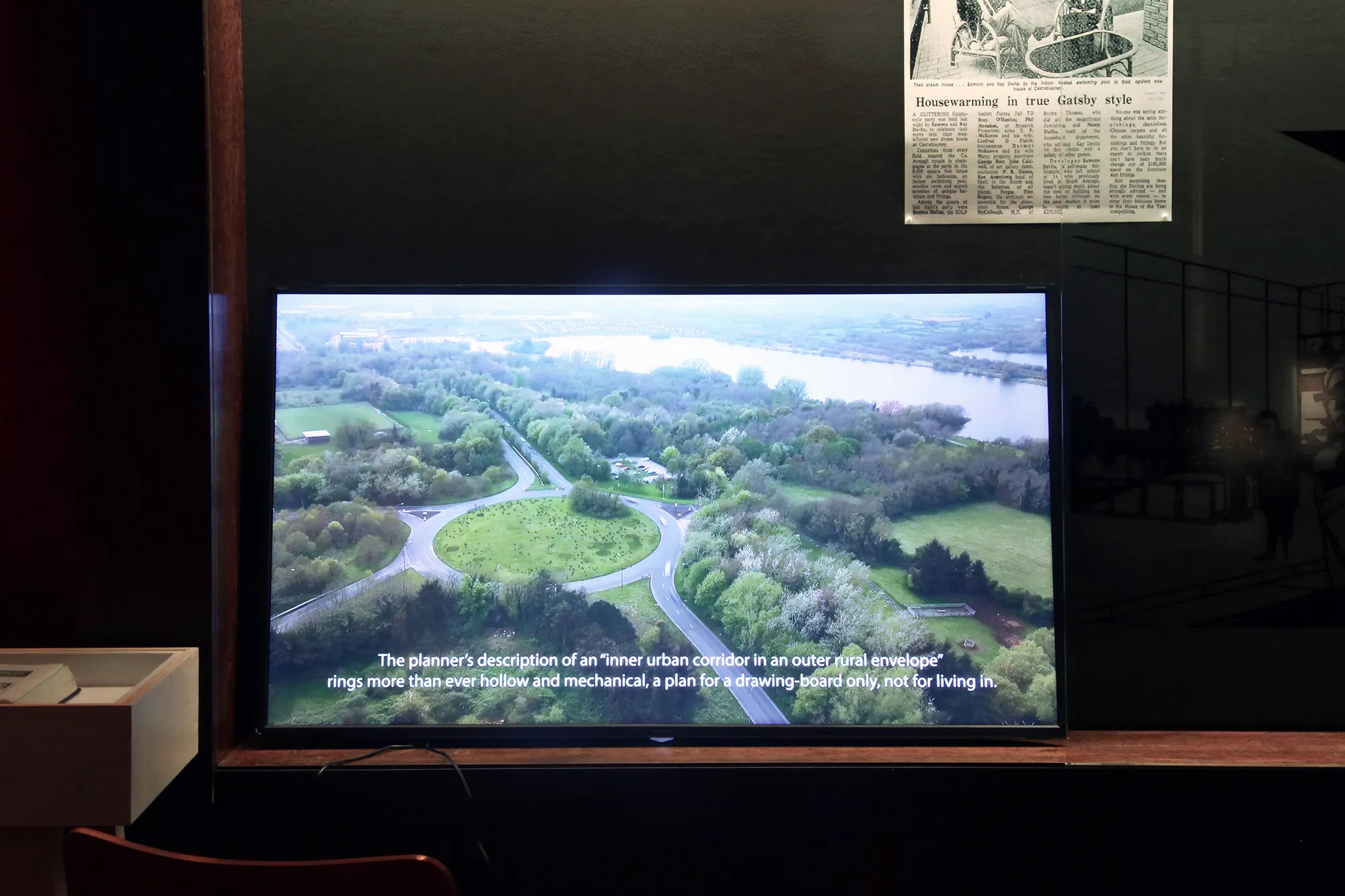
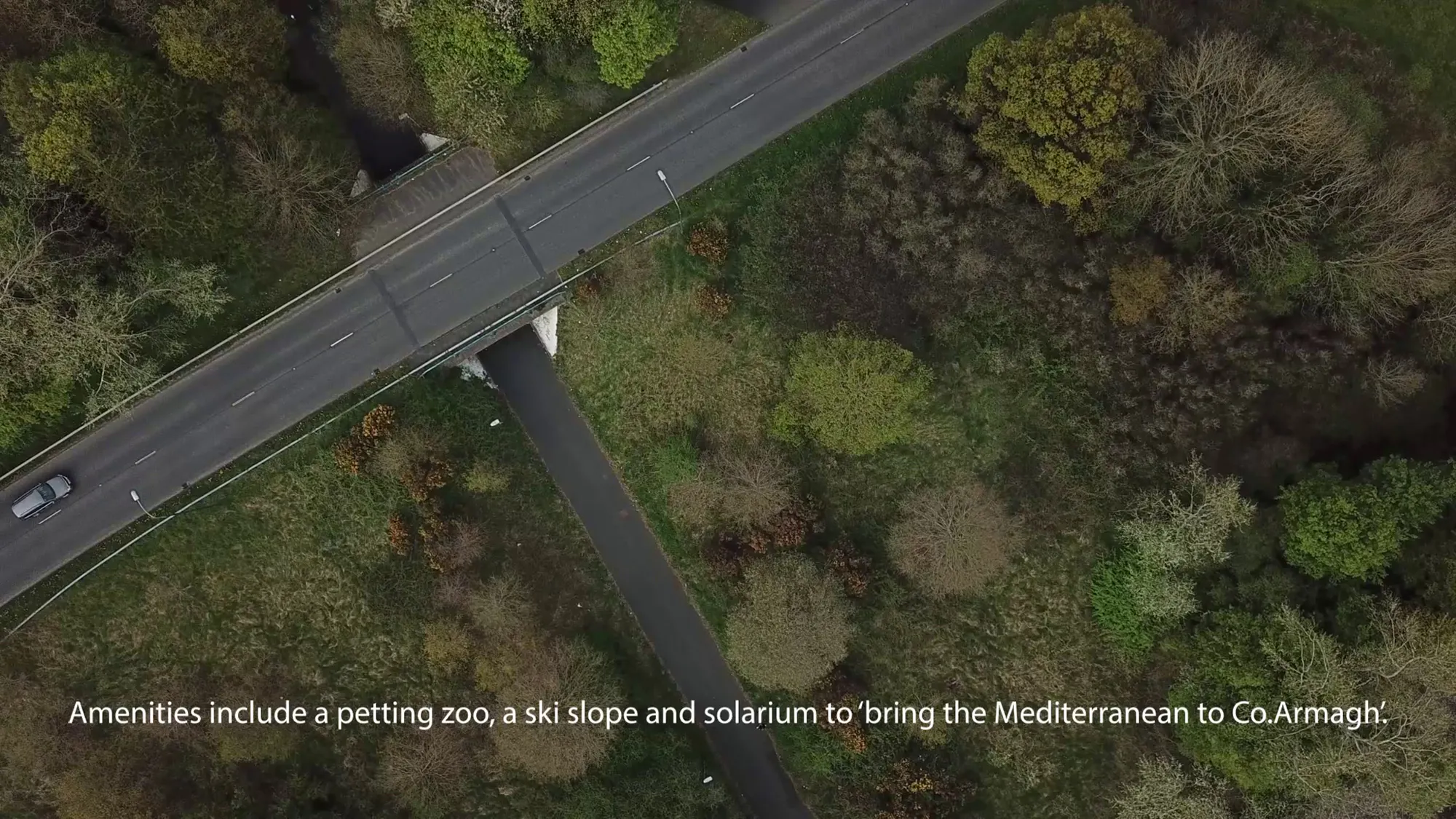
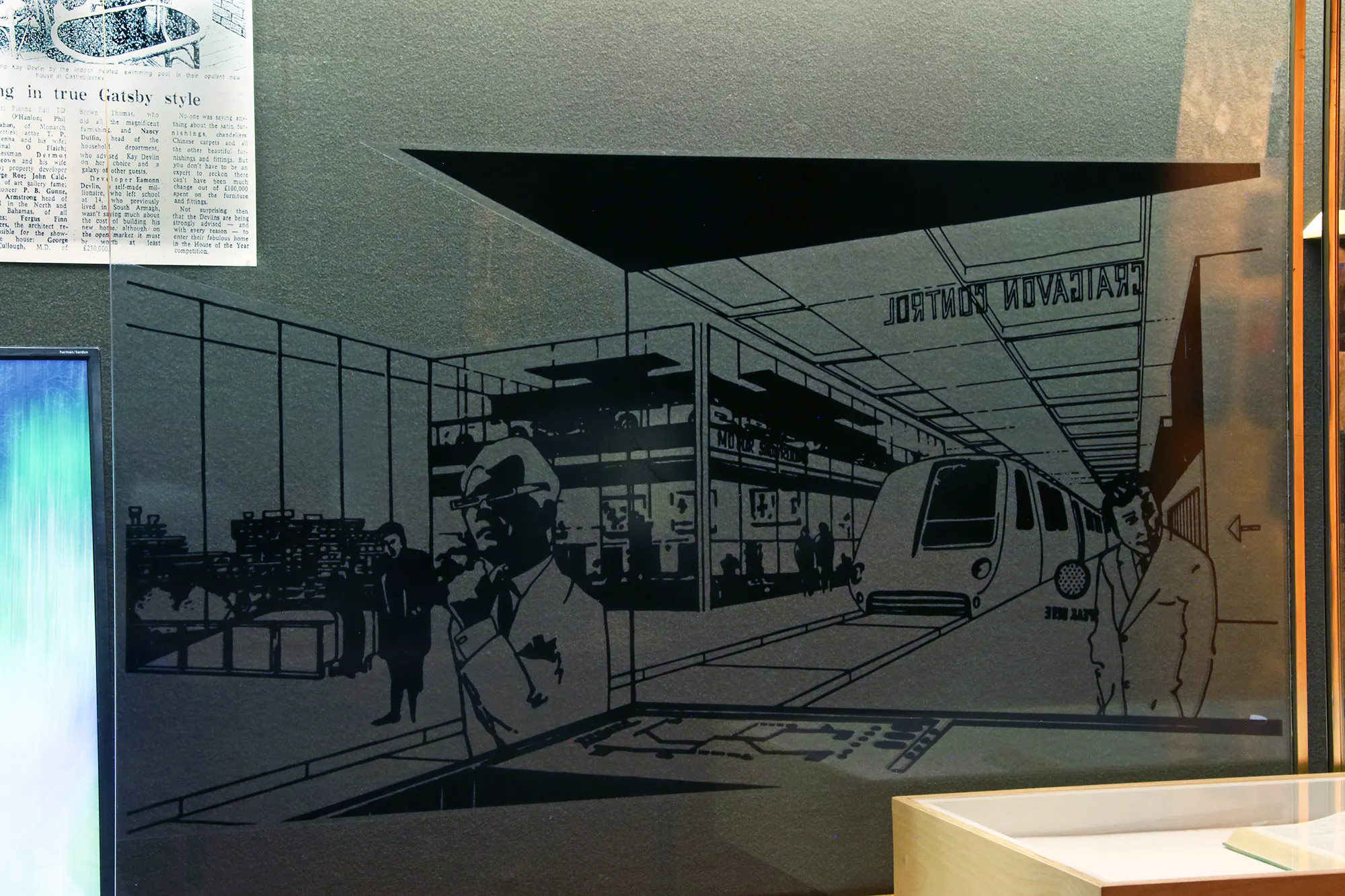
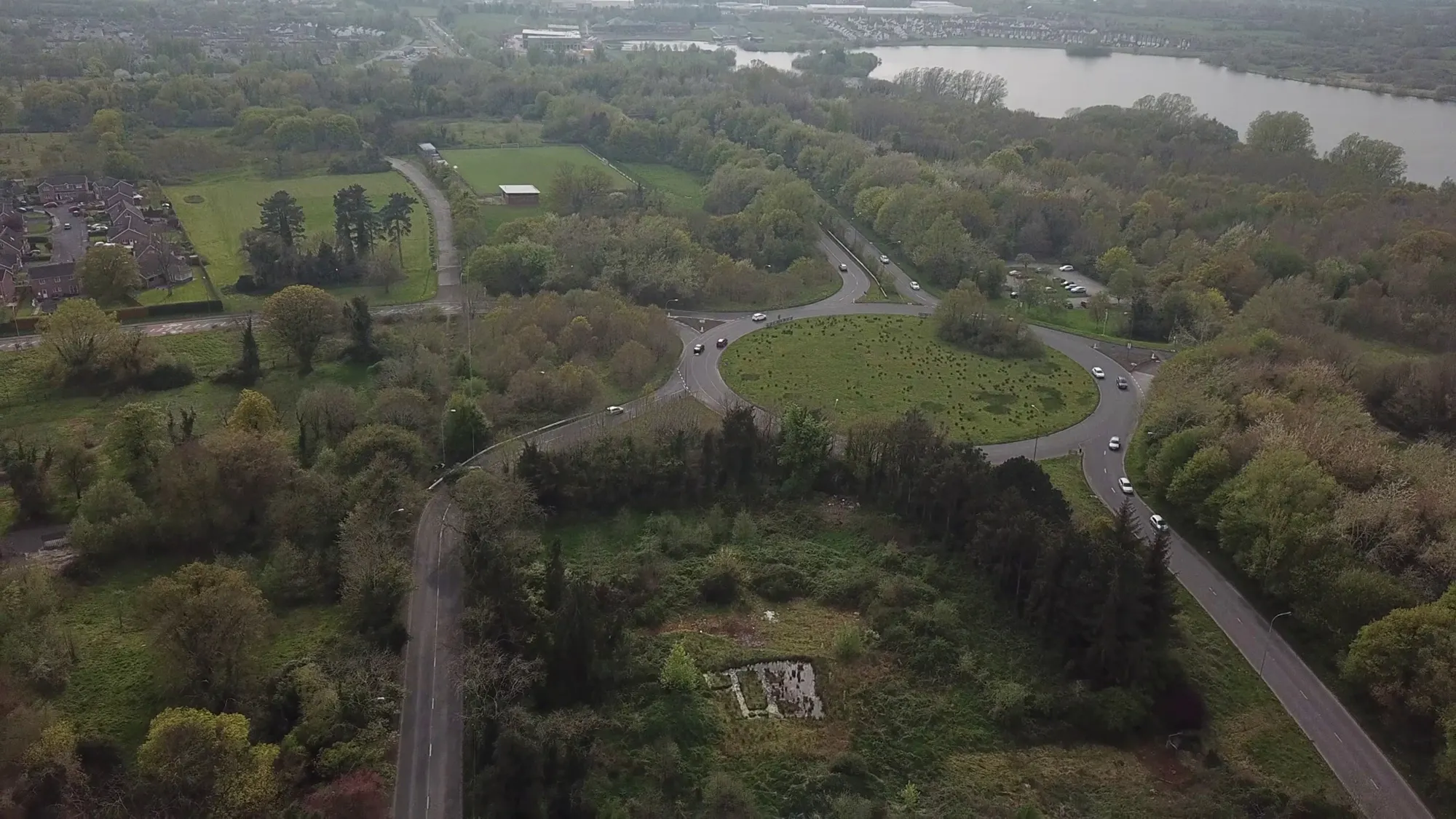
Fiona Marron’s Island beyond an Island is a mediation on human yearning to build, both as acts of confinement and liberation. Marron seems to preserve such desires in a surreal or dreamlike state, as if their potential far outweighs their actual realisation. Alongside newspaper clippings and imagery culled from the archive, her video work investigates the idiom of new town building, with a special emphasis on Craigavon, a planned town in Armagh built since 1965.
John Carson
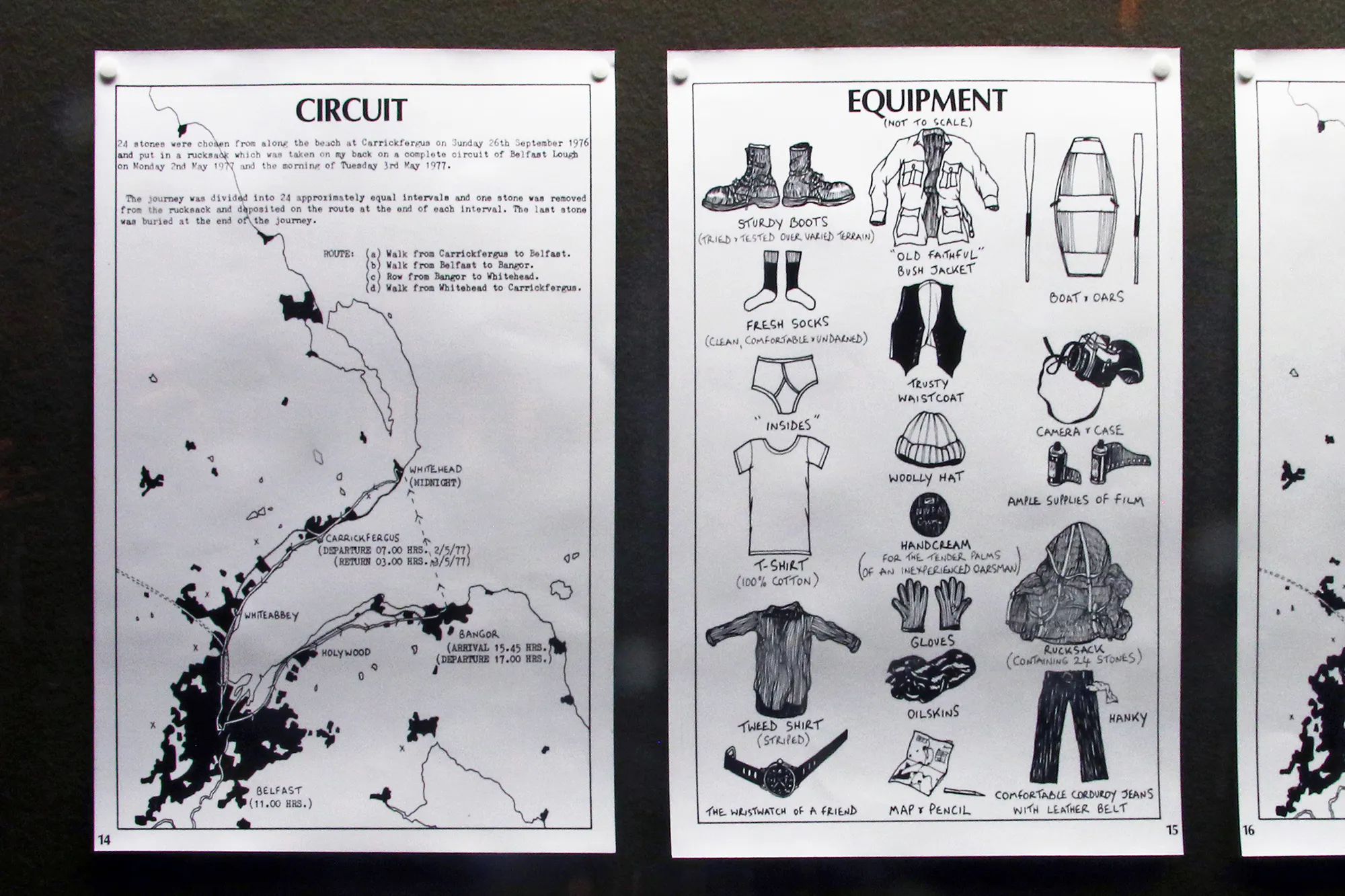
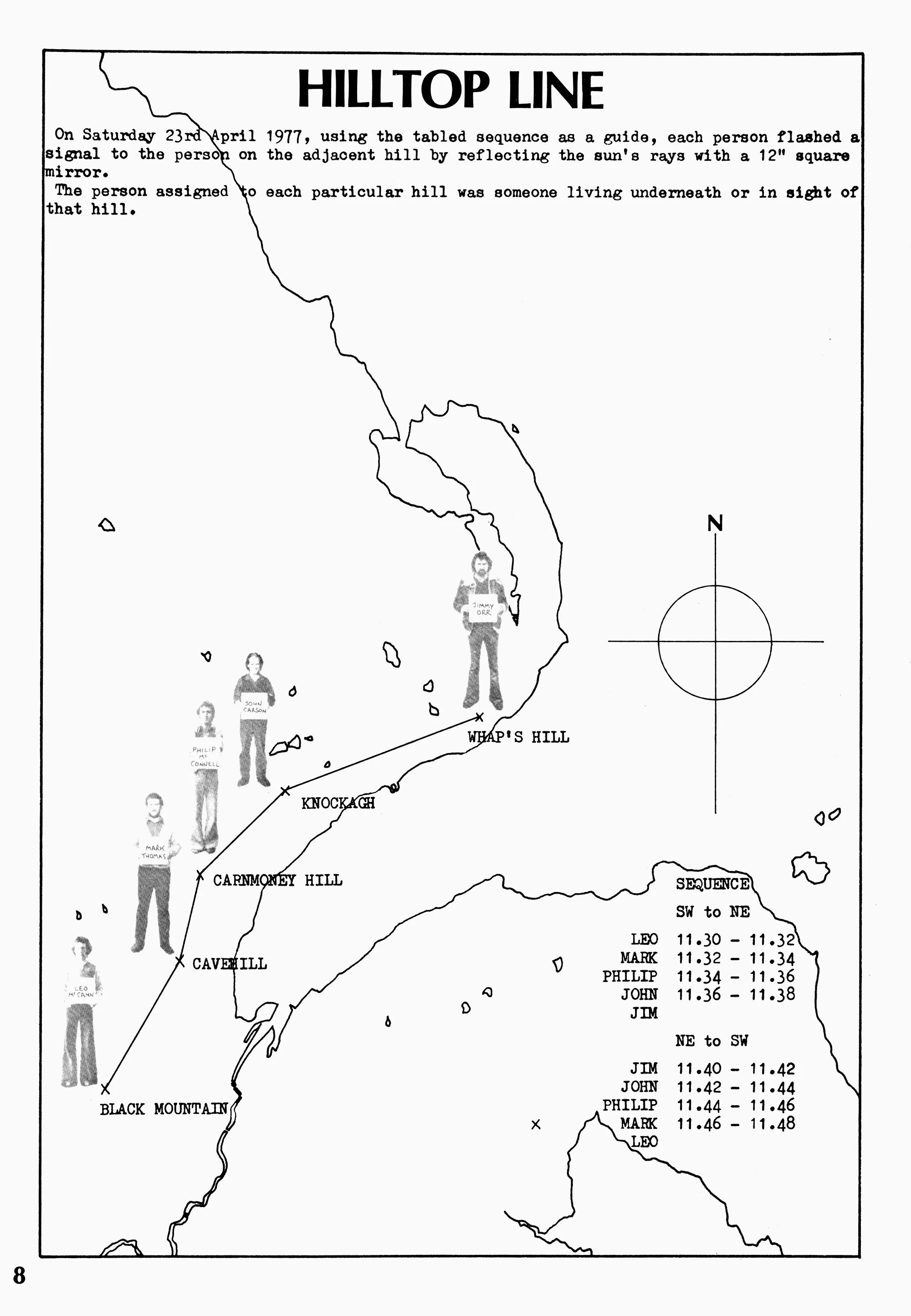
A selection of conceptually-led projects from 1977 by John Carson were also exhibited, each accentuating new experimental geographies around Belfast and its hinterland, involving the moving of stones, a bespoke signalling system and the subtle evocation of a telepathic relationship between three friends facilitated by DJ Handi of local station Radio Downtown.
Stuart Whipps
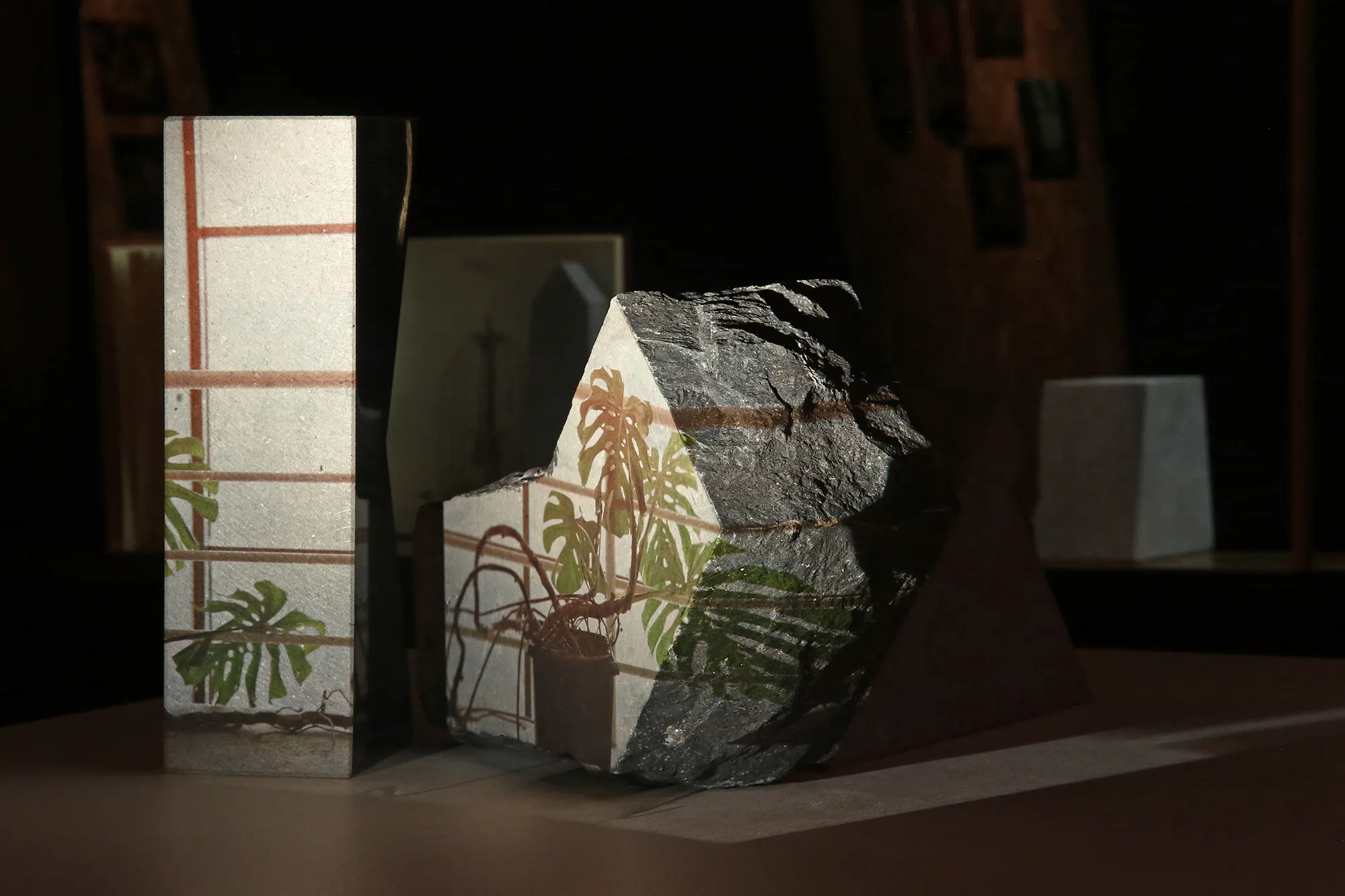
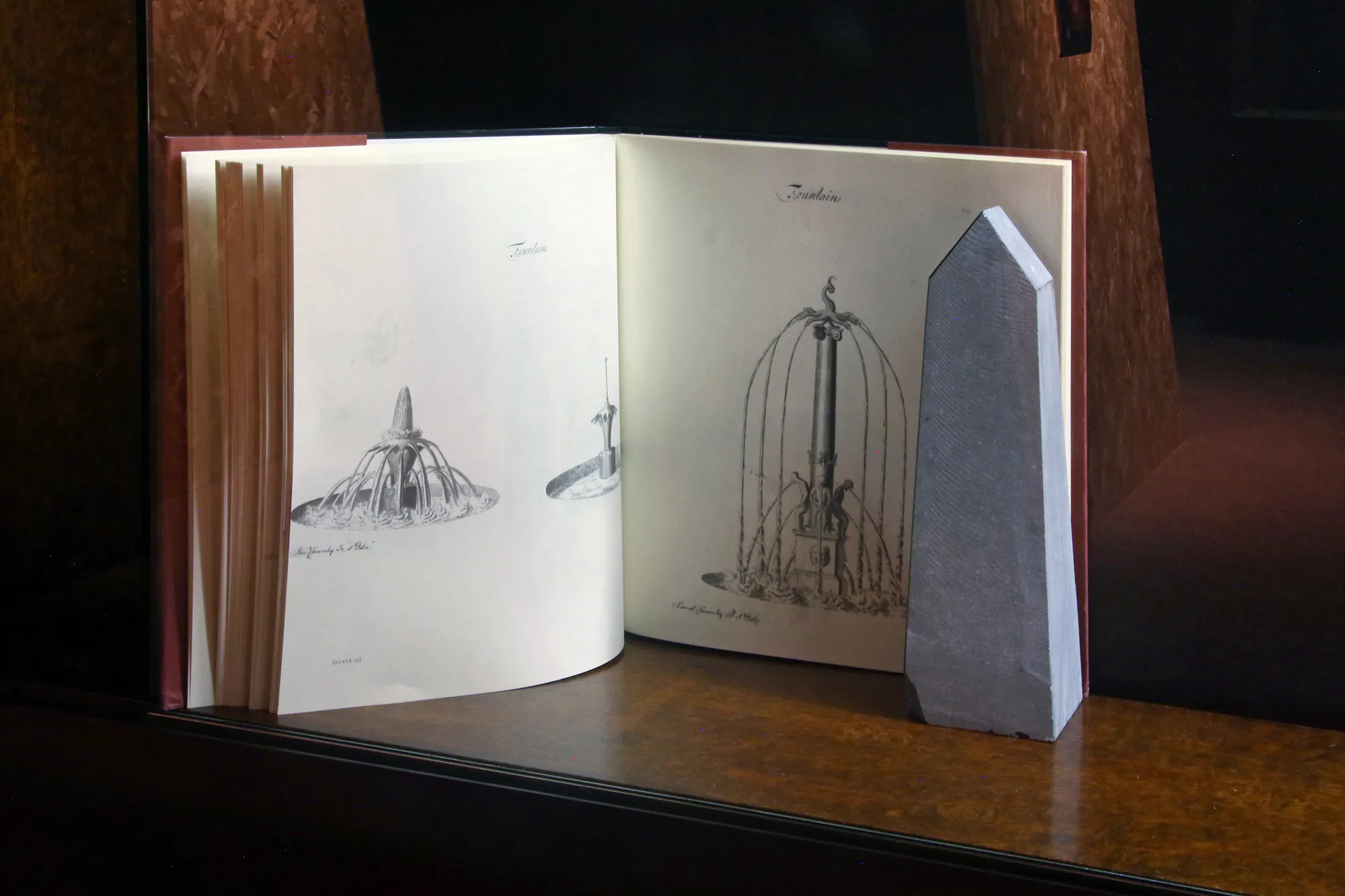
Stuart Whipps’ artworks make evident the consequences of human agency on the landscape, assembling seemingly unrelated intentions or actions into sharp agglomeration. Made during a recent residency at Lismore Castle Arts, McKeon Stone in Stradbally and Askeaton Contemporary Arts, a video follows the flight of African Sand Martens now nesting in holes created by quarrying stone in the Irish midlands. In turn, Whipps uses this stone to shape various sculptural forms borrowed from ‘Miscelanea Structura Curiosa’ a surreal and sometimes grotesque 18th century book on garden design by Birr’s Samuel Chearnley, juxtaposed with an image of plants found in corporate offices at the Rusal Aughinish bauxite refinery, Ireland’s largest industrial, and ever-controversial, site of lax environmental regulation located on the Shannon Estuary.