
The Algae Summit
15–18 June 2017
Askeaton and the Shannon River Estuary
Convened by Belgian artist Filip Van Dingenen, The Algae Summit was an international conference taking place in Askeaton and nearby Shannon River Estuary in June 2017.
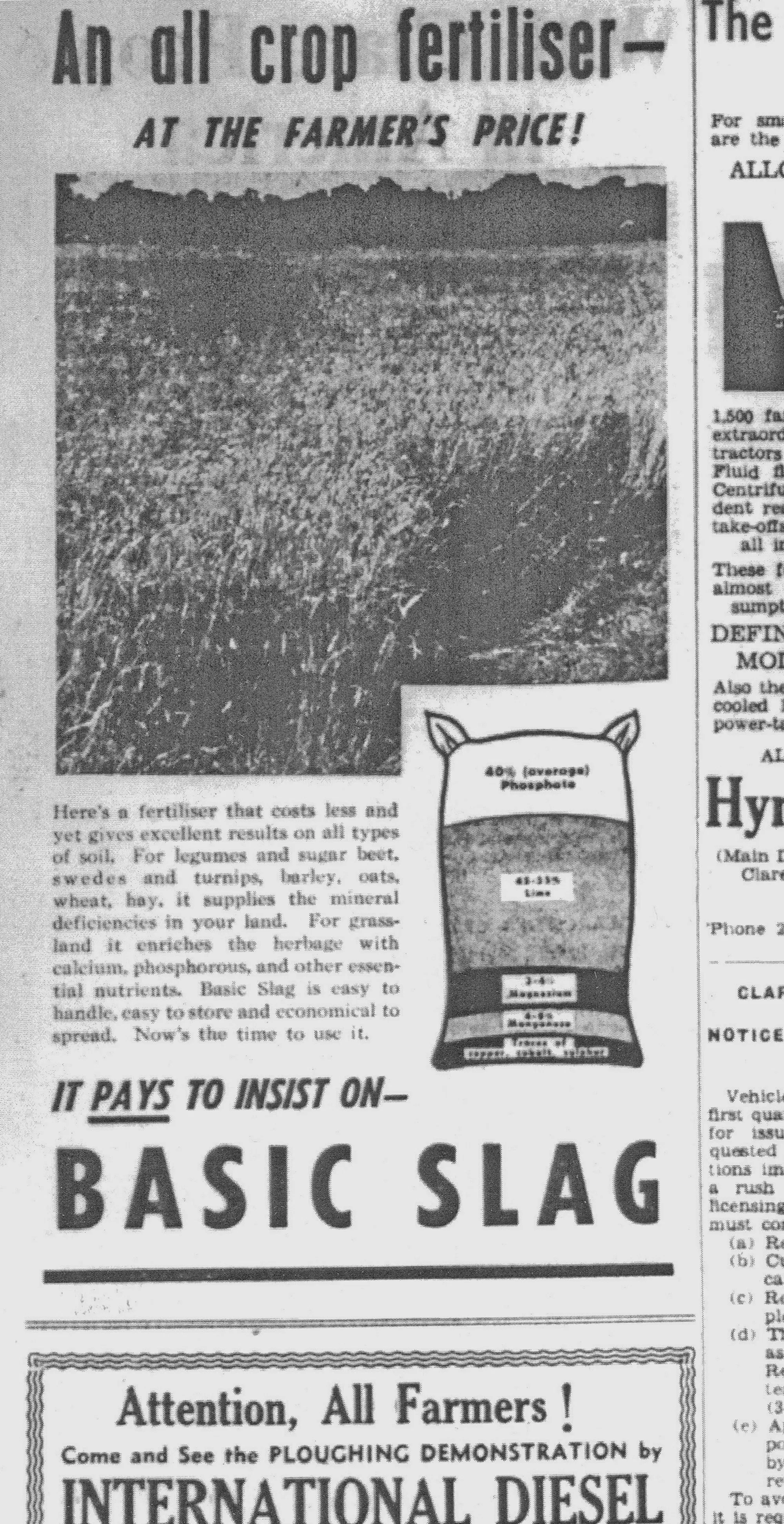
Askeaton and its outlying territories is an acknowledged centre of seaweed cultivation from at least medieval times, as it was used as the primary agricultural fertiliser in the region to sustain daily nutrition and life. The introduction of chemical substitutes in the 1950s saw its decline alongside depopulation of many islands on the Shannon. Van Dingenen has repeatedly visited Askeaton in recent years to research this history, seaweed cutting and the still-unresolved nature of harvesting rights in Ireland, along with the wider ecological impulses that must be spoken of – all to remove the divide between human and nature, and challenge the alienation of contemporary life from the now unheard environmental spirits in our midst. A focal point was a two-night engagement held on uninhabited Coney Island in the middle of the Shannon Estuary, with the aim of creating a new alternative treaty to address this wide-ranging issue. As we understand the political isolationism directed from Trump and big business towards the delicate world we inhabit, the Algae Summit acts as a model to identify and promote the needs and urgencies of indigenous critical resistance.
Alongside contributions from the Askeaton locality including Cyril Ryan and Liam Dundon, participants include artist and curator Paula von Seth from Stockholm, environmental activists John Bhaba Jeaic Ó Confhaola, Sinead Mercier and Séagh Mac Siúrdáin, Berlin-based Australian poet, critic and curator Rachel O’Reilly, Belgian energy therapist and artist Ive Van Bostraeten, cynotype expert Sarah Codd and Czech artist Klara Hobza, all alongside Irish artists Domestic Godless, Adrian Duncan, Maurice Foley, Mary Conroy and Seanie Barron and seaweed food company Mungo Murphy. The event was supported by Lismore Castle Arts, and Temple Bar Gallery + Studios, Dublin.
Van Dingenen further presented elements of his research at the Lofoten Biennial in Norway in 2017 and the Casablanca Biennial in 2018. Here, participant Adrian Duncan describes more.
1.
In early 2017 I was invited to attend The Algae Summit, a four-day get-together organised by Askeaton Contemporary Arts in collaboration with Belgian artist Filip Van Dingenen. The summit took place in Askeaton town and Coney Island, a small semi-abandoned island, among other islands, that sits where the Fergus River flows into the Shannon Estuary. Central to the summit was the marine plant, seaweed.
Prior to this event, I knew almost nothing about seaweed. So anything I pass off as knowledge here is new-found. Some of my asides in this text draw from the excellent publication developed as an accompaniment to the summit, compiled by Askeaton Contemporary Arts and Van Dingenen.
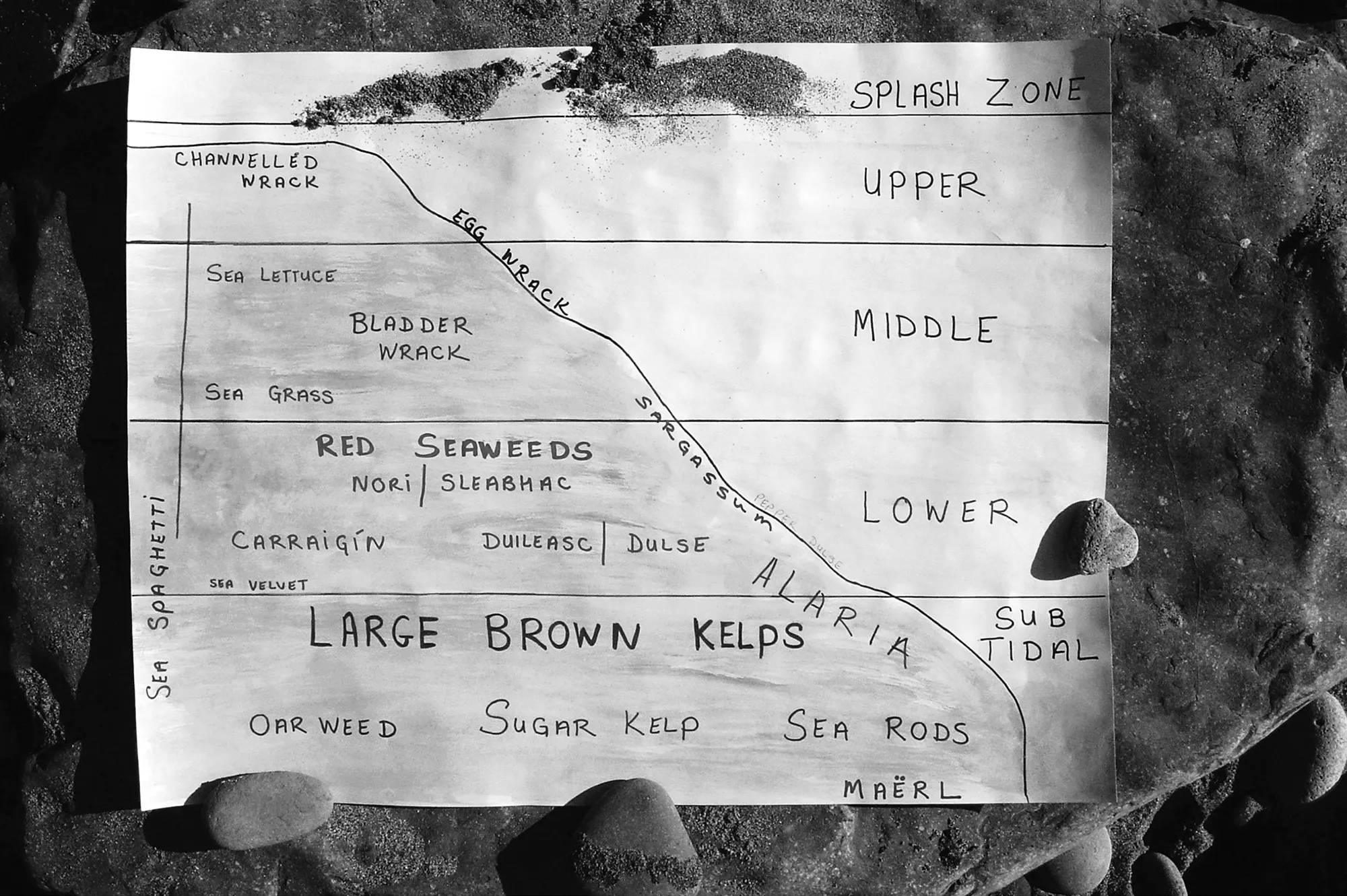
First, I think it might be useful to describe the basic structure of seaweed, because its growth and the way the plant is harvested are intricately connected. There are two types, one is planktonic – microscopic and suspended in water; the other is macro algae and generally grows from a hard surface, usually some kind of rock. This is often seen draped darkly along seashores. The ‘root’ of the seaweed, the thing that is connected to the rock, is evocatively termed the ‘holdfast’; the stem is referred to as the ‘stipe’, and the body, the wavy hand-like part, is called the ‘frond’ or sometimes the ‘blade’. As one descends the foreshore and enters deeper into the water, the type of seaweed that grows, naturally enough, varies considerably – from channeled wrack, to egg wrack, to sea lettuce, sea grass, nori, dulse, sea spaghetti, kelps.(1) You will notice that the word ‘weed’ doesn’t appear in any of these terms that are more in keeping with a garden, a tillage field or a restaurant. And I suppose, in turn, this suggests that what we are dealing with here is as much crop as weed. These words have an important public function in suggesting types of value attributable to the organism.
In the publication assembled for the summit there is an article from a 1956 edition of the Clare Champion newspaper, describing methods then employed in hand-cutting and extracting seaplant from the coastline along the estuary and the nature of the physical exertion, experience, and sensitivity required in pulling in a harvest:
… The knives the men cut the weed with were made from blades of scythes by the local blacksmith and it was amazing to watch how deftly the men cut the weed off the shores …
Then onto a method for gathering:
… The islanders on the Shannon and the Fergus invented a means to avoid this trouble (seaweed drift) by making what they called seaweed ropes. These ropes were spun from straw and called ‘seagaun’ and were of great length. When a certain amount of the weed was cut this long straw rope was placed in a circle around the weed and a small wisp of the weed was then twisted around the rope to its full length and secured with a light seagaun. When the tide flowed in all of the weed floated and a man holding each end of the rope slowly drew the whole lot onto the shore …
Followed by a description of how the collected weed was then transported from the rocks:
… The men raised the barrow, one at either end, and walked with their load over the rough and slippery stones to the boat and lifted the barrow over the gunwale of the boat …
What might be important to take from this is the physical connection to the landscape by those making the harvest. There is an intuitive sense of what is appropriate for harvesting and transportation, tactile methods is that two types of time become important: the time of harvest, and the time of the tides. The frequency of harvesting a particular part of the coastline can be anything between every three or every five years. The frequency of the tides, as we know, is far shorter, so a working knowledge of the land (it seems strange calling the foreshore ‘land’) is central to the crops’ short-term harvesting and long-term survival.
In local man Liam Dundon’s Thursday night presentation at the Askeaton Civic Trust, he described harvesting seaweed, as a young adult, along the estuary from Barrigone to Poulaweala Creek. Thirty or so audience members gathered around in the snug upper floor of the trust as Liam displayed the various implements used for wrenching the wet weed from the shore. He described methods for lugging it aground, and for drying it, before the seaweed was transported to nearby Kilrush, where it was processed into animal feed.
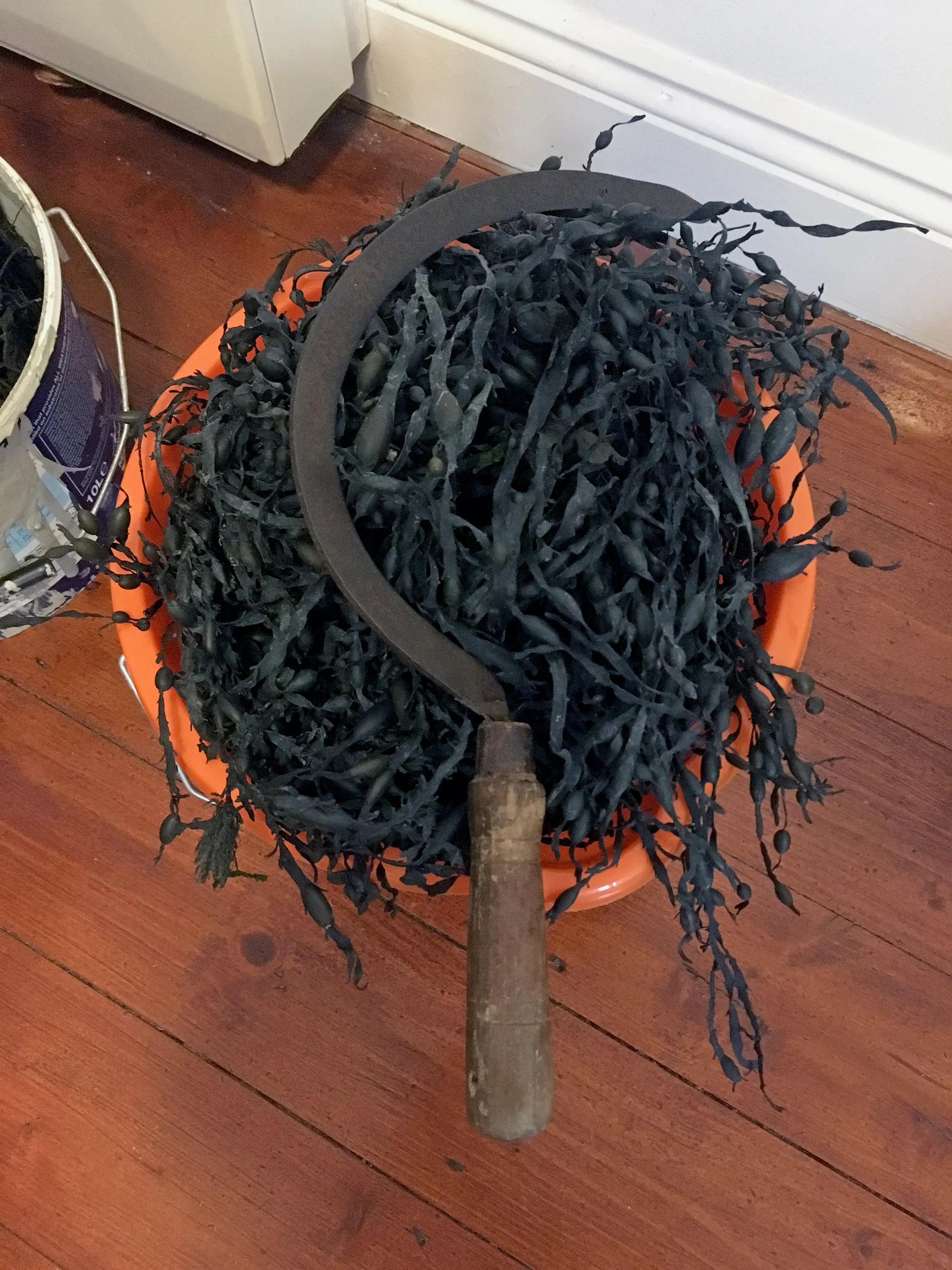
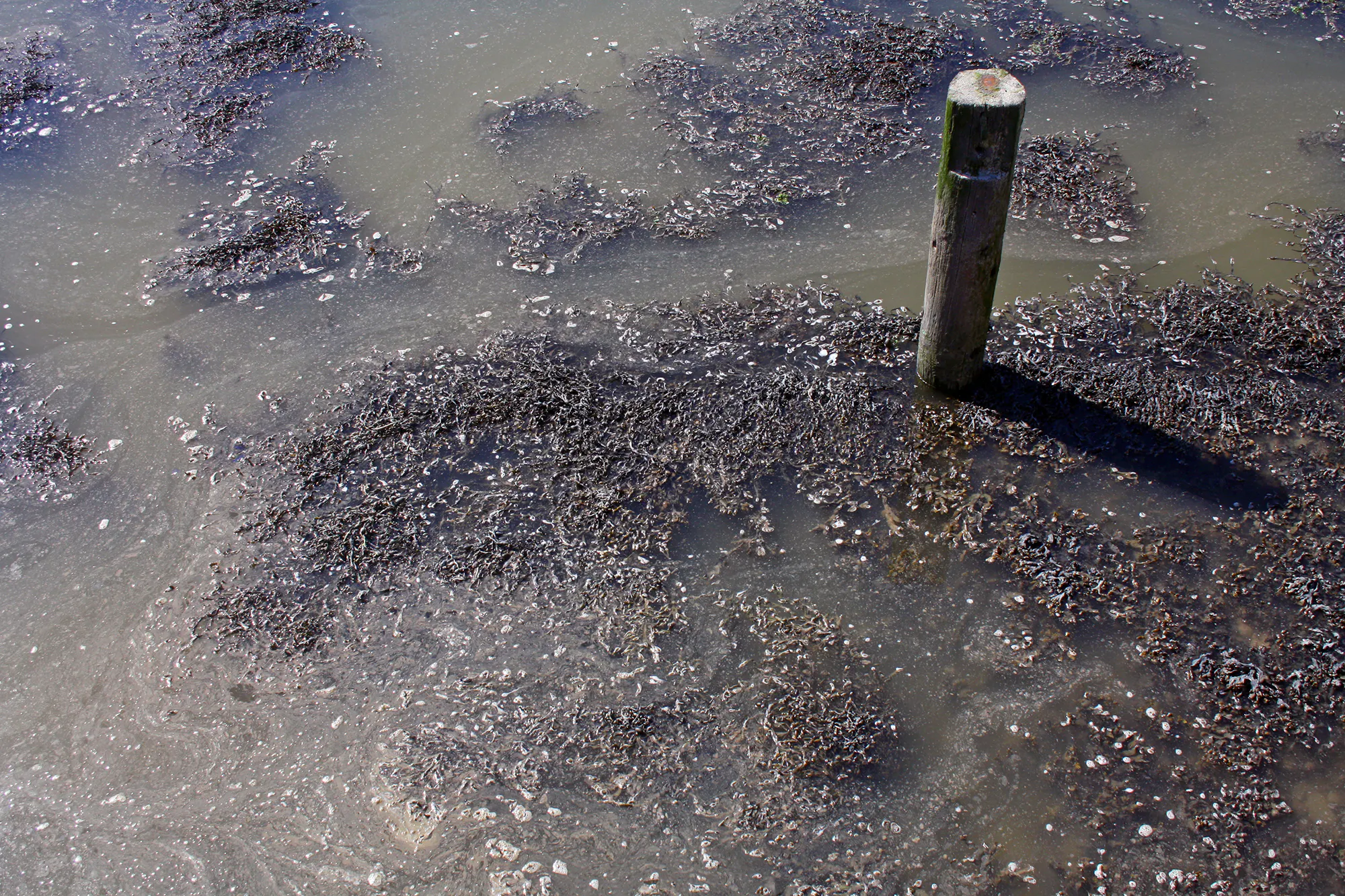
Séagh Mac Siúrdáin, an independent advisor on sustainable seaweed management, was the second speaker that night and he introduced this term ‘seaplant’ alongside words like ‘sea spaghetti’ and ‘sea vegetable’. He explained how vital these plants are for the production of iodine, for farmland fertilisation and as natural sources of vitamins for human consumption. He told us that the seaweed reserves of Ireland is the last natural resource still in state ownership, and described the structure of ownership currently in place on the west coast of Ireland, particularly the length of coastline that he is most familiar with, from Donegal to Spanish Point. Harvesters in this area work the land and sea in families, and that the traditional labour unit of this crop is understood in these familial terms, as opposed to individuals or companies.(2) The main processor in Connemara since 1947 is Arramarra, a semi-state company that operates within the aegis of Údarás na Gaeltachta (ÚnaG).(3) A primary issue at the moment is ÚnaG selling harvesting rights in Connemara to a large Canadian company, Acadia Seaplants, an act done with little public consultation and involving an opaque tendering process.(4) It is being fought tooth and nail by local harvesters, which I will return to later. Apart from the sale of this natural resource at a price that greatly undervalues the commodity, the nature in which this seaweed will be mechanically harvested by companies such as Acadia draws great concern from local people and anyone with an interest in taking care of our foreshore, our waters and the delicate and complex marine ecosystem within.
2. Seaweed Circles
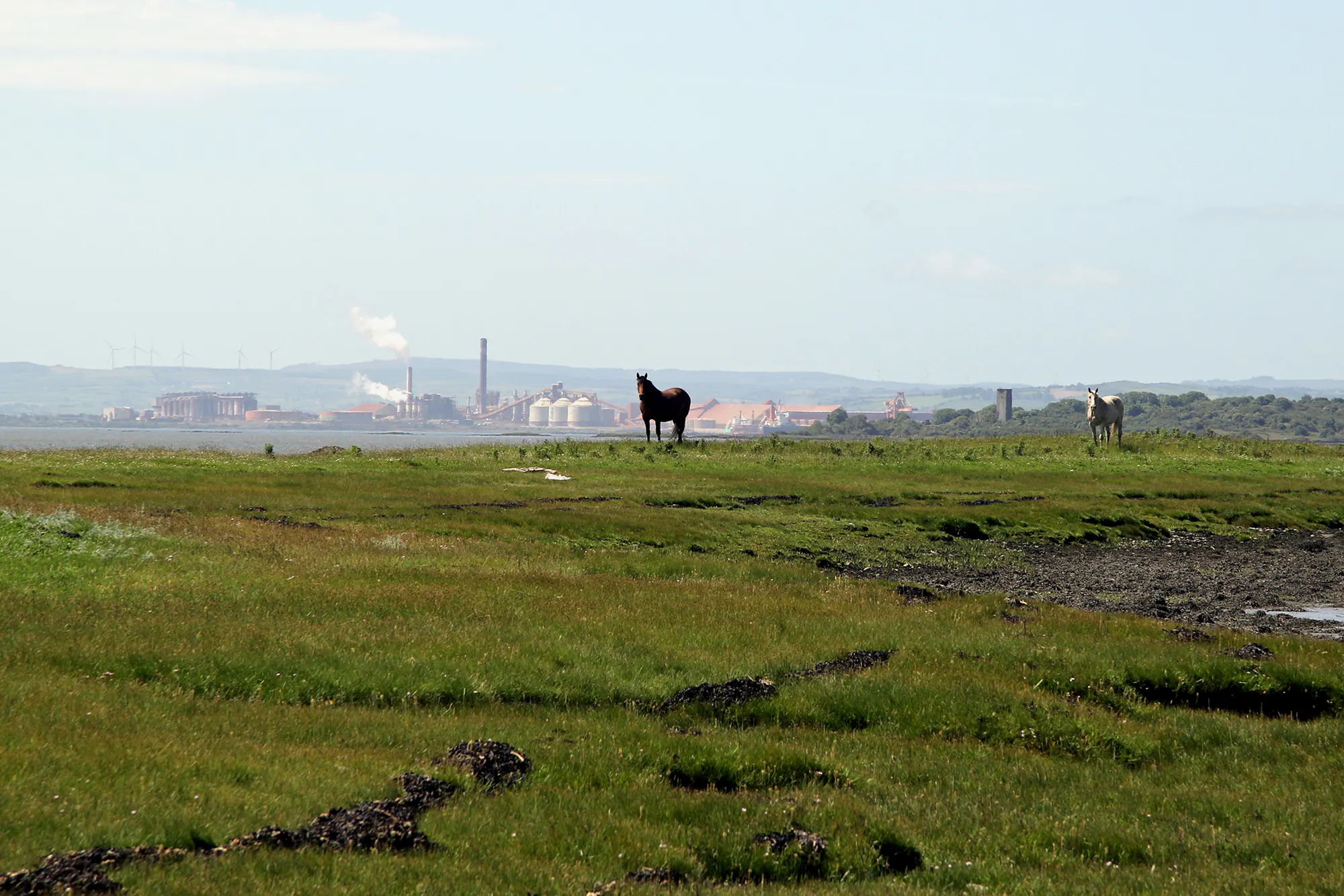
Late on Friday morning our group of over twenty took two boats out to the island to be joined by a further dozen the next day. As we surged west along the estuary, the water twinkled and heaved. It was a sunny and warm afternoon. To our left the vast Russian-owned Aughinish Alumina plant chugged exhaust into the sky. The plant was visible from the island too, and was one of many non-human presences that became part of the weekend.
We were greeted at the end of the small harbour on the southern edge of Coney Island by Kevin Guinane, one of the four landowners there. He is a farmer who lives in county Limerick, but travels over and back, rearing twenty-two cattle across his seven plots of land dotted around the island. He chatted affably to us all, telling us that the name of the island comes from the Irish word for rabbit coinín, and that its other name is Oileán dhá dhroim – the island of two hills. Then, with no apparent nostalgia, he told us that there had been no rabbits here since 1979 and the last human inhabitant left the island in 1986. According to Kevin, the island’s land consists of 18 inches or so of topsoil upon a comprehensive layer of sand, and aside from the odd few erratics plopped around, contains few rocks. All the stone used for building had been taken from other islands. With the wind gently ruffling his greying fair hair, he continued, telling us, in his clipped rural-Limerick accent, that in April you can see dolphins around the island, and sometimes seals, sometimes sea otters, and on the island itself there were mostly cattle, a few bulls that we needed to avoid, and an old lone dog, who had been exiled to the island for biting some kids on the mainland; it was that or put the dog down, he said. Before Kevin left us he pointed out a deep well at the top of the hill adjacent to the old stone schoolhouse. He said we could take our water from there, but that the water was heavy with lime – ‘You’d only drink a cup or two of it’, he said.
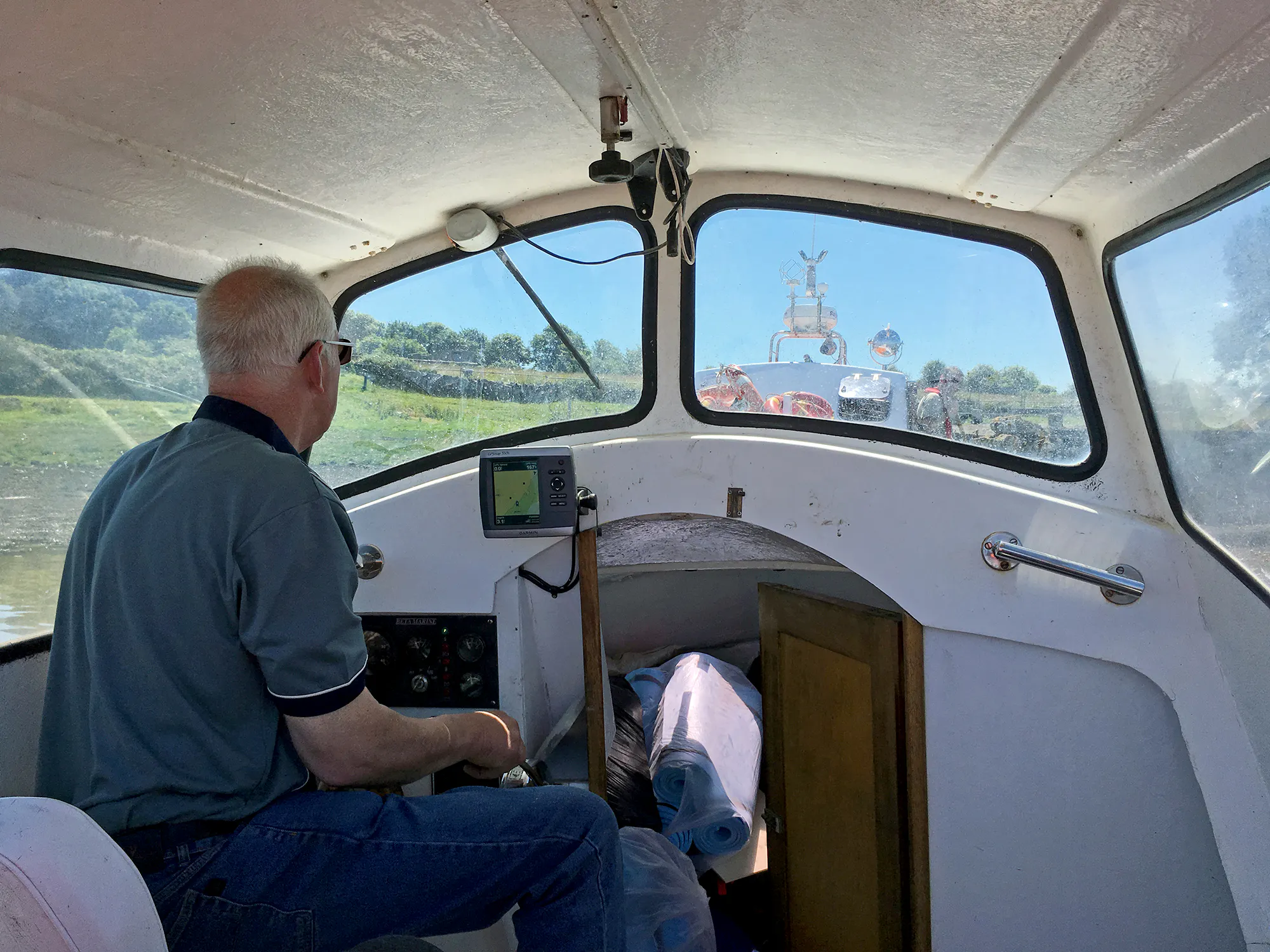
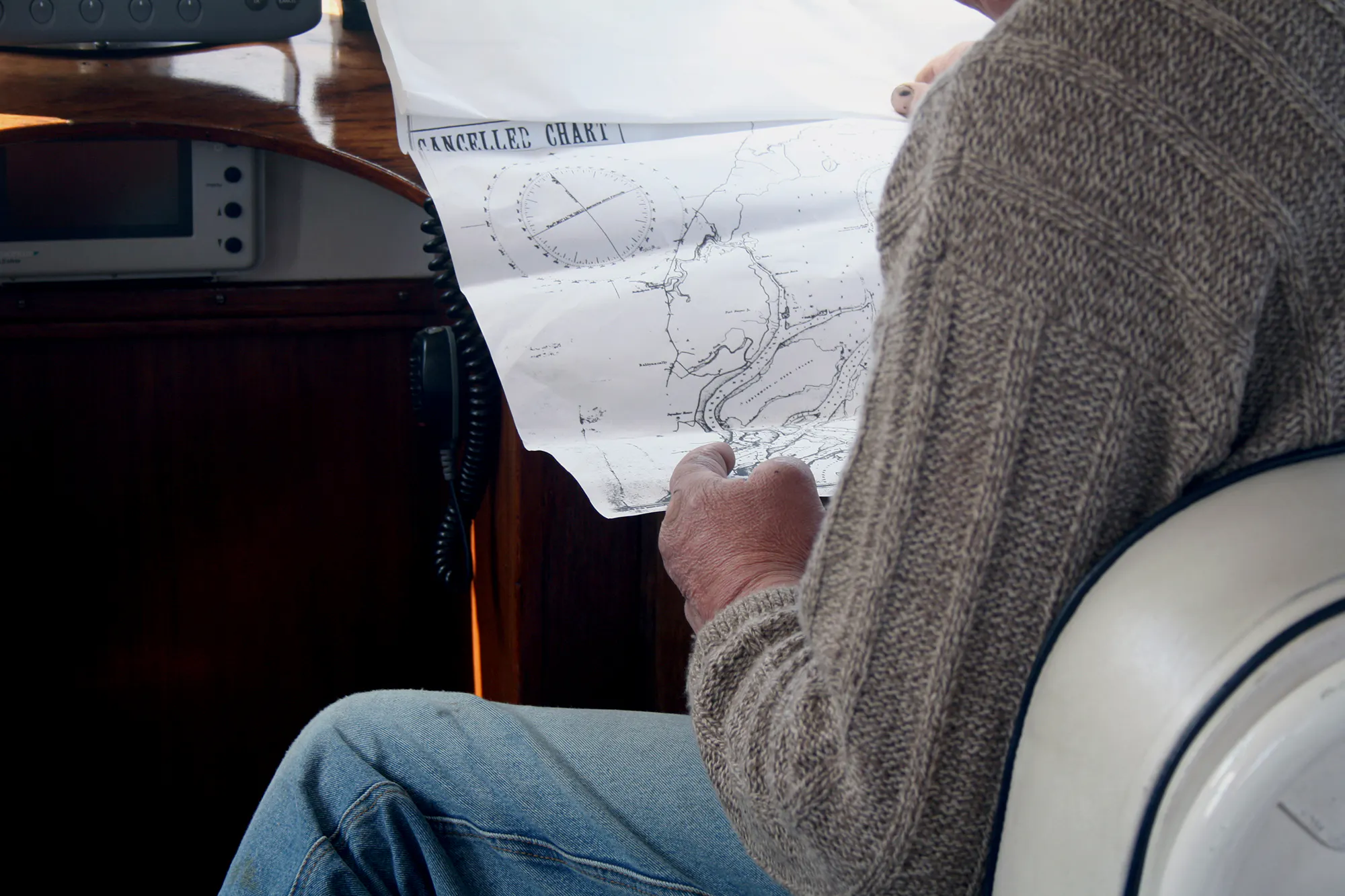
After we snacked and set up camp, Filip and Ive Van Bostraeten, a fellow Belgian artist and crystal healer, delineated a meeting circle out of dried seaweed on a small flat peninsula that cleaved out into the water. We each found a rock to sit on and gathered to hear about each other’s practices and their concerns. Sean Lynch, who along with Michele Horrigan runs ACA, explained their position in relation to the large-scale economically driven, national and international developments affecting Askeaton and the surrounding countryside. He described future plans for the Shannon Estuary to become a new Rotterdam-like port to aid the flow of international container shipping. This increase in freight traffic has engendered a need to construct more suitable connections between the estuary and Dublin, which involves building a new road through or nearby Askeaton town. The development authority has proposed three options for the route, which will carry extremely heavy traffic at high frequencies. By offering three alternatives, the authority appears to be ‘giving options’ to the local community. However, such is the diffuse nature of the offer, it is less likely to meet with as robust or concerted a refusal as a one-route option, simply because more people can coherently gather around one potential problem as opposed to three.
Klara Hobza, a Czech artist, spoke about her extraordinary venture that involves swimming from the North Sea to the Black Sea – via the rivers of Europe (the Rhine, Main, Danube, and many more). This project, which Klara reckons will take the next forty years of her life, is currently still navigating its way out of the Dutch canals. Klara explained to us that scuba diving in waters like this was being done, for her, at an ‘artistic pace’. And in this strange introverted diving space of the mind, as she navigates the channels and waterways of the heavily industrialised European water highways, her experience becomes raw artistic material. It is also a pragmatic navigation of the bureaucracy of borders between countries through which these arteries of water flow. She described coming up for air one day at the underside of the Erasmus Bridge in Rotterdam, and meeting (an astounded) bridge controller. She spoke compellingly about how these unexpected encounters loosen the otherwise staid tones of her border negotiations.
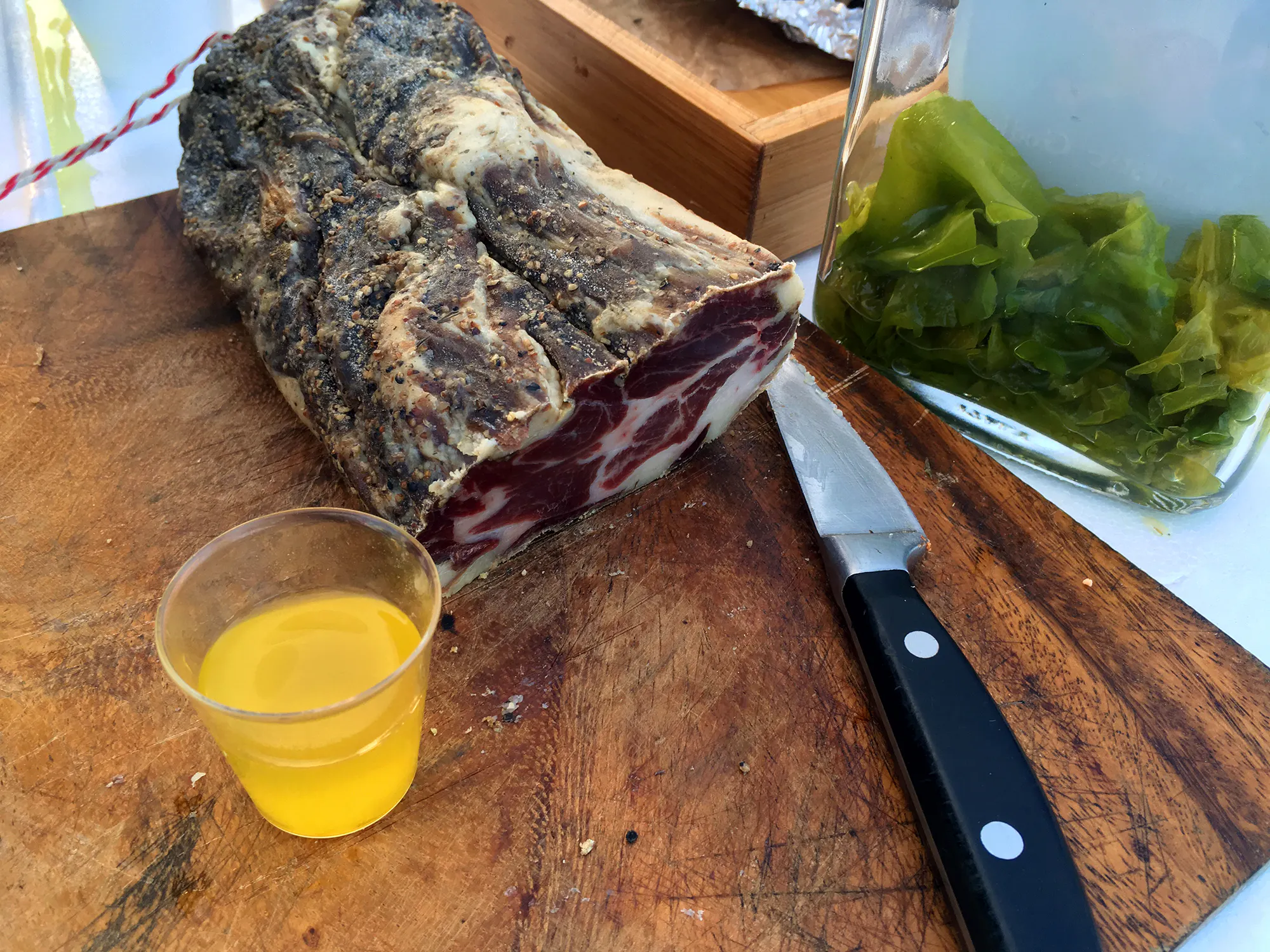
The Domestic Godless, a Cork-based artist trio (Irene Murphy, Mick O’Shea and Stephen Brandes) whose work sits somewhere between cuisine, slasher-movie special effects and art, then brought up a term that resonated through the weekend: terroir – the terroir of food and drink, the way in which food and drink becomes the embodiment of a place and landscape. One illustration of this is Scottish whisky: the bottle of whisky becomes a frame for producing an authentic mediation of the landscape from which the product emerges. This idea of terroir is important to how the Domestic Godless ‘destroy, reshape and repurpose’ the food and drink stuffs they concoct. Over the course of the weekend, they plied us with homemade vodkas and schnapps and other odd tinctures and beverages, all of which were presented with a sort of physician’s fastidiousness, and tasted (though I am not a ‘spirits man’) amazing. In the context of this Algae Summit the term terroir has some important applications, which I will return to.
Rachel O’Reilly, an Australian poet, curator and artist, told us that before attending the Jan van Eyck Academie in Holland, she was the curator of moving image at the Museum of Modern Art in Brisbane. Around the time of her leaving, it became apparent that the museum’s new lead sponsor was going to be the same company responsible for fracking the land not far from the museum, and installing its processing and shipping infrastructure on the port of her hometown of Gladstone, Queensland. The dredging and leveling process massively denigrated the coastal ecology and fishing industry. This strange econocultural bind became a turning point in her practice, her curiosity leading her towards the visual and textual language of corporate meetings, the aesthetics of local law and industrial processes – specifically the manner with which actual processes of industry are illustrated for public consumption – and how in this mediation, essential data and details are glossed over and thereby, in the apparent frankness of these simplified illustrations, hidden. Further disconnections between the visible land and its people were opened out with her description of industrial-scale dredging occurring in Queensland and across Southern Australia, that generally exemplifies not only a disconnect between land and sea, but also land and use. At this moment someone brought up the English romantic-era poet John Clare – the ‘Northamptonshire peasant poet’ (1793–1864), whose work was known and celebrated as a poet of politics, in particular the damage and interruption caused by the Enclosure Act that gripped the land from the early seventeenth century onwards.(5) He was described by poet John Goodridge as:
The verse-spokesman of the village and the village community. Even more than Wordsworth he is the champion of the local and the particular, the marginalised and the undervalued, both in the human world and in all those fragile and vital areas of nature.
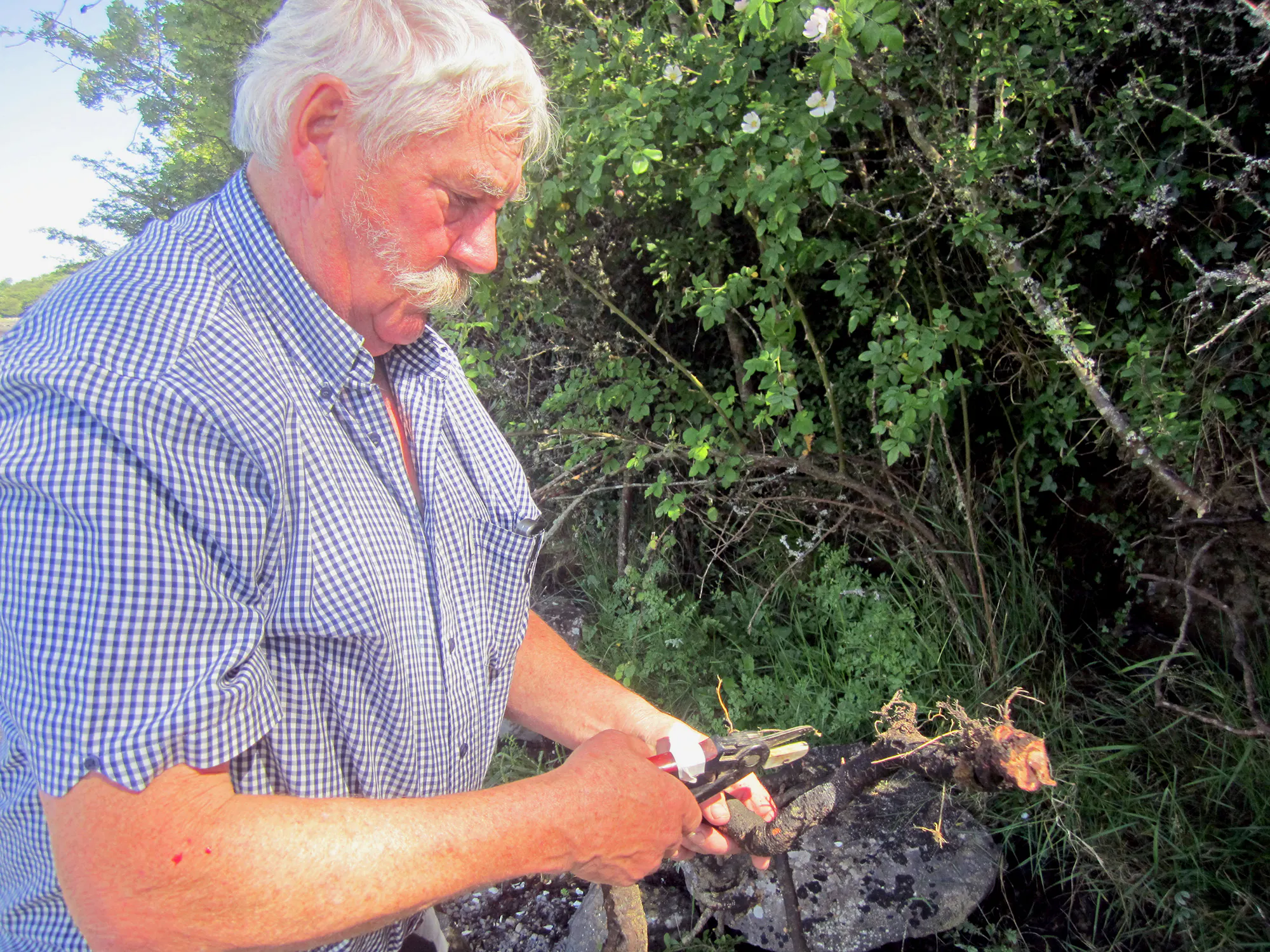
With the delicate waves of the estuary breaking behind us, the conversation uncoupled a little into one of those gently curling and overlapping things where everyone chips in – the bottle of whisky as a framing device was again proposed in tandem with differences in how Japanese and Irish seaweed is packaged (one trimmed neatly, the other left rough and ‘untouched’), back to one of John Clare’s poems The Badger and onto Askeaton stick-maker Seanie Barron’s way of making and naming sticks: from digging up a stick from the earth, then cleaning it and shaping it and, in one instance, realising that one particular stick’s handle resembled a badger, which reminded us, as we spoke, of the fact that this stick emerged from a hedge that is the habitat of the badger… From these conceptual filaments we eventually wended our way towards a loose sort of conclusion: that these complex metaphorical badger-connections encouraged a type of ‘thinking beyond the stick, and beyond the object.’ Brian Friel’s play Translations entered our loose and casual conversation, within which I mentioned the name of my home townland in Co. Longford – Terlicken, Tír na Leacain, the land of the limestone flags. Then, we all stopped talking for a moment, and the breeze picked up, breached itself, and disappeared again.
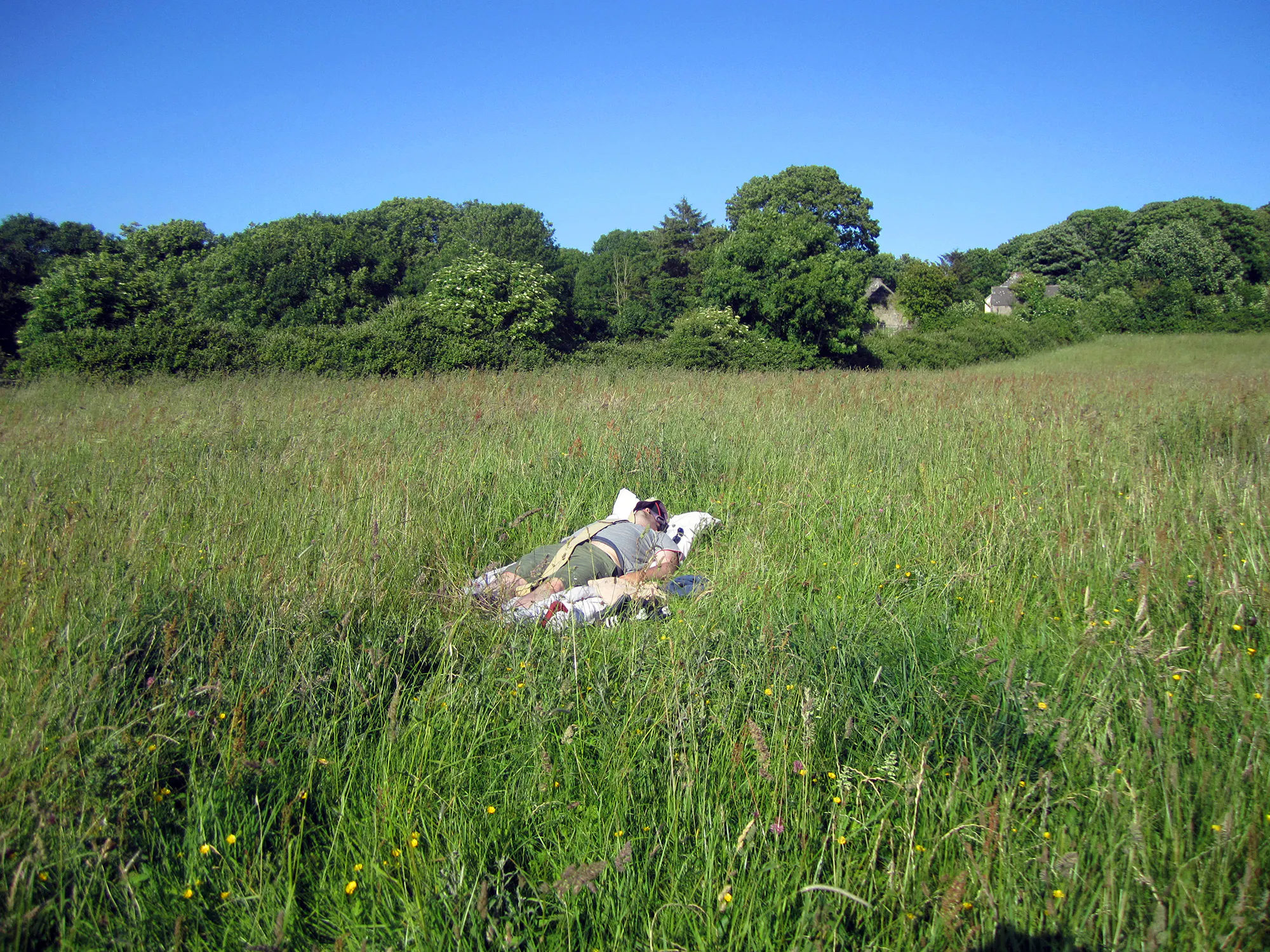
I sat back. The day was entering its hottest hours. A plane took off from nearby Shannon Airport, surging meatily upward, followed by another. I reclined further, leaning on my arms, and became aware of a farmer’s tractor on the next island over, clattering the sky. The stone I was sitting on became uncomfortable, so I lay on the grass, and sheltered my head with my hand. The sun – I cannot express how bright it was that weekend – beat down. I looked around and it became clear that outside of large hedges on the island there was very little in the way of broad trees, very little natural shelter.
Paula von Seth, a Swedish artist and curator, took up the conversation and shared with us a variety of her projects that seemed to happily bring together people from different disciplines and places and walks of life – people who might not usually meet. One project involved pairing Finnish and Swedish poets as a means to unearth secrets hidden in metaphors of Scandinavian poetry; another involved a year-long project in Hawston, near Cape Town in South Africa, where she, with local students, organised a carnival as an act of ‘commoning’;(6) and yet another project which took place in the Museum of Modern Art, Stockholm – a shamanistic workshop employing an animistic approach whereby participants made masks depicting ‘power animals’. Afterward, the makers threw a party where the transformative power of the mask coupled with the power of the fluxing atmosphere within and around them helped turn the maker into something surprising, something else.
Next, Mary Conroy, a ceramic artist based in Limerick, led us through some features of her practice, gathered around the question of how a loving connection to the natural world, ‘biophilia’, can happen in the city. In pursuing this question, over the last seven years or so, Mary has brought a number of strategies to bear, making art and applied-art objects and placing them in public spaces. One project involved the guerrilla-style planting of birdhouses and animal shelters, where small dwellings evolved out of repurposed wood and ceramic objects. Mary told us that in making these objects the nature of the process and the nature of the material opens up to its maker in complex and self-interpolating ways.
Before we returned to the camp, Ive told us of his wish to use his collection of small and beautiful crystals to heal the seaweed; then to produce an energy network incorporating the island itself with these charged crystals. He hoped, over the weekend, that we would break gaps into our minds too, and from there see and think and listen to the seaweed around the island anew.
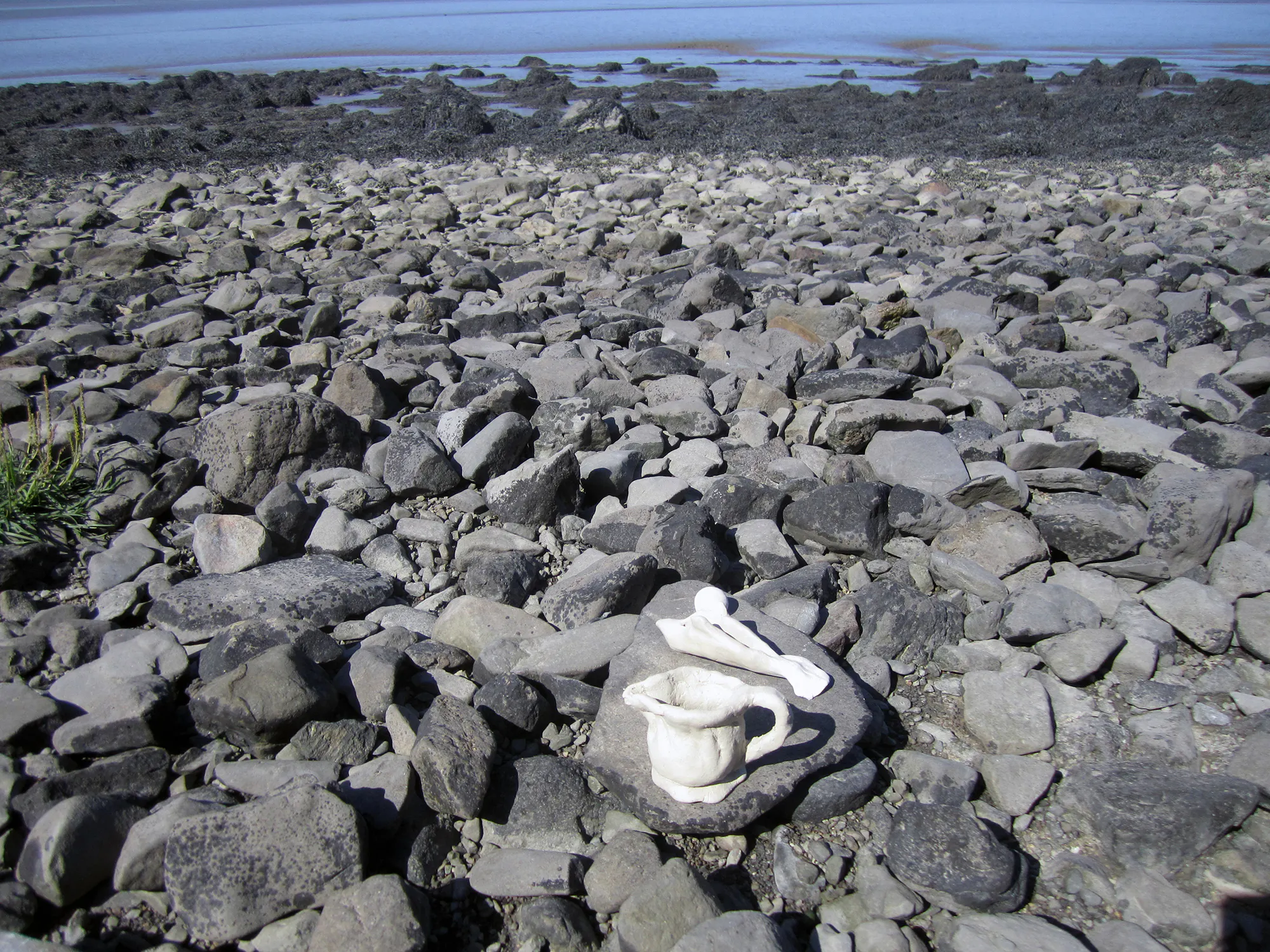
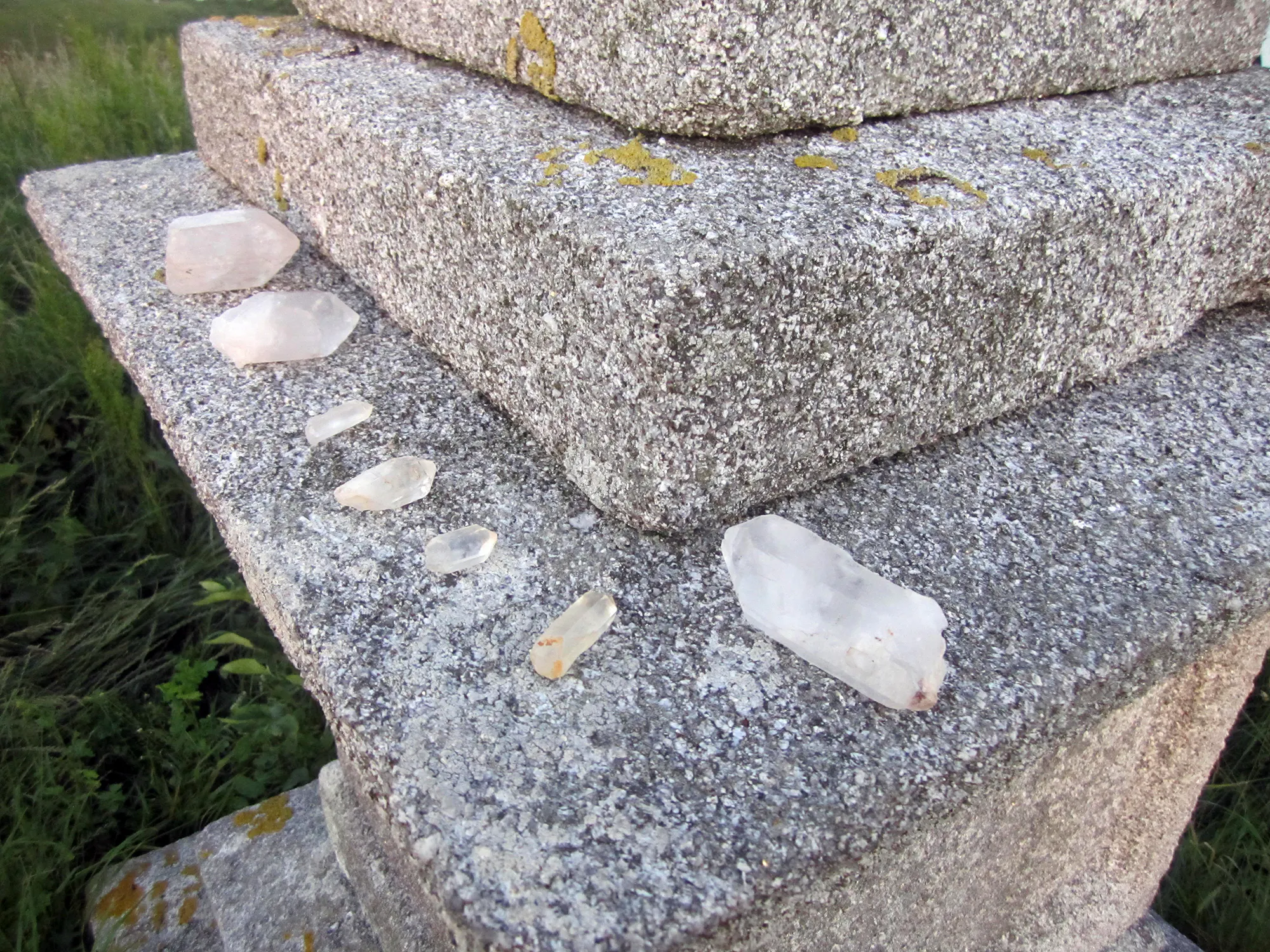
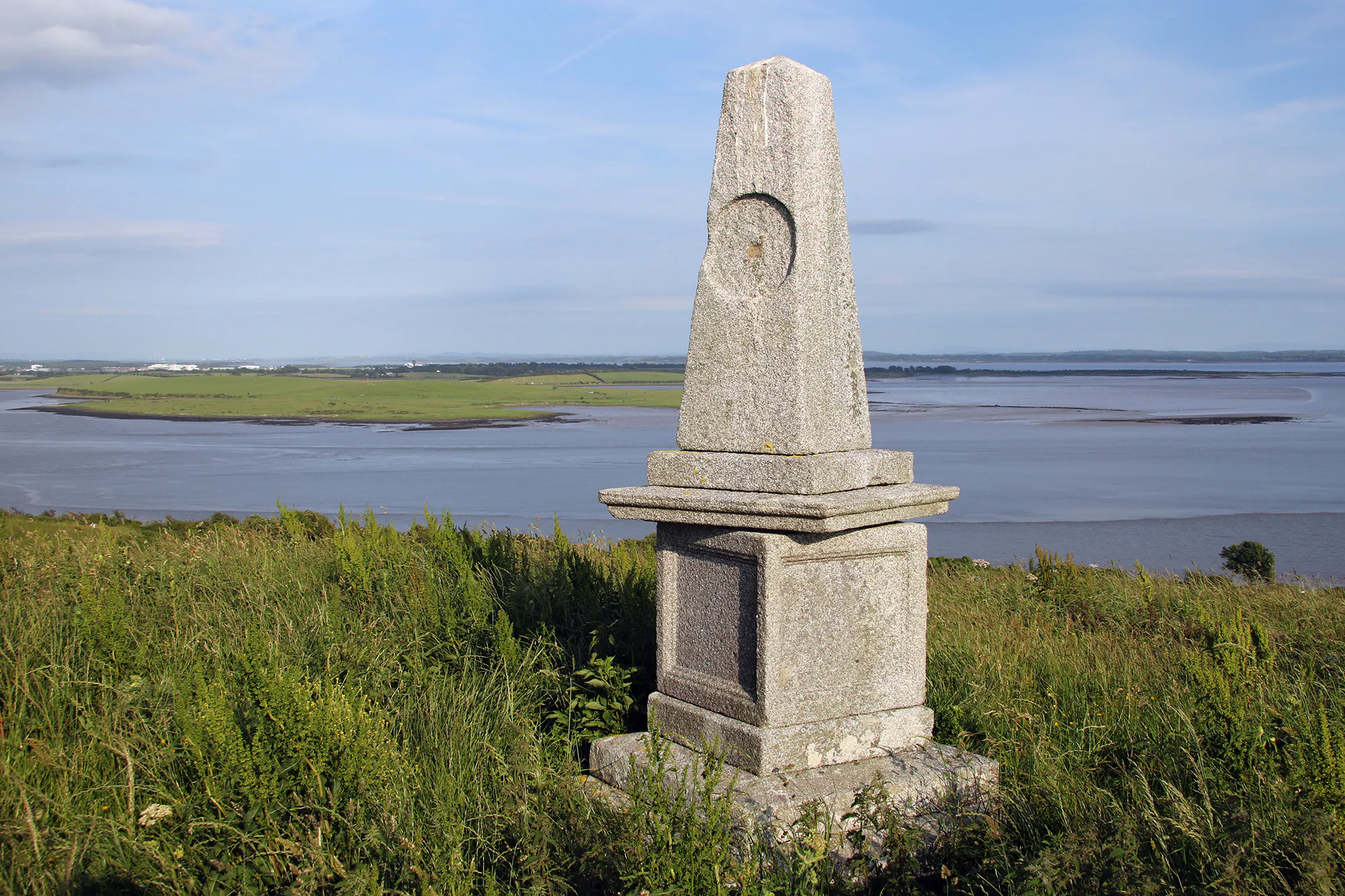
After a snack at camp we relaxed for a while. People dispersed through the island. I was trying to read Mathias Enard’s new novel Compass, but, not for the first time that weekend, I couldn’t concentrate on printed text, so I dropped it, and joined Rachel, Sean, Paula and Filip for a walk across the island. We ambled past the abandoned school and a gathering of old stone houses, then up along the only road that runs approximately from east to west and is just over a mile long. There was talk of going for a swim on the other side that didn’t happen – the water was too difficult to access. It was strange in this marine area that the land seemed so pasture-like, with cows and grass and dense hedges. On the way back we all jumped a gate and made our way up to the tallest hill on the island where there were two stone monuments – one an Ordnance Survey bench mark, the other, a memorial Kevin had told us about earlier that day. It had been erected on this ‘Big Hill’ by a Sir John Fitzgerald, who owned the land during the mid-nineteenth century. The monument was in memory of his son, Captain John Foster Fitzgerald, who died in 1848 having been wounded in battle in the Punjab. Kevin recalled 2002, when President George Bush flew into Shannon Airport the CIA carried out a security check on the island, and in their meat-headed paranoia mistook this old monument for a potential rocket-launcher. In inspecting the piece, they tampered with its large pyramidal capping stone and didn’t repair it.
As we circumnavigated the tip of the hill we could clearly see the top half of the monument had been swivelled out of position. We discussed the implications of swivelling it back into position… but we did nothing other than take a few photos and leave.
By the time we got back down to camp the sun was arching back towards the rolling land and shining sea lines. Ray Griffin and Carl Doran, two long-standing (7) collaborators with ACA, had prepared food for us all. We sat around eating, drinking and chatting as the light turned yellow, orange, umber, blue, near-black. The Domestic Godless produced seaweed vodka and schnapps, freeze-dried mussels and more small fish snacks. I remember talking with Filip about two of his projects: traditional snowshoes he made while on residency in Banff in Canada and a drawing project about the infamous albino gorilla, Snowflake, who died in Barcelona zoo in late 2003. I enjoyed hearing about these projects, but I didn’t have my notebook with me, and I was tired and a little drunk, and can’t remember much other than these vague impressions. But I suppose isn’t that much of how we remember each other’s research – conversational fragments here and there, that only gather together into something whole after a few further chance meetings, or an exhibition, by which time the project no doubt has changed completely and is almost unrecognisable to what you thought you remembered of it.
3. Crystals, Clay, Sticks and Tools
Next day, we were joined on the island by about forty canoeists who’d paddled over from the mainland to camp the night. The Algae Summit was to expand too, by another dozen souls. Kevin later told us there hadn’t been this many people on the island at one time for over a hundred and fifty years.
After breakfast, while we waited for the rest of the summit-members to arrive, we took a walk to the north-east of the island to a large split erratic rock somewhere along the coastline. Séagh reckoned that the name of a rock like this, in Irish, would be ‘an cloch scailte’. To split the rock, he said, it would have been heated with a raging fire for many days until it became extremely hot, then cold seawater would have been poured over it, and these extremes in temperature would have created a crack on the surface, which would then have been wedged, hammered and split. When we eventually happened upon what remained of the rock, Paula and I lingered around it for some time photographing it. I tried to imagine what sort of an inferno must have consumed the thing before it was poured over with water, and how much black steam this must have thrown into the air, and what on earth might that crack have sounded like when it undoubtedly happened.
We joined the others at a small beach where Filip gave us each a Belgian chocolate; then, Ive gave us each a crystal and asked us to help charge it for burial on the island. We were invited to enter the water and move close to the seaweed and spend some time with it, being with it, listening to it. I misunderstood Ive’s request and, as we walked around, knee-deep in the slow-moving surf, looking at the seaweed waving below, amid the rocks and stone and sand, I took the reflective quiet of the others as a moment of great import, so, thinking ‘now is the time’, I buried my crystal in the seabed, and in its place I took a seashell – a sort of swap with the estuary.
Filip, Dave, Rachel and Ive then waded way out and took a swim. The alumina refinery steamed out strings of smoke in the distance. The rest of us walked back onto the warm shingly sand and dried our feet. When Ive came in, he asked for the crystals back, and I realised my mistake. I told him what I’d done, and we made to find the crystal, but the moment we started looking it became apparent how impossible it would have been to locate it. Instead I gave Ive the seashell I’d swapped with the bed of the estuary and he added it to the pretty little arrangement of seaweed and crystals on the beach, which he gathered up a few minutes later for the more ceremonial burial later in the day.
Then, we spied a boat in the distance crossing the estuary, slowly advancing towards us. It was the others, so we turned back for camp to greet them. On the way we met two serene old horses, one brown, the other speckled white. We patted them for a while. Then, a few of us made some audio recordings of the drying mud in the manmade sea-polder nearby that sounded like a vast eerie bowl of popping Rice Krispies.
We gathered again with the newcomers at the seaweed circle to hear John Bhaba Jeaic O’Chonfhaola talk about his museum dedicated to seaweed in Connemara. He told us about the current plight of seaweed harvesters in that area too. He began by showing us two implements, an adapted wrought-iron sickle and a pitchfork, used to cut the seaweed at low tide. While doing so, John said, one must be careful not to sever the holdfast from the rock from which the weed protrudes, otherwise the regrowth of the crop will be destroyed.(8) John Bhaba informed us that the Fukushima nuclear disaster had wiped out huge reserves of Japanese seaweed and it was this gap in the market that the Irish and Scottish coastlines were being asked to partly fill; thus, I suppose, the corporate interest from these Irish, French, and Canadian harvesting companies. It was John Bhaba’s contention that ÚnaG, whose supposed remit is to protect the interests of the local gaelgeoir (Irish-speaking) community, shouldn’t be selling off harvesting rights to multinational conglomerates. He said that for the rights of the local harvesters to be protected or even heard, it was necessary for him to not only leapfrog dealing with ÚnaG but also the Irish government and to take his argument to Brussels, where it was, apparently, gaining some traction. Apart from his livelihood being endangered by these corporations, another concern was the ecological implications of mechanical harvesting. The difference between hand harvesting and mechanical harvesting is that the latter happens at high tide and it is done from a boat. The crop is not touched by hand. It is extracted from beneath the surface of the water and so it is not clearly seen, or felt. Though this method will extract large quantities at far greater speeds, the method is considered insensitive to the holdfast, thus potentially the re-growth of any seaweed and in turn greatly endangering the many complex ecological systems that surround it. The methods described by Irish company BioAtlantis suggested that the holdfast of the seaweed might not be so aversely affected by mechanical harvesting because the cutting of the weed, they claim, would not go below 25cm, thus presumably leaving the holdfast intact. As to whether we can afford to believe BioAtlantis or companies of this kind is another question.(9)
John’s argument about the need for protection against corporate interests suggests a belief in the nation state as something with interest or power in relation to the resources it is supposed to manage. In a country like Ireland that is almost totally accepting of the will of neoliberalism, it seemed to me an important if almost quaint hope.
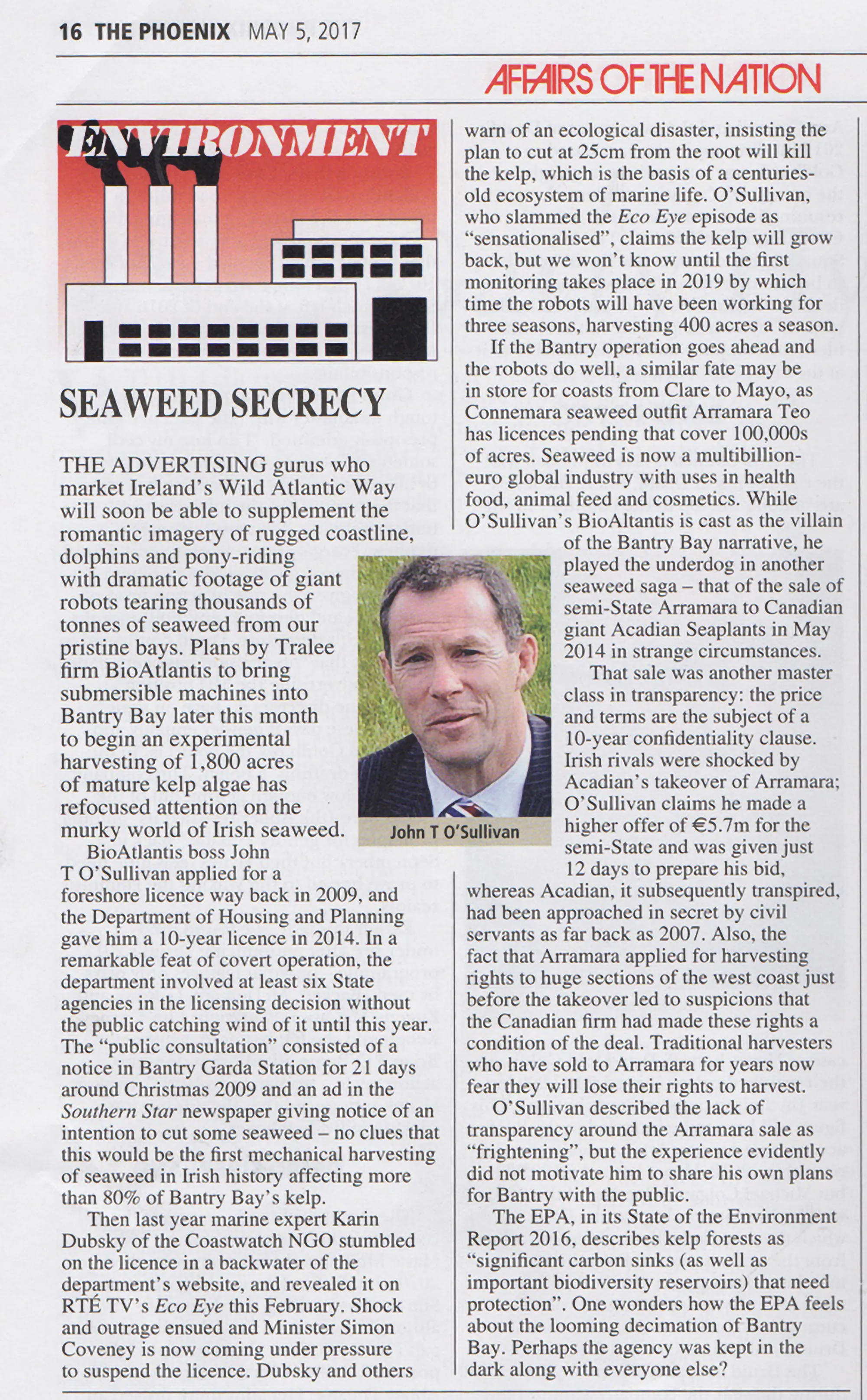
In some contrast to John’s presentation was another given later that evening by Sinéad O’Brien of Mungo Murphy’s Seaweed Co. (MMSC), based in Rossaveal in county Galway. MMSC is an extension of Connemara Abalone, an abalone (or sea-snail) farm founded and run by Sinéad’s mother Cindy, an American marine biologist, who over many years set up this innovative and controlled on-shore facility that uses only local seaweed as feed for the shellfish and abalone they produce and sell.
MMSC is a new company and it produces food and beauty products from seaweed. These products are smartly packaged and ably sold to an international market. Sinéad, who first trained as a lawyer, initiated this company, building on her mother’s research and work. What’s interesting is that the company is named after a fictional character: Mungo Murphy, whose appearance is a cartoon-rendering of the stereotypical local seaweed harvester.(10) In the ‘About’ section of the MMSC website, we are told that, ‘Mungo’ lives in Connemara in the West of Ireland on a bogland beside the sea. He lives with his one-eyed rabbit named Sushi and his tailless cat, Parnell… and, that… when not harvesting seaweed, Mungo is either soaking himself in a seaweed bath or else eating the seaweed in one of his delicious and nutritious culinary creations.
This idyllic rendering holds within it a recognisable pursuit of international capital. The terroir of the seaweed that MMSC markets is playfully evoked; so too is the ‘Irishness’ of the construct that holds and thrusts the brand forward: the enterprise rehearses features of state-approved entrepreneurialism – using a skillful projection of a type of pre-modern/naïve Irish-ness to draw on foreign capital.(11) These marketing features aside, Connemara Abalone and MMSC are businesses that are innovative and sustainable in their treatment of the environment. What is important about this is that their success will draw attention to their methods and by virtue of their existence and example they will hopefully put pressure on other forms of environmentally damaging extraction taking hold in the area. Connemara Abalone and MMSC also bring into the narrative of the contemporary foreshore in the Gaeltacht, not just new forms of production/extraction but also a gender difference. These elements make more complex the now almost vernacular term: ‘local-harvesters rights’.(12)
It is clear that the foreshore is a very particular layer of the country that holds a variety of specific cultures and forms of extraction. It is not an invisible underground reservoir of gas or oil to be tapped miles off the Irish coast; nor is it an abstract, obliging tax-break; nor an appropriate education system – the foreshore is an expansive, complex and delicate physical interface between what is dry land and what is something else. It is inherent in our islandness and is at least subconsciously bound to any sense of identity we might draw from our islandness. Only now, when the foreshore’s intrinsic value has become apparent, does the question of its management and ownership emerge as problematic. Something of the intrinsic value of the crop is still tied to a tradition of harvesting in Ireland that not only has ecological value but also has spiritual, local-social, and smaller local-economic implications.
As Sinéad presented her company, its products and its history, a couple of the canoeists ambled along to say hello. They sat in among us for a while, probably wondering what on earth we were all gathered around talking about. Once they got some hot water, they left. Then, after we all asked questions and engaged in a brief energetic chat, I spied a little further up the hill some smoke spiraling from a hole that Mary Conroy had dug for us to fire small clay objects we’d made earlier in the day.
Seanie Barron, who had been foraging for some sticks around the island re-appeared and presented some finds in among pre-prepared sticks he had brought over from Askeaton. One was a privet stick, made from a length of blackthorn found near a railway line in rural Limerick; another was a chest-high hazel stick – ‘to keep away the spirits’ – with a deer horn as a handle, a small pretty horseshoe carved into the root of the horn, and a handsome copper ferrule clasping the tip of the stick. He then showed us a blackthorn stick with a goat’s horn as the handle and in doing so pronounced to us, ‘Every stick has to be walked’. As his informal presentation progressed, at the far end of the shore Ive was making shrouds out of cloth and crystals for people to lie in and reconnect with the island.
I wandered back to the camp to get out of the sun and try to read. Soon, Ive and a dozen or so set off up to the Big Hill and had a ceremonial burial of the crystals around the monument that had mysteriously been put back in place overnight. We suspected Carl and Ray had done this, but they denied it vehemently, claiming that it was probably the canoeists.
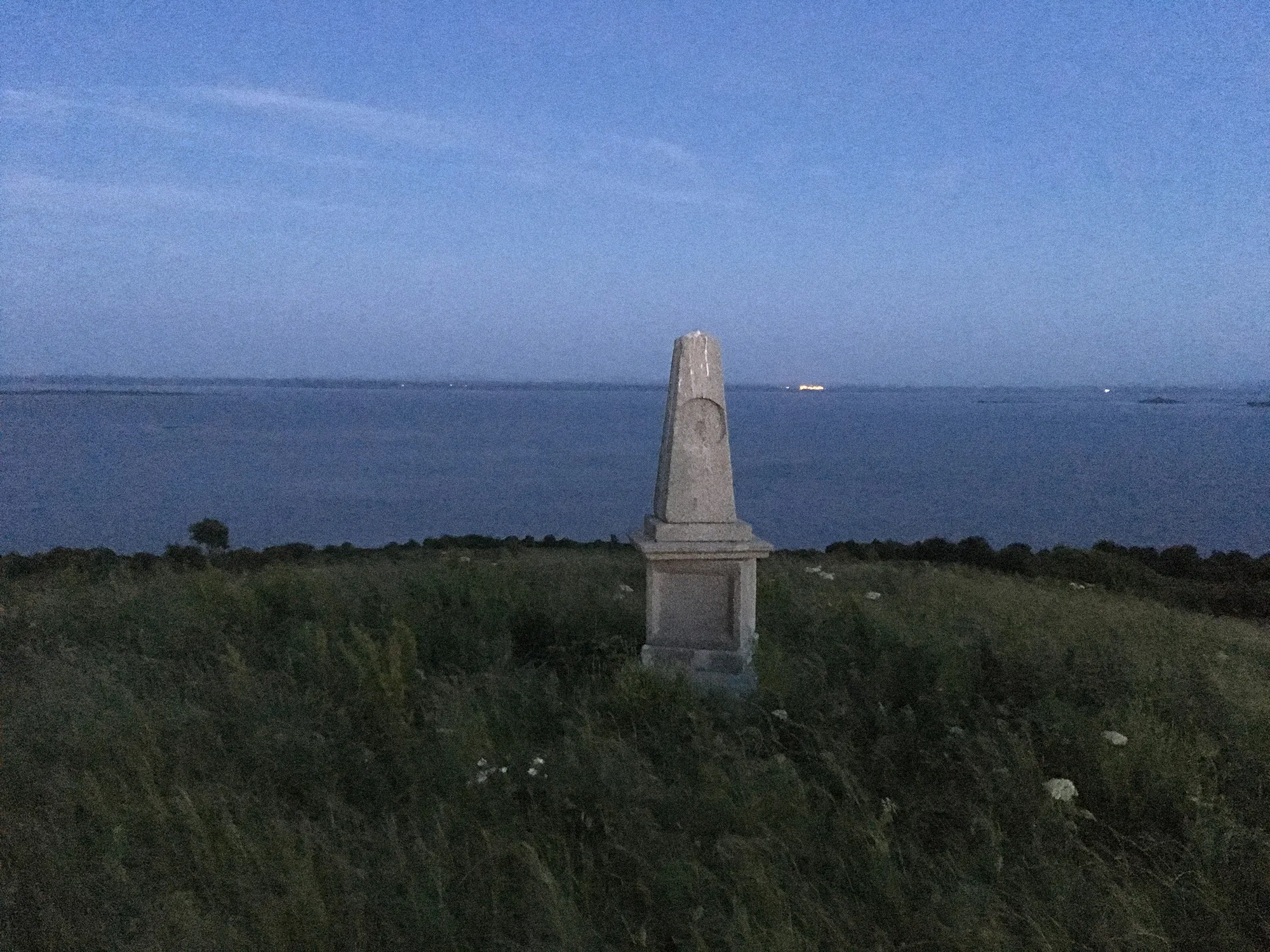
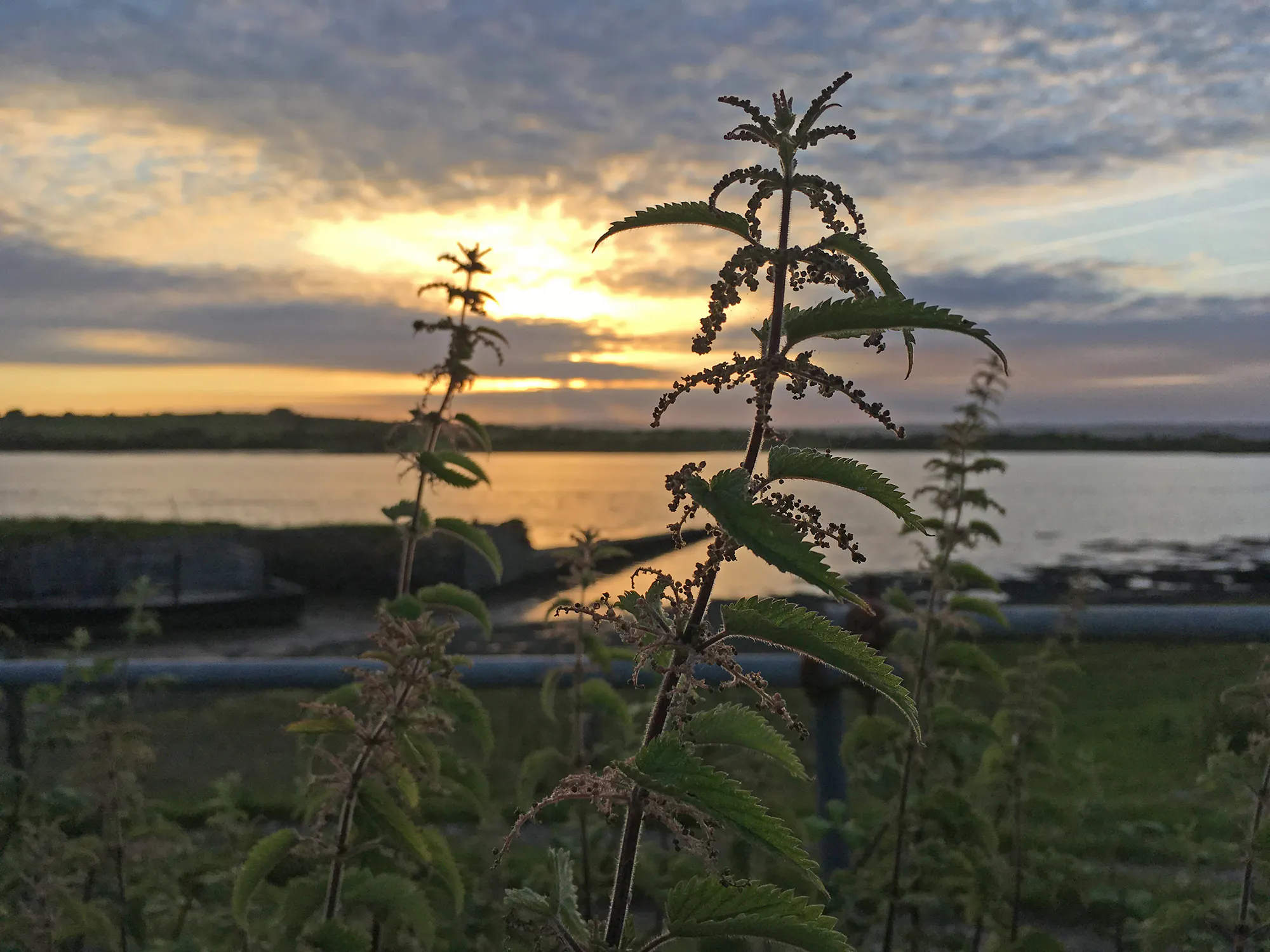
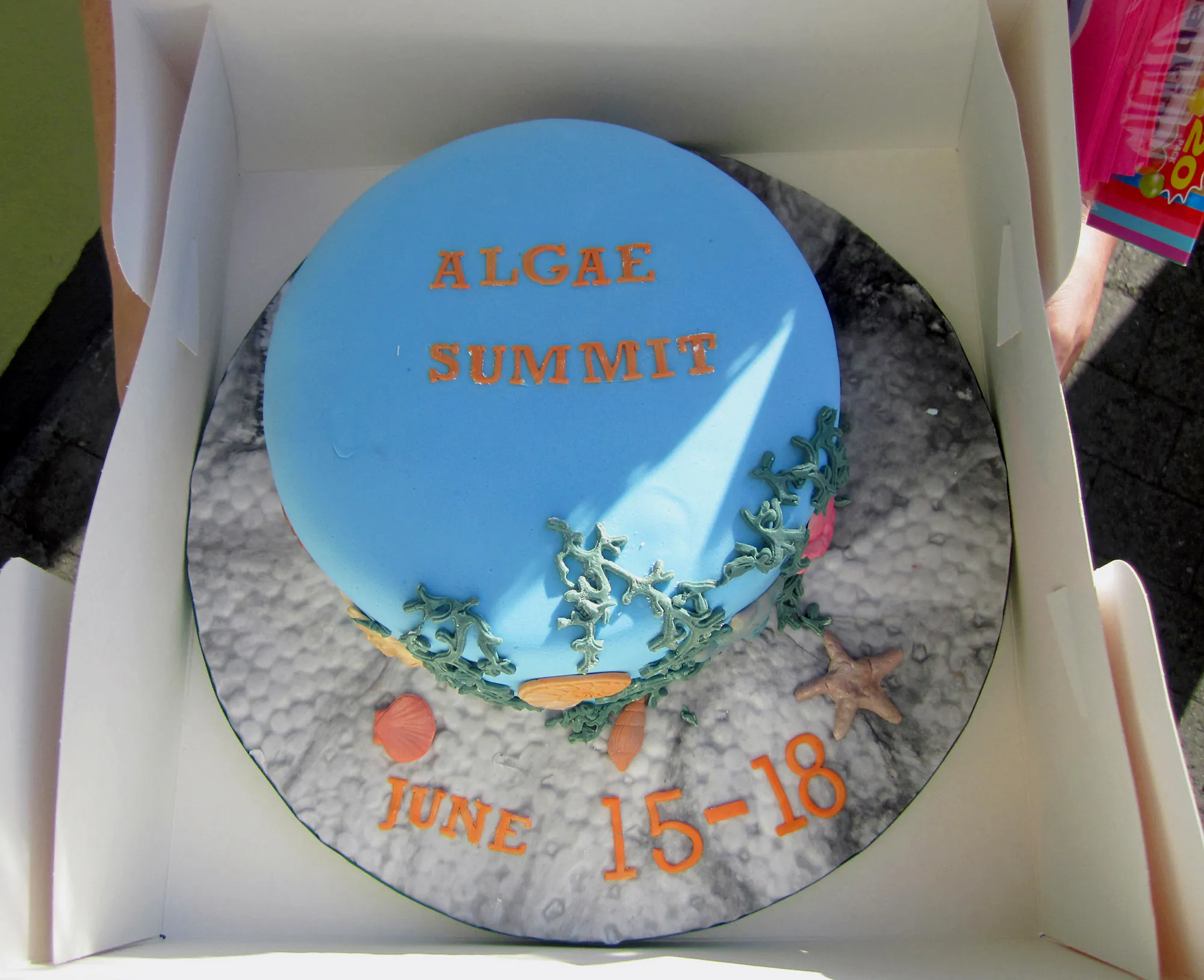
That evening, after all of the presentations and walking and talking and listening and making, we got pretty loaded. It was Seanie’s birthday and Michele had brought a cake over from Askeaton. Ray and Carl prepared another beautiful meal; again, I can only remember the impression of it being delicious, I can’t for the life of me remember what it actually consisted of. We ate and drank and I can’t recall what we talked about. The sunset had been slow and beautiful too. It was lovely to be on that island with all of those people. It was like being, at once, in the middle and on the edge of a world. At one stage, after drinking the last of a shot of tequila that Stephen Brandes had given me, I fished a tiny potent red chilli out of the bottom of my glass, and, a few moments later I absent-mindedly rubbed my eye with the same fingers with which I’d touched the chilli and my eye suddenly stung and watered profusely. I thought it was smoke from the fire, then Stephen appeared beside me with a piece of tissue sopped in milk and told me to rub my eye out. He did this with the quiet familiarity of a man to whom something like this had happened a million times before. As the darkness came up and the fire roared and the twinkling lights on the mainland became overslung with the canopies of stars, the singing started.
Out of nowhere Carl began singing the theme to Ghostbusters a capella. He stood, as other voices gathered around him, and sang out in a grand mid-baritone, framed by the fire behind him, his straggly hair, his theatrical aspect and his un-ironic commitment to the music – it was incredible. It was the sort of performance that would laugh you into sadness. A few people stayed up quite late, but the sun had knocked me for six. I had no idea what time it was when I sloped off – it was just dark. As I was lying in my sleeping bag, dozing, I could hear from the campfire in the distance: singing and calling and laughing and the odd peep from the whistles Seanie’d carved into a stick.
At one time, according to Sir George H. Darwin, the Moon was very close to the Earth. Then the tides gradually pushed her away: the tides that the Moon herself causes in the Earth’s waters, where the Earth slowly loses energy.
—Italo Calvino, The Distance of the Moon
4. Back to the Mainland
On the Sunday I woke tired and sore and looking forward to a shower. The sun was out, buzzing, and the dew on the grass was already almost burned off. The exiled dog, who’d crept closer to our camp all weekend, presumably looking for company, was by then perched out on the end of the harbour waiting for someone or something. I watched it as I sipped coffee and had something to eat. Then Paula and I walked back up the road and hopped into a field where some of our party had seen a bull on the Friday afternoon as they walked down to the old ruined church. I was jittery about the bull suddenly appearing again, but Paula seemed utterly at ease. We walked around the small graveyard that surrounded the old roofless and overgrown church. It was so enveloped in ivy that it seemed as if the land was reclaiming the stones to itself. The only name I could make out on the graves was ‘Guinane’. Apparently there had once been four families of Guinane on this island. I suppose Kevin must be one of the last connections the Guinane name has to the place. Paula took many photos and we walked back to the camp to pack away our tents. Mary was extracting clay objects from the burnt-out pit. She’d made a series of remarkable ceramic skulls before she came over and wanted to see if she could pattern them in this fire. I think she felt the results were mixed.
I realise looking back on my notes from the Sunday that my energy had flagged badly. By the time we collapsed all of the tents and packed up, we returned to the seaweed circle. Someone brought up the idea of ‘outcomes’ from the weekend, and ‘further thoughts’ people might have had. I shut down to the point of briefly growing sullen to the enthusiasm surrounding me. All I could think about was something cold for my head, a shower, and a nap. I lay on the ground as people spoke and held my fleece up to shadow my eyes.
On the trip back to Askeaton, the sea ebbed prettily back down the estuary and out to the Atlantic. We curved around Beeves lighthouse and onto the town’s harbour, where we clambered off and unloaded the boats, returned to our lodgings for a shower, then met for a snack. Michele, her mother Anne, Emily and I went back down to their house in Gurt as Sean took those who stuck around for the evening up for a drive to the hills towards the south-west of Askeaton, from where it is possible to get another viewpoint of the Alumina plant and the extent of its impact on the town’s hinterlands. Michele and I had a coffee in the house and talked about our various projects, funding opportunities and strategies… It was nice sitting in their kitchen again chatting with her about the business end of what we do.
I ambled up to Cagney’s bar in the middle of town where I had a few pints and fags with Carl and Ray. They looked relieved to be done for the weekend. On the TV in the bar, French filmmaker Jean Painléve’s films were playing. They are gorgeous ‘scientific-poetic’ things.
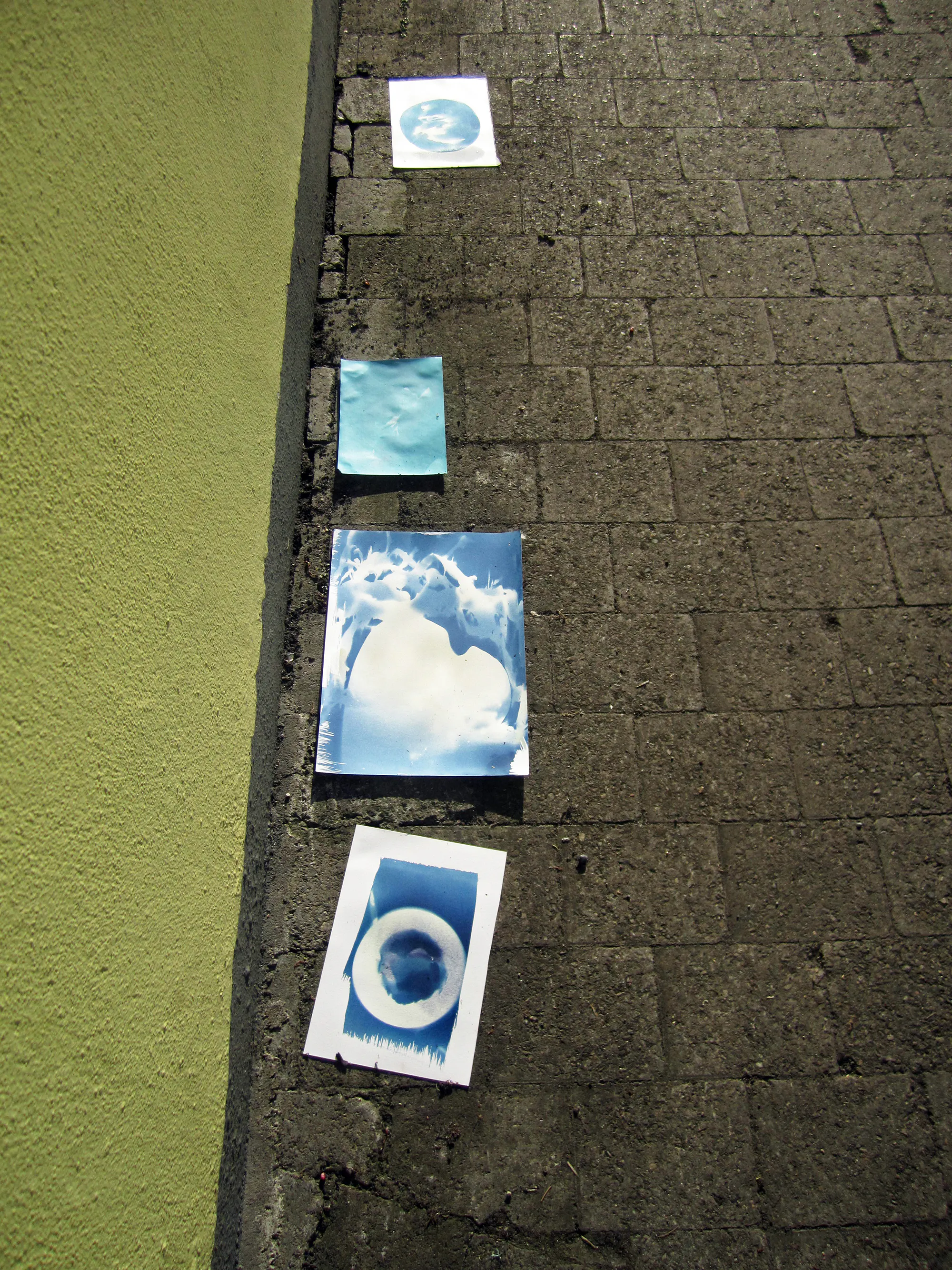
With more arriving, we made some cyanotype prints with Sarah Codd, who had come up from Lismore Castle to lead the informal workshop. Seanie Barron arrived with Michele and Anne; and the place lifted again. Kevin Guinane appeared briefly too. Seanie had some more sticks with him; his enthusiasm for these things is seemingly unending. Carl and Mary headed back into Limerick soon after. I got chatting for a while with Anne. We had cake and the sugar rush for a moment elated me, but soon after I became extremely tired – the sort of tired no amount of pints would make right. Seanie was singing again by the time I said goodnight to everyone and left for the short walk back through Askeaton town, which I think was quiet enough by then.
Thanks to Rebecca O’Dwyer, Rachel O’Reilly, and Sallyanne Duncan.
Notes
1. The foreshore is a strip of land that runs from the high-tide watermark out twelve nautical miles into the sea. In Ireland this part of the country, oddly, falls under the remit of the Department of Housing and Planning.
2. This economic unit makes the work in this part of country seem less gendered, i.e. men and women, boys and girls harvested seaweed, whereas in Liam Dundon’s presentation the work in the Shannon Estuary seemed, mostly, to be carried out by men. Why this is the case I cannot tell and this interesting cultural difference lies, for the moment, outside of the scope of this text.
3. Údarás na Gaeltachta, established in 1980, is a regional state agency responsible for the economic, social and cultural development of nominally Irish-speaking regions of Ireland. Its stated purpose is to strengthen the Gaeltacht communities, to increase the quality of life of its community members and facilitate the preservation and extension of the Irish language as the principal language of the region.
4. As reported by Lorna Siggins, Irish Times, 16 June 2016.
5. The Enclosure Act was the legal process in England of enclosing a number of small landholdings to create one larger farm. Once enclosed, use of the land became restricted to the owner, and it ceased to be common land for communal use.
6. The term ‘commoning’ has been popularised by historian Peter Linebaugh, whose 2008 book The Magna Carta Manifesto shows the founding document of Anglo-American democracy repeatedly affirms people’s right to use the commons (cultural and natural resources available to all members of society) to fulfill their basic needs. A majority of English people, known as ‘commoners’, derived at least part of their livelihoods from the commons before the brutal onset of enclosures by wealthy landowners.
7. Long-suffering!
8. In Tim Robinson’s 2011 Connemara: A Little Gaelic Kingdom there are some lovely passages and quotations on the seaweed industry (past and present) in and around Carna in Connemara, particularly chapter 16, ‘A Necklace of Islands’, giving one of the most evocative pieces of psychogeography I’ve read in a long time. Robinson also gives a useful description of the Arramara plant near the end of chapter 19, ‘Saving Father Miley’.
9. Lorna Siggins, Irish Times, 11 December 2017, reports on the uproar surrounding Minister for Housing Damien English’s granting BioAtlantis harvesting rights in Bantry Bay using mechanical means without commissioning an impact survey of any kind.
10. He looks like a mix of Ronan O’Snodaigh (the ageless lead singer of Irish traditional music band Kila) and Wes Anderson’s fictional marine explorer Steve Zizou. Aside from beauty and food products, MMSC also provide tasting tours of their facilities, placing themselves into the agri-tourism market.
11. Luke Gibbons further describes this in 1996’s Transformations in Irish Culture, being at once profitable and beautiful:
The policy (the regional development policy) could be described as industrialisation without urbanisation. Part of the attraction of outlying rural areas for industrial investment was that they lacked the strong traditions of trade union militancy which are characteristic of the urban working class. By the end of the 1970s, only one-quarter of new industrial employment was generated in the east of the country: the west and midlands were the main target areas of the new industrial policy.
12. Mungo as representation might well be read as an illustration of John Bhaba and the tradition he embodies. One, however, that overlooks contributions made by female workers to the local seaweed narrative, which creates an interesting tension between marketing models and assumptions about the role of gender in seaweed harvesting. I asked Rachel O’Reilly, an Algae Summit participant, if she would read this text and offer me any suggestions or criticisms. She raised, over the course of our correspondence, issues of labour, gender, and narrative power in relation to modern and contemporary mineral extraction (a particular research subject for her), and suggested the need to continue to revalue women workers’ rights and their impact on the environment. This subject topic was central in her talk Reading Extractive Industry Divestment and an accompanying screening of Sophie Bissonnette, Martin Duckworth, and Joyce Rock’s 1980 film Une Histoire de Femme, (A History of Women) at Temple Bar Gallery + Studios, Dublin, organised by Askeaton Contemporary Arts and AEMI (Artists’ & Experimental Moving Image) as a prologue to the Algae Summit. For more see here.